When it comes to enhancing independence and comfort for individuals with disabilities, smart home systems can make a significant difference. These technologies provide tailored solutions, promoting ease of use and connectivity. By integrating smart devices, you can create a supportive environment that prioritizes safety and autonomy. However, not all systems are created equal. Let’s explore the top options available and what factors to evaluate before making a choice.
Home Assistant Green Smart Home Hub

The Home Assistant Green Smart Home Hub is an ideal choice for those seeking reliable, user-friendly automation tailored for individuals with disabilities. This compact, fanless device runs efficiently with a quad-core processor and has 32GB of storage, making it perfect for managing your smart home. You can control all your devices from one hub, simplifying your daily routines. Home Assistant Green prioritizes your privacy by storing data locally, so you have full control over it. Plus, its low power consumption and USB expandability guarantee you can add more devices as needed, enhancing your home’s automation capabilities while keeping it energy-efficient.
Best For: Individuals seeking a reliable and user-friendly smart home automation system that prioritizes privacy and ease of use.
Pros:
- Compact and silent design makes it ideal for any living space without noise distractions.
- Local data storage ensures user privacy and full control over personal information.
- Low power consumption and USB expandability allow for energy-efficient operation and the addition of more smart devices.
Cons:
- Requires Ethernet connection, which may limit placement options for some users.
- Initial setup may be challenging for those unfamiliar with smart home technology.
- Limited built-in compatibility with certain devices unless additional USB modules are purchased.
Tapo Smart IR & IoT Hub with Chime (H110)

Looking for a versatile solution to simplify your daily routines? The Tapo Smart IR & IoT Hub with Chime (H110) is just what you need. This universal remote controls over 18 device types, including TVs and ACs, making it perfect for your home. With Matter certification, it connects seamlessly with 8,000+ infrared brands. You can manage devices via voice commands, the Tapo app, or scheduled automation. Plus, its built-in alarm keeps you alerted to motion or door activity. Enjoy enhanced independence and comfort by integrating your legacy electronics effortlessly with modern smart solutions.
Best For: Users looking for a versatile smart home hub that can control multiple devices, including legacy electronics, while providing automation and security features.
Pros:
- Supports over 18 device types, allowing for extensive control of various electronics.
- Seamless integration with voice assistants like Alexa, Google Assistant, and Siri for hands-free operation.
- Built-in alarm provides real-time alerts on important events, enhancing home security.
Cons:
- May require initial setup time for pairing older devices and customizing settings.
- Limited to devices within the IR signal range, potentially restricting control of some appliances.
- Dependence on WiFi connectivity may pose issues during outages or disruptions.
CallToU Wireless Caregiver Pager Smart Call System
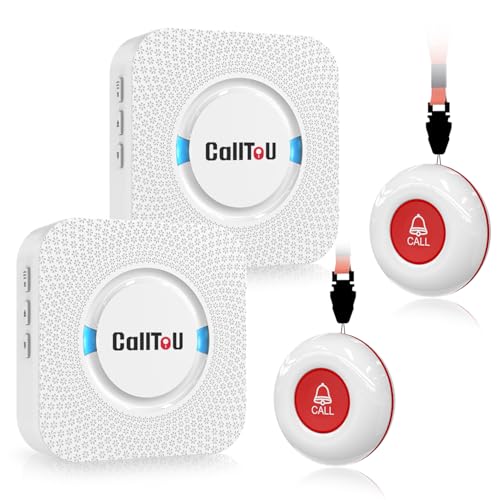
Designed specifically for elderly individuals and those with disabilities, the CallToU Wireless Caregiver Pager Smart Call System guarantees help is just a button press away. With two SOS call buttons and two receivers, this system lets you maintain your independence while ensuring assistance is readily available. Its impressive 500-foot range means you can use it throughout your home. The portable receiver plugs into an outlet, and the waterproof call button is easy to wear or secure for quick access. Plus, you can customize alerts with 55 ringing tones and adjustable volume levels, enhancing your comfort and safety effortlessly.
Best For: Elderly individuals, seniors, patients, and disabled individuals who require immediate assistance at home.
Pros:
- Reliable alert system with a working range exceeding 500 feet, allowing users to call for help from various locations in the home.
- Customizable audio alerts with 55 ringing tones and 5 adjustable volume levels, accommodating individual preferences.
- Durable and portable design, featuring waterproof and dustproof buttons suitable for diverse environments.
Cons:
- Limited to two call buttons and two receivers, which may not be sufficient for larger households or care facilities.
- Requires power outlet for receiver, which may limit placement options in certain areas of the home.
- Potential learning curve for some users, especially those who are not tech-savvy.
Smart Caregiver Bed Exit Alarm with Wireless Pager for Seniors

For seniors and elderly individuals at risk of falls, the Smart Caregiver Bed Exit Alarm with Wireless Pager offers an essential safety solution. This system features a weight-sensing bed pad that alerts you when pressure is removed, ensuring your loved ones stay safe in bed. The 10 x 30 bed pad provides full-coverage monitoring, wirelessly notifying caregivers through a pager that vibrates or sounds. You can expand the network to connect with up to six sensors, covering beds, chairs, and doorways. With 30 years of experience, Smart Caregiver delivers reliable support and minimizes false alarms, fostering trust in your safety measures.
Best For: Seniors and elderly individuals at risk of falls who require constant monitoring and safety solutions.
Pros:
- Wireless Notifications: Caregivers receive immediate alerts via a vibrating or sound pager, allowing them to respond quickly.
- Expandable Network: Can connect with up to six sensors for comprehensive monitoring across different areas like beds and doorways.
- Minimized False Alarms: Engineered with an extra-large contact sensor to reduce the likelihood of unnecessary alerts.
Cons:
- Initial Setup Required: Users may need some time to set up the system and familiarize themselves with the features.
- Limited Range: The wireless pager may have range limitations depending on the environment and obstacles.
- Dependence on Batteries: The system relies on batteries for both the pager and sensors, which may require regular replacements.
Medical Alert System with Fall Detection for Seniors
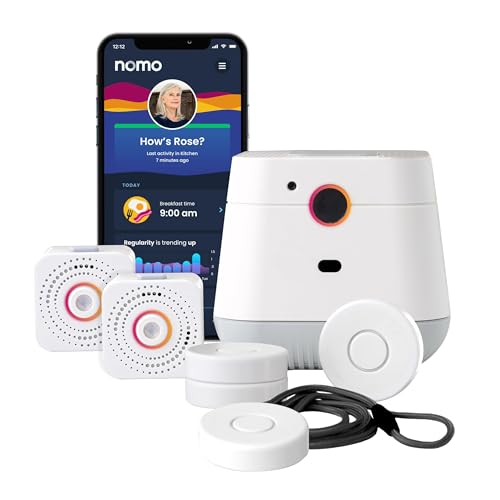
Seniors seeking peace of mind and safety at home will find the NOMO SMART CARE ESSENTIAL KIT an ideal solution, thanks to its advanced fall detection feature. This in-home monitoring system offers a hassle-free setup with no special wiring needed. The kit includes a Smart Hub, motion-sensing Satellites, and wearable Tags to guarantee constant safety. With two-way voice communication, you can easily connect during emergencies. Plus, the system provides 24/7 monitoring and sends alerts to your Care Circle if a fall occurs. Enjoy independence while knowing help is just a button press away, all within a privacy-focused design.
Best For: Seniors who want a reliable and user-friendly home safety system with fall detection and emergency alerts.
Pros:
- Easy plug-and-play installation with no hidden fees or technician visits required.
- Two-way voice communication allows for instant contact during emergencies.
- 24/7 monitoring with customizable alerts ensures peace of mind for seniors and their families.
Cons:
- Monthly subscription fee applies after the initial 60-day trial period.
- Requires a secure WiFi connection for full functionality.
- Some users may find the sensitivity settings for fall detection difficult to adjust.
Amazon Echo Hub, 8” Smart Home Control Panel

The Amazon Echo Hub, with its intuitive 8” touchscreen, offers a seamless way to manage your smart home, making it an ideal choice for individuals with disabilities. You can easily control lights, cameras, and smart plugs through voice commands or touch gestures. The customizable dashboard lets you access your most-used devices and routines quickly. It syncs effortlessly with WiFi, Bluetooth, and various smart devices, providing thorough management. Plus, you can enhance security by arming or disarming systems directly from the Hub. Designed with privacy in mind, it guarantees your personal information stays safe while being made from sustainable materials.
Best For: Individuals with disabilities seeking an intuitive and accessible way to manage their smart home devices.
Pros:
- Easy control of smart devices through voice commands or touch gestures.
- Customizable dashboard for quick access to frequently used devices and routines.
- Built-in security features for arming and disarming systems directly from the Hub.
Cons:
- May require additional setup for installation, such as wall mounting or cable management.
- Compatibility with certain devices may vary, requiring research before purchase.
- Limited to Amazon’s ecosystem for optimal functionality, potentially excluding other brands.
Smart Caregiver Floor Mat Alarm and Pager System

Designed specifically for dementia patients, the Smart Caregiver Floor Mat Alarm and Pager System offers a reliable solution for preventing falls and wandering. When someone steps on the durable 24in x 48in mat, the wireless pager alerts you with sound or vibrations, even from up to 300 feet away. This means you can respond quickly without disturbing patients. Setup is a breeze; just place the mat next to the bed or an exit. Plus, you can monitor multiple devices with one pager, enhancing safety for seniors. With a one-year warranty, this system supports your caregiving needs effectively.
Best For: The Smart Caregiver Floor Mat Alarm and Pager System is best for caregivers of seniors, particularly those with dementia, who need to prevent falls and wandering.
Pros:
- Alerts caregivers immediately with sound or vibration, allowing for quick responses.
- Wireless pager operates effectively up to 300 feet, ensuring caregivers can monitor from a distance.
- Easy setup and placement near beds or exit doors enhances safety and convenience.
Cons:
- Requires 2 AA batteries for the pager, which are not included.
- Limited range may not be suitable for larger facilities or homes.
- Additional Smart Caregiver products are sold separately, potentially increasing overall costs.
Smart Caregiver Pager System with 2 Call Buttons for Elderly Assistance

For those caring for elderly loved ones, the Smart Caregiver Pager System stands out with its two call buttons that enable quick alerts for assistance in emergencies or falls. This wireless system operates within a 300-foot range, ensuring you receive alerts throughout your home. The call buttons can be worn or mounted for easy access, and the battery-operated design means it’s ready to use right out of the box. With positive reviews and U.S.-based customer support, this reliable system enhances safety and peace of mind, making it an essential tool for elderly assistance in any household.
Best For: Caregivers seeking a reliable and easy-to-use system for alerting assistance for elderly loved ones in emergencies or falls.
Pros:
- Wireless operation with a range of up to 300 feet, providing flexibility and mobility throughout the home.
- Easy setup with no additional pairing required, allowing for immediate use right out of the box.
- Positive customer feedback and U.S.-based support ensure quality service and reliability.
Cons:
- Limited warranty period of only 90 days may not provide enough coverage for some users.
- Battery-operated design requires periodic battery replacement, which could be inconvenient.
- The noise level of 75 decibels may be too loud for some environments or sensitive individuals.
WiFi Caregiver Pager Life Alert System for Seniors

If you’re caring for a senior loved one, the WiFi Caregiver Pager Life Alert System stands out as an essential tool for guaranteeing their safety. This system features a waterproof call button, a watch button, and a receiver, all controlled via a user-friendly app—without any monthly fees. With a range of up to 656 feet, it penetrates walls, making it perfect for various settings. When help is needed, a simple press activates alerts for caregivers and family members. Plus, customizable ringtones and volume levels enhance usability, while professional support guarantees a seamless experience. Enjoy peace of mind knowing help is just a button away.
Best For: Seniors living independently who require immediate assistance and their caregivers looking for an effective alert system without ongoing fees.
Pros:
- No monthly fees, making it a cost-effective option for families.
- Waterproof call button ensures safety in various environments, including bathrooms.
- Customizable ringtones and volume levels enhance user experience and adaptability.
Cons:
- Only supports 2.4GHz Wi-Fi, limiting compatibility with some modern routers.
- SMS and phone call alerts require additional subscription, which may incur extra costs.
- The maximum range of 656 feet may not be sufficient for larger properties or facilities.
Tapo Smart Hub with Built-in Chime (H100)

The Tapo Smart Hub with Built-in Chime (H100) stands out as an excellent choice for individuals with disabilities who need seamless connectivity and control over their smart home devices. It connects up to 64 devices, operating on low-frequency broadband for fewer signal interferences. With a maximum range of 30 meters, you’ll enjoy reliable performance in various environments. The low-power wireless protocol greatly extends battery life, ensuring your devices last longer. Plus, it integrates with motion and door/window sensors, activating a high-decibel siren for added security. The Tapo Smart Hub enhances your independence while keeping you comfortable and safe at home.
Best For: Individuals with disabilities seeking seamless control and connectivity for their smart home devices.
Pros:
- Connects up to 64 smart devices for comprehensive home automation.
- Utilizes low-power wireless protocol to significantly extend battery life of connected devices.
- Integrates with security sensors to activate a high-decibel siren, enhancing home safety.
Cons:
- Cannot directly connect to smart plugs or lighting, requiring 2.4GHz Wi-Fi for those devices.
- Performance may vary based on environmental conditions, potentially affecting connectivity.
- Maximum connection distance of 30m may limit placement options in larger homes.
Factors to Consider When Choosing Smart Home Systems for Disability Assistance
When you’re choosing smart home systems for disability assistance, it’s essential to take into account a few key factors. You’ll want a user-friendly interface and voice control capability to make everyday tasks easier. Additionally, look for systems that integrate well with your devices and provide strong data privacy assurance.
User-Friendly Interface
How can you guarantee that a smart home system is truly user-friendly for individuals with disabilities? Look for interfaces that offer intuitive navigation and clear labeling. These features guarantee you can easily access controls, regardless of your technical skills. Customization options, like adjustable font sizes and color contrasts, cater to specific visual needs, making interaction smoother. Additionally, consider systems that integrate well with your existing devices, allowing you to manage everything from a single platform. Clear audio or visual feedback for actions taken will boost your confidence and understanding, guaranteeing you feel in control. Prioritizing these elements can greatly enhance your experience and independence in a smart home environment.
Voice Control Capability
Accessible smart home systems not only provide user-friendly interfaces but also incorporate voice control capabilities, making daily tasks even simpler. With voice control, you can operate devices hands-free, which is especially beneficial if you have mobility challenges. Many systems support popular voice assistants, enabling you to issue commands like adjusting lights or controlling thermostats effortlessly. You can simplify complex tasks by combining actions into a single command, such as “turn off all lights and lock the doors.” This integration promotes independence, reducing the need for physical interaction with devices. Plus, systems equipped with voice recognition technology can adapt to your unique voice, ensuring personalized and accurate responses, making your smart home experience even more tailored to your needs.
Emergency Alert Systems
What factors should you consider when selecting emergency alert systems for disability assistance? First, prioritize ease of use. Look for systems that allow you to call for help quickly through simple buttons or wearable devices. Wireless capabilities are essential; choose systems with a range of over 500 feet, ensuring alerts can be sent from anywhere in your home or care facility. Advanced systems offer customizable alerts, so you can set different ringtones and volume levels to suit your preferences. Integration with mobile apps can enhance communication, providing real-time notifications to caregivers and family members. Finally, consider systems with built-in security features, like sirens or unauthorized access alerts, for an added layer of safety.
Integration With Devices
When selecting smart home systems for disability assistance, integrating with various devices is essential for maximizing functionality and ease of use. Look for systems that support multiple protocols like Zigbee, Z-Wave, or Matter, ensuring compatibility with a wide range of smart devices. Consolidate control over everything from lighting to security features through a single interface, reducing complexity in daily tasks. It’s vital that your system can connect to legacy devices, allowing extensive control over older electronics. Evaluate options offering automation capabilities, so devices can function together based on your defined schedules or triggers. Finally, prioritize systems with strong app support and voice assistant compatibility, enabling seamless control from mobile devices or through voice commands tailored to your preferences.
Data Privacy Assurance
Guaranteeing data privacy is essential for anyone selecting smart home systems for disability assistance, particularly because these systems often handle sensitive information. Look for options that store user data locally to enhance privacy and minimize unauthorized access. Additionally, many devices allow you to view, share, and export your data, promoting transparency about how it’s used. Choose systems compliant with established security standards to protect against cyber threats. Also, prioritize products that don’t share personal information with third parties, especially if you’re concerned about data misuse. Finally, always review the data handling and privacy policies to confirm they align with your preferences and comply with regulations. Your peace of mind is paramount when enhancing your independence and comfort.