If you’re looking to enhance your independence and improve communication, exploring assistive communication devices can be a game changer. These tools are designed to empower you, making it easier to express yourself in various situations. From customizable options to portable designs, there’s a solution for nearly every need. But, with so many choices available, how do you find the right fit for you? Let’s uncover the top options that could transform your daily interactions.
Joyreal AAC Device for Autism, Non Verbal Communication Tool

The Joyreal AAC Device stands out as an excellent choice for individuals with autism or non-verbal communication needs, thanks to its 23 pre-installed talking buttons that feature clear pictures and colors for essential phrases like “yes” or “thirsty.” This user-friendly design guarantees that you can quickly convey important messages, making communication easier in daily interactions.
With six programmable buttons, you can personalize voice recordings to fit your unique needs. Plus, the dual-language support allows you to switch between English and Spanish effortlessly. Its adjustable volume control and lightweight design enhance usability, ensuring you stay connected wherever you go.
Best For: The Joyreal AAC Device is best for non-verbal children, individuals with autism, and those with speech difficulties looking for effective communication tools.
Pros:
- Supports dual-language functionality, allowing easy switching between English and Spanish.
- Features 23 pre-installed buttons with clear pictures for essential communication phrases.
- Lightweight and portable design, making it easy to carry and use anywhere.
Cons:
- Requires 3 AAA batteries, which may need frequent replacement.
- Limited to 29 total buttons, which may not cover all individual communication needs.
- Programmable buttons may require initial setup time to customize effectively.
Special Supplies AAC Communication Device for Speech Therapy
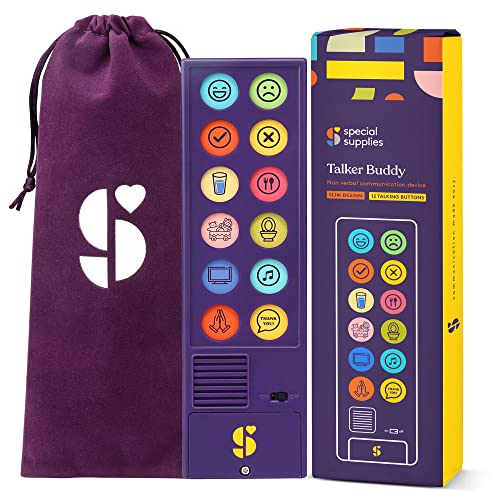
For individuals who are non-verbal due to conditions like autism or stroke, the Special Supplies AAC Communication Device, Talker Buddy, offers a practical solution. This user-friendly device features a soft touch button layout, making it easy for you to communicate quickly. With preprogrammed vocabulary, including common phrases and sentences, it’s perfect for a variety of situations. Lightweight and portable, Talker Buddy comes with a stylish travel bag, allowing you to take it anywhere—home, school, or therapy sessions. Whether you’re a caregiver or a professional, this device is essential for enhancing communication and independence in daily life.
Best For: Individuals who are non-verbal due to autism, stroke, or other special needs requiring effective communication tools.
Pros:
- User-friendly design with a soft touch button layout for quick and intuitive communication.
- Preprogrammed vocabulary covering common phrases and sentences for diverse communication needs.
- Lightweight and portable with a stylish travel bag, making it convenient for use in various settings.
Cons:
- Limited vocabulary may not cover all specific communication needs for every individual.
- Users may require initial guidance or support to fully utilize the device.
- Battery life may be a concern for extended use without access to charging options.
Joyreal AAC Device for Autism

Designed specifically for non-verbal individuals, the Joyreal AAC Device for Autism serves as an invaluable tool for those who struggle to communicate their needs. This communication tablet features 37 easy-to-understand talking buttons, making it perfect for children with autism and adults with speech difficulties. With a male/female voice switch and 8 programmable buttons, you can personalize voice recordings to fit your unique communication style. Lightweight and portable, the device operates on 3 AAA batteries and offers adjustable volume for various settings. By facilitating effective communication, it helps reduce anxiety and build confidence, allowing you to express your needs and feelings more easily.
Best For: Individuals who are non-verbal, including children with autism, stroke patients, and those with speech difficulties.
Pros:
- Easy-to-understand talking buttons that cater to diverse communication needs.
- Lightweight and portable design, making it convenient for travel and everyday use.
- Programmable buttons allow for personalized voice recordings, enhancing user experience.
Cons:
- Operates on AAA batteries, which may require frequent replacements.
- Limited number of programmable buttons may not accommodate all individual needs.
- May require initial setup and instruction for effective use, which could be challenging for some users.
TalkingTiles AAC Device for Autism & Speech Therapy

Offering a robust solution for nonverbal individuals, TalkingTiles stands out as an ideal assistive communication device for adults with autism and speech challenges. This AAC device simplifies communication, allowing you to connect and express yourself effectively. With full customization options, you can create personalized pages using images and voice recordings that reflect your daily routines. The device supports swipe gestures to enhance fine motor skills, and you can organize communication with unlimited pages. Designed with input from caregivers and specialists, TalkingTiles is user-friendly, cost-effective, and guarantees reliable communication at home, school, or on the go.
Best For: Individuals with autism and speech challenges seeking a customizable and effective communication tool.
Pros:
- Full customization with images and voice recordings allows personalization for individual needs.
- Encourages fine motor skills development through swipe gestures.
- Cost-effective alternative to expensive speech therapy sessions, making communication accessible.
Cons:
- May require initial setup time to create personalized content.
- Dependence on battery life for extended use, which may require charging during the day.
- Larger device size may not be as portable as smaller AAC options.
AAC Device for Autism & Speech Therapy

The AAC Device for Autism & Speech Therapy excels as a communication tool for non-verbal individuals, including both children and adults facing speech challenges. With 14 pre-installed talking buttons featuring clear images and colors, you can easily express your needs, like saying “I’m thirsty” or “It’s too loud.” Plus, the two programmable buttons let you record personal messages in your own voice, making communication even more meaningful. Its small, lightweight design guarantees you can take it anywhere, enhancing your independence in various settings. This device serves as a great alternative to traditional communication cards and boards, empowering your self-expression.
Best For: Individuals with autism, non-verbal children, stroke patients, and anyone experiencing speech difficulties.
Pros:
- User-friendly: 14 pre-installed buttons with clear images make it easy to communicate basic needs.
- Customizable: Two programmable buttons allow users to record personal messages for a more tailored communication experience.
- Portable design: Small and lightweight, making it convenient to carry and use in various environments.
Cons:
- Limited button options: Only 14 pre-installed buttons may not cover all communication needs for some users.
- Battery reliance: The device requires batteries, which may need to be replaced regularly.
- Learning curve: Some users may require time and assistance to become familiar with the device’s functions.
AAC Device for Autism with Grip Handle – Non-Verbal Communication Tool

For non-verbal children with autism, the AAC Device with Grip Handle stands out as an invaluable tool for communication. This device features 40 picture-color coded buttons, simplifying daily interaction and reducing frustration. With dual voice modes, it creates relatable connections, while 8 customizable buttons allow for personal commands. The exclusive grip handle aids those with fine motor challenges, making it easier to use. Its adjustable volume and lightweight design guarantee portability, perfect for various environments. By promoting active language response, this device boosts confidence and enhances connections with loved ones, making it a trusted choice for speech therapists and families alike.
Best For: Non-verbal children with autism, stroke survivors in rehabilitation, and individuals with congenital speech difficulties seeking an effective communication tool.
Pros:
- User-friendly design with 40 picture-color coded buttons that simplify daily communication and reduce frustration.
- Customizable features including dual voice modes and 8 personalized buttons enhance user relatability and engagement.
- Portability with a lightweight design and adjustable volume, making it suitable for various environments and on-the-go therapy.
Cons:
- Requires 3 AAA batteries, which are not included, adding an extra cost for users.
- Limited to pre-installed buttons for daily needs, which may not cover all individual communication requirements.
- Potential learning curve for users unfamiliar with technology or those with severe fine motor challenges.
4 Pack Portable AAC Communication Devices for Autism Individuals
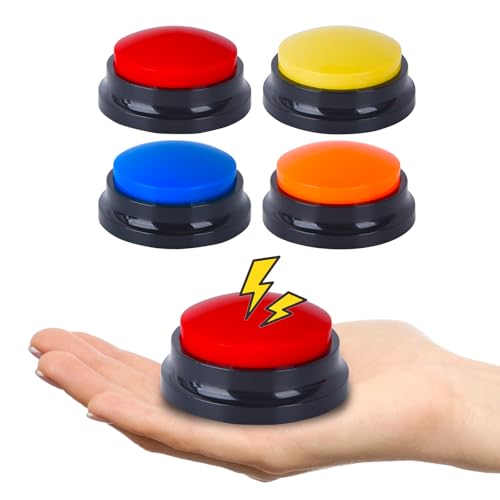
Designed specifically for individuals with autism and nonverbal communication challenges, the 4 Pack Portable AAC Communication Devices empower users to express themselves effectively. Each device features customizable voice recording buttons, allowing you to record messages up to 30 seconds long. The built-in speakers guarantee clear audio output, making your communication smooth and understandable. Their compact and lightweight design makes it easy to carry them anywhere, whether at school, home, or in therapy sessions. Plus, these devices can even be used for training pets. With these tools, you can enhance your independence and connect with the world around you.
Best For: Individuals with autism, nonverbal communication challenges, and language disorders seeking effective communication tools.
Pros:
- Customizable Voice Recording: Each button allows users to record personalized messages up to 30 seconds.
- Clear Audio Output: Built-in speakers ensure that communication is understandable and effective.
- Portable and Lightweight Design: Easy to carry, making it suitable for various environments such as schools, homes, and therapy sessions.
Cons:
- Requires Batteries: Each button needs 2 AAA batteries, which are not included with the device.
- Limited Recording Time: The maximum recording length of 30 seconds may not be sufficient for more complex messages.
- Potential Learning Curve: Some users may need time to familiarize themselves with the device and its functionality.
Joyreal AAC Device for Autism and Speech Therapy

Non-verbal individuals and those with speech challenges, such as autism or aphasia, will find the Joyreal AAC Device a game-changer in communication. This device features 23 easy-to-understand talking buttons and pre-installed picture instructions, catering to both kids and adults. You can switch between male and female voices for a personalized audio experience, while six programmable buttons let you record your own messages. With adjustable volume settings, it suits any environment. By enhancing your ability to express needs and feelings, the Joyreal device fosters confidence and reduces anxiety, bridging the gap between you and your loved ones effectively.
Best For: Non-verbal individuals, children and adults with autism, stroke patients, and those experiencing speech difficulties such as apraxia or aphasia.
Pros:
- Features 23 talking buttons with easy-to-understand instructions, enhancing communication.
- Customizable audio experience with male/female voice options and programmable message buttons.
- Adjustable volume settings make it suitable for various environments, promoting effective use.
Cons:
- Operates on AAA batteries, which may require frequent replacements.
- Limited to 23 pre-installed messages, which might not cover all individual needs.
- May require assistance for initial setup and programming for some users.
EazyHold Aqua Silicone Adaptive Aid (2-Pack)

The EazyHold Aqua Silicone Adaptive Aid (2-Pack) stands out as an ideal choice for adults with limited hand strength or dexterity, as its universal cuff design accommodates larger hands and a variety of objects. Made from soft, flexible silicone, it grips securely without being tight, allowing you to feel the weight and texture of items. Whether you’re using mops, gardening tools, or cooking utensils, this adaptive aid enhances your daily living. Plus, it’s easy to clean and durable enough for repeated use. With multiple sizes available, you’re sure to find the perfect fit for your needs.
Best For: Adults with limited hand strength or dexterity seeking assistance with daily living tasks.
Pros:
- Provides a secure yet gentle grip, enhancing the ability to use various tools and objects.
- Made from durable, easy-to-clean silicone, ensuring longevity and hygiene.
- Available in multiple sizes to accommodate different users, from infants to seniors.
Cons:
- May not fit smaller hands or objects as effectively.
- Some users may find the silicone material less comfortable for extended use.
- Limited color options available for personal preference.
Special Supplies AAC Communication Device for Speech Therapy

For individuals seeking effective communication aids, the Special Supplies AAC Communication Device stands out as an excellent choice. Its user-friendly design features soft touch buttons, making it easy for you to communicate quickly. This device is perfect for non-verbal children and adults, including those with autism or recovering from strokes. With preprogrammed commands and installed vocabulary, you’ll find essential phrases and sentences ready to go. Plus, its lightweight, portable design paired with a stylish travel bag guarantees you can take it anywhere—whether at home, school, or during travel. Enhance your independence with this reliable communication tool.
Best For: Individuals seeking effective communication aids, including non-verbal children and adults, individuals with autism, and stroke survivors.
Pros:
- User-friendly design with soft touch buttons for quick communication.
- Preprogrammed commands and installed vocabulary for essential phrases and sentences.
- Lightweight and portable, making it convenient for use at home, school, or while traveling.
Cons:
- May require initial familiarization for some users despite its user-friendly design.
- Limited to preprogrammed vocabulary, which may not cover all specific communication needs.
- Battery life may vary, requiring regular monitoring and charging.
Factors to Consider When Choosing Assistive Communication Devices for Disabled Adults
When you’re choosing an assistive communication device, think about your specific communication needs first. Consider factors like how portable the device is, its weight, and if it can be customized to fit your preferences. Additionally, make sure it’s easy to use and supports the languages you need.
User’s Communication Needs
Choosing the right assistive communication device hinges on understanding your specific communication needs. Start by evaluating how you express your basic wants, emotions, and needs, which helps identify necessary device features. Consider various communication modes, like pre-programmed phrases or customizable recordings, to match your preferences and capabilities. Ease of use is vital; make certain the device suits your motor skills and cognitive abilities for effective communication. If you operate in a multilingual environment, bilingual support can greatly enhance your interactions. Finally, think about the device’s portability. A lightweight and travel-friendly design is essential if you need to communicate across different settings, such as home, school, or therapy sessions, making sure you can stay connected wherever you go.
Device Portability and Weight
Portability and weight are two critical factors to evaluate in assistive communication devices, as they directly impact how easily you can carry and use your device in different settings. Lightweight designs enhance transportability, allowing you to communicate effectively at home, school, or in public places. Many devices come with convenient carrying cases or travel bags, making them perfect for your on-the-go lifestyle. Consider how the weight affects your comfort; lighter devices are easier to handle for extended periods, especially if you have limited strength or dexterity. Compact designs not only improve portability but also guarantee that your device can be easily stored and accessed without taking up much space. Look for ergonomic features like grips to enhance usability during transportation and use.
Customization and Personalization Options
After guaranteeing that an assistive communication device is portable and lightweight, the next step is to explore customization and personalization options. These features let you record personalized messages, allowing you to communicate in your own voice and reflect your unique needs. Many devices include programmable buttons tailored to specific phrases, commands, or images relevant to your daily activities, enhancing usability. Incorporating user-specific vocabulary guarantees the device adapts to your lifestyle, improving interaction with caregivers and peers. Full customization capabilities support language development by enabling you to create communication pages aligned with your routines and interests. Additionally, some devices come with extensive libraries of pre-configured images and phrases, which you can further personalize, making navigation easier.
Ease of Use
When evaluating assistive communication devices, ease of use should be a top priority, as a user-friendly design guarantees quick and effective communication. Look for devices with soft touch buttons or intuitive layouts, which can greatly enhance accessibility for users with fine motor challenges. This approach minimizes frustration and encourages smoother interactions. Preprogrammed vocabulary and commands can also save time, allowing you to operate the device effectively without a steep learning curve. Additionally, customization features, like programmable buttons for personalized messages, help tailor the device to your specific needs. Finally, consider portability; lightweight and compact designs make it easier to communicate in various settings, ensuring you can connect whenever and wherever you need to.
Language Support Features
How can effective communication be achieved in diverse environments? Language support features in assistive communication devices play a crucial role. Devices with dual-language functionality let you switch seamlessly between languages, making them perfect for multicultural families or settings. Customizable voice options help enhance relatability, allowing you to choose voices that feel comfortable and personal, whether male or female. Additionally, pre-programmed vocabulary in various languages enables quick communication of basic needs in your preferred language. Having access to multiple languages greatly boosts your confidence and reduces barriers, making social interactions and therapeutic settings more accessible. When choosing a device, consider these features to guarantee effective communication across diverse environments.
Battery Life and Operation
Effective communication relies not only on language support features but also on the performance of the devices themselves. When choosing assistive communication devices, consider battery life and operation. Many devices use standard batteries, usually 2 to 3 AAA, which can affect portability. Look for options with adjustable volume settings to guarantee clarity, especially in noisy environments. Some models boast longer battery life due to energy-efficient designs, reducing the need for frequent changes. You’ll also want to check if the device has a rechargeable battery option, making your life easier. Finally, many devices indicate remaining battery life clearly, helping you plan for recharging or replacements and avoiding unexpected communication interruptions.
Cost and Accessibility
Choosing assistive communication devices involves careful consideration of both cost and accessibility, as these factors greatly impact your ability to communicate effectively. Costs can vary greatly, with options ranging from under $100 to thousands of dollars. Insurance and government programs might cover some expenses, but maneuvering the approval process can be challenging. Fortunately, non-profit organizations and grants can offer financial assistance, making communication tools more affordable. Low-cost alternatives, like smartphone apps or basic AAC devices, also improve access without breaking the bank. Additionally, local community resources, such as rental programs or lending libraries, allow you to try devices before committing to a purchase, enhancing your overall experience and ensuring you find the right fit for your needs.