Choosing fall prevention products for dementia patients is about more than stopping a fall. The right setup can reduce nighttime risk, wandering, and caregiver stress while preserving dignity.
Below, we focus on practical options that alert caregivers early, cushion impact, and support safer movement in the bedroom, chair, and wheelchair.
Best 10 Fall Prevention Products for Dementia Patients Picks for 2026
Best Bedside Floor Protection

- 70" x 36" coverage for bedside safety
- Impact-absorbing foam with non-slip backing
- Beveled edges help reduce trip hazards
Best For: Dementia care rooms and senior bedrooms where bedside falls are the main concern.
Best for Fast Room-Exit Alerts
PILSAMAS Bed Alarm with Sensor ID Display

- Infrared motion sensing helps cut down on false alarms.
- Pager shows the triggered sensor ID for faster response.
- 1000 ft range, no monthly fees, and privacy-friendly monitoring.
Best For: Caregivers who need quick, room-specific alerts without cameras or subscriptions.
Best for Early Bed-Exit Alerts
CallToU Bed Alarm for Dementia Wandering

- Early floor-sensor detection before a full stand
- Silent, vibration-only, and audible alert modes
- Portable receiver with flexible setup and battery power
Best For: Caregivers monitoring dementia wandering and nighttime bed exits.
Best Chair-Exit Alert
Smart Caregiver Chair Exit Monitor

- Alerts caregivers when the user stands up from a chair
- Easy placement and simple reset-button operation
- Wipe-clean pad with low-battery and pad-lost alerts
Best For: Caregivers monitoring dementia patients who are likely to stand up from a chair unexpectedly.
Best for Wheelchair Stability
NEPPT Wheelchair Seatbelt Restraints

- Quick-release buckle for fast use
- Adjustable strap fits different chairs
- Helps reduce sliding in wheelchairs
Best For: Dementia patients or seniors who need a simple wheelchair safety strap to help prevent slipping.
Best for Wireless Bed Monitoring
Smart Caregiver Bed Exit Alarm

- Wireless pager with sound and vibration alerts
- Large bed pad senses when the user starts to get up
- Expandable with up to six compatible sensors
Best For: Caregivers needing quick wireless alerts for nighttime bed exits and wandering risk.
Best for Bed-Exit Alerts
Upgraded Bed Sensor Alarm for Dementia
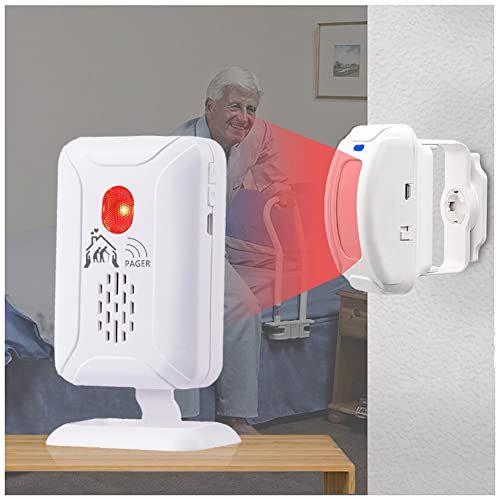
- Wireless motion sensor works under the bed or at the door
- Caregiver pager receives alerts without alarming the patient
- 5 volume levels and LED/sound reminders for flexible use
Best For: Caregivers monitoring dementia patients who may get up at night or leave the room.
Best for Early Warning
Lunderg Wireless Early Alert Bed Alarm

- Wireless pager alerts before bed exit
- No in-room alarm to startle loved ones
- Easy setup with no Wi-Fi or app
Best For: Caregivers seeking a calmer overnight bed-exit alert for dementia patients.
Best Wireless Early-Alert
Lunderg Wireless Bed & Chair Alarm

- Wireless pager alerts caregivers before the user gets up
- Includes both bed and chair sensor pads for broader coverage
- No Wi-Fi or app required; simple setup and adjustable volume
Best For: Caregivers who want a discreet, early-warning fall alert system for dementia care.
Best Bedside Floor Protection – NYOrtho Bedside Fall Mat
If you’re comparing fall prevention products for dementia patients, a bedside mat like this is a practical way to soften accidental drops and improve footing when getting in and out of bed. The NYOrtho mat focuses on floor-level protection with a non-slip surface, impact-absorbing foam, and enough coverage to help reduce injury risk in high-fall-risk rooms.
Best For: Seniors, adults, and dementia care setups where the main goal is cushioning bedside falls and improving safer floor access.
Pros:
- Large 70″ x 36″ footprint provides generous bedside coverage.
- High-density foam helps absorb impact from slips or low falls.
- Non-skid backing and textured surface help the mat stay in place on common flooring.
- Beveled edges make it easier to roll over with wheelchairs or mobility aids.
Cons:
- Designed for floor protection, not for preventing a fall from happening.
- May need up to 24 hours to fully flatten after unrolling.
As part of fall prevention products for dementia patients, this mat is strongest as a passive safety layer rather than a medical alarm or restraint. It’s a solid pick when you want simple bedside cushioning, stable footing, and a low-maintenance way to reduce the severity of nighttime falls.
Best for Fast Room-Exit Alerts – PILSAMAS Bed Alarm with Sensor ID Display
For families comparing fall prevention products for dementia patients, this PILSAMAS bed alarm stands out for its motion-based, non-contact alerts and easy-to-read caregiver pager. It’s designed to help you spot bed exits or room movement quickly, without the false alarms that can happen with pressure pads.
Best For: Caregivers who want a privacy-friendly, no-subscription monitoring system that makes it easier to identify which sensor was triggered.
Pros:
- Infrared motion sensing helps reduce false alarms from shifting, incontinence, or bed movement.
- Pager display shows the exact sensor ID, so you know where to respond faster.
- 1000 ft wireless range and multiple alert modes support whole-home coverage.
- No monthly fees and no audio/video recording for added privacy.
Cons:
- Motion detection can still be affected by placement and nearby pets.
- Best performance depends on correct sensor height and setup.
- Not a substitute for direct supervision or a full clinical fall-monitoring plan.
As a practical add-on in fall prevention products for dementia patients, this system is strongest when you need quick awareness of movement without a camera or subscription. It’s especially useful for homes where fast response time and simple room identification matter most.
Best for Chair Monitoring – Basic Pull String Alarm for Fall Prevention
If you need a simple, low-cost alert tool, this pull-string alarm is a practical option among fall prevention products for dementia patients. It is designed for chair use, where movement pulls the magnet free and triggers a continuous alarm to notify a caregiver right away.
Best For: Caregivers who want a basic chair-mounted wandering and movement alarm for supervised seating areas.
Pros:
- Simple pull-string design provides an immediate audible alert when the resident moves too far.
- Includes volume adjustment, low-battery light, and a secure chair clip for placement.
- Useful for monitoring chair restlessness and helping reduce unassisted standing.
Cons:
- Requires a 9-volt battery, which is not included.
- Not recommended for bed use, so it is limited to chair-based monitoring.
Overall, this is a straightforward alert device rather than a full safety system, but it can still be helpful in the right setting. For caregivers comparing fall prevention products for dementia patients, it makes the most sense when the main need is a reliable chair alarm for supervision and anti-wandering support.
Best for Early Bed-Exit Alerts – CallToU Bed Alarm for Dementia Wandering
If you’re comparing fall prevention products for dementia patients, this CallToU bed alarm is designed to alert caregivers before a loved one fully gets up from bed. The floor sensor detects movement as feet touch down, so you get a head start on bedtime wandering, with adjustable sound, vibration, and silent modes to fit day or night care.
Best For: Caregivers who want a portable bed-exit alert that can help catch nighttime standing attempts early without relying on a bed pad.
Pros:
- Detects early movement when feet touch the floor, before a full stand.
- Adjustable volume, 18 ringtones, plus silent or vibration-only modes.
- Portable receiver and replaceable AAA batteries make setup flexible.
- 360° sensor rotation helps reduce nuisance alerts from minor movement.
Cons:
- Works as an alert system, so it doesn’t physically prevent a fall.
- Requires battery management for the sensor and charging for the receiver.
- May need tuning to match room layout and caregiver hearing needs.
For families shopping for fall prevention products for dementia patients, this is a practical monitoring-first option: it’s built to buy time, reduce false alarms, and give caregivers a better chance to intervene before a risky bed exit turns into a fall.
Best Chair-Exit Alert – Smart Caregiver Chair Exit Monitor
This chair-exit alarm is a practical choice in fall prevention products for dementia patients when the main risk is someone standing up unassisted. The weight-sensing pad alerts a caregiver as soon as the user rises from the chair, helping add a quick response layer in living rooms, bedrooms, or care areas.
Best For: Caregivers who want an easy-to-use chair alarm with a simple setup and reliable seat-exit alerts.
Pros:
- Weight-sensing pad alerts the caregiver when the patient gets up
- Simple setup: place the pad on the chair before use
- Helpful extras include reset button, low-battery indicator, and pad-lost alert
- Wipe-clean vinyl pad is incontinence resistant and covered by a 1-year warranty
Cons:
- Requires a 9-volt battery, which is not included
- Designed for chair exits only, not bed or door monitoring
- AC power adapter is sold separately
For fall prevention products for dementia patients, this monitor makes sense if wandering or impulsive standing from a chair is the main concern. It is a focused, no-frills alert system that can help caregivers react faster without adding complexity.
Best for Wheelchair Stability – NEPPT Wheelchair Seatbelt Restraints
If you’re comparing fall prevention products for dementia patients, this wheelchair seatbelt restraint is a practical option for reducing sliding and improving seated stability. It’s designed for simple installation, adjustable fit, and everyday use in homes or care settings where extra support is needed.
Best For: Dementia patients or elderly wheelchair users who need a straightforward safety strap to help prevent slipping and accidental falls.
Pros:
- Tool-free installation with a quick-release buckle
- Adjustable length helps fit different body types and chair sizes
- Durable materials suited for repeated use in care environments
- Can be used on wheelchairs and other chairs
Cons:
- Fit may vary, so measuring before buying is important
- Provides restraint support rather than full fall protection
- May feel too basic for users needing more structured positioning
For buyers focused on fall prevention products for dementia patients, this is a simple, no-frills safety aid that prioritizes stability and ease of use over advanced positioning features. It’s a good fit when the main concern is helping someone stay securely seated in a wheelchair or chair.
Best for Wireless Bed Monitoring – Smart Caregiver Bed Exit Alarm
If you’re comparing fall prevention products for dementia patients, this bed exit alarm is a practical choice for overnight monitoring and early notice when someone tries to get out of bed. It’s designed to alert caregivers quickly without requiring constant bedside supervision, which can be especially helpful for home care routines.
Best For: Caregivers who need a wireless bed-exit alert with pager notifications for nighttime fall prevention and wandering risk.
Pros:
- Wireless pager alerts with both sound and vibration
- Full-coverage bed pad helps catch movement as the user begins to rise
- Expandable system can monitor multiple zones with compatible sensors
- U.S.-based company with customer support
Cons:
- Works best as part of a broader care plan, not a complete safety solution
- Requires proper pad placement to reduce missed or false alerts
- Not ideal if you need a fully hands-free, camera-based system
For caregivers prioritizing simple nighttime alerts, this model hits a useful balance of responsiveness and ease of use. Among fall prevention products for dementia patients, it stands out for bedside monitoring that can help reduce delayed responses when wandering or unassisted standing is a concern.
Best for Bed-Exit Alerts – Upgraded Bed Sensor Alarm for Dementia
For families comparing fall prevention products for dementia patients, this wireless bed and motion alarm is designed to catch bed exits or room departures before a fall happens. The floor-mounted sensor can be placed under the bed or near a doorway, sending alerts to a caregiver pager instead of sounding in the patient’s room.
Best For: Caregivers who want a simple wireless alert system for monitoring nighttime bed exits and door movement without startling the person being monitored.
Pros:
- Motion sensor can be placed under the bed or at the door for flexible monitoring
- Alarm alerts the caregiver pager, helping avoid noise in the patient’s room
- 5 volume levels plus LED/sound reminders make it easier to tailor alerts
- Dual power options and included batteries make setup more convenient
Cons:
- Requires careful sensor placement and range testing for reliable performance
- Battery and wireless systems need occasional maintenance
This is a practical pick if you want a discreet monitoring setup that focuses on early warning rather than physical restraint. Among fall prevention products for dementia patients, it stands out for its caregiver-facing alerts and flexible sensor placement.
Best for Early Warning – Lunderg Wireless Early Alert Bed Alarm
If you’re comparing fall prevention products for dementia patients, this Lunderg bed alarm stands out for giving caregivers a wireless heads-up before a loved one gets out of bed. It’s designed to reduce nighttime wandering risk without using a loud in-room alarm that can startle or agitate the person sleeping.
Best For: Caregivers who want an early-alert, low-disturbance bed alarm for dementia care and overnight fall prevention.
Pros:
- Wireless pager alerts you before the person fully leaves the bed
- No loud bedside alarm, which can help preserve dignity and reduce fear
- Simple setup with no Wi-Fi, app, or tools required
- Portable pager offers adjustable volume, vibration, and up to 400 ft. range
Cons:
- Only covers bed-exit monitoring, not broader room-level fall prevention
- Works best when positioned correctly on the bed, so placement matters
- May be more specialized than basic motion alarms
This is a strong pick if you want fall prevention products for dementia patients that focus on early notification instead of startling alarms. It’s especially useful for families who need a practical overnight safeguard and prefer a system that feels calmer and more respectful for the person being monitored.
Best Wireless Early-Alert – Lunderg Wireless Bed & Chair Alarm
If you’re comparing fall prevention products for dementia patients, the Lunderg Wireless Early Alert Bed & Chair Alarm Set is built to notify caregivers before a loved one gets up, without sounding a loud alarm in the room. The wireless pager-based setup keeps the response discreet while covering both bed and chair use.
Best For: Dementia care at home or in facilities where caregivers need an early warning system without an in-room alarm that may cause agitation or startle the person being monitored.
Pros:
- Wireless pager alerts help caregivers respond before the person is fully out of bed or standing up.
- Includes both bed and chair sensors for broader fall-risk coverage.
- No Wi-Fi, app, or tools required, making setup straightforward.
- Adjustable pager volume plus vibration mode adds flexibility for overnight use.
Cons:
- Requires the caregiver to carry the pager for it to be effective.
- Sensor pad placement needs to be correct for the earliest alert timing.
- Not a substitute for direct supervision in high-risk situations.
As fall prevention products for dementia patients go, this set stands out for favoring caregiver awareness and dignity over noisy bedside alarms. It’s a practical option when you want early warning, simple setup, and both bed and chair monitoring in one system.
How We Picked the Best Fall Prevention Products for Dementia Patients
We prioritized Fall Prevention Products for Dementia Patients that are easy to use, caregiver-focused, and suited to real-world home care. Key factors included alert timing, ease of setup, portability, alarm type, and whether the product supports safer supervision without adding unnecessary confusion or noise.
Quick Comparison
In this category, the main choices fall into a few groups: bed exit alarms, chair exit alarms, bedside fall mats, wheelchair restraints, and wandering alerts. Bed and chair sensors are best for early notice, while mats help reduce injury if a fall happens. Wheelchair restraints and anti-wandering alarms are more specialized and should match the user’s mobility, supervision level, and care plan.
Key Buying Factors for Fall Prevention Products for Dementia Patients
Alert Style
Look for systems that notify the caregiver, not the person at risk, whenever possible. Silent or vibration alerts can help avoid startling someone who is confused or easily agitated.
Early Detection
For dementia care, earlier notification is usually better than a loud alarm after someone has already stood up or fallen. Weight-sensing pads and motion-triggered systems can give caregivers more time to respond.
Placement and Fit
Check whether the product is designed for beds, chairs, wheelchairs, or floor use. A good match reduces false alarms and helps the device work consistently in the intended location.
Caregiver Workflow
Choose products that are simple to monitor, easy to reset, and comfortable to carry or hear throughout the home. If multiple caregivers are involved, paging range and battery needs matter more than flashy features.
Comfort and Safety
For restraint-based products, verify that they align with clinical guidance and local regulations. The safest option is one that supports supervision without creating pressure points, discomfort, or panic.
Who Should Buy Which Fall Prevention Products for Dementia Patients?
If the main concern is nighttime bed exits, choose a bed alarm or bedside mat. If the person spends time in a recliner or dining chair, a chair exit alarm is often the better fit. If wandering is the issue, a wearable or pager-based alert system may be more practical. For wheelchair users, a properly fitted restraint or safety harness may help, but only when appropriate for the care setting and supervision plan.
In short, the best choice depends on where the risk happens most often and how quickly a caregiver needs to know. The strongest Fall Prevention Products for Dementia Patients are the ones that are simple, reliable, and matched to the user’s daily routine.