When memory loss or confusion makes everyday outings riskier, the right identification can make a fast, stressful situation easier for everyone involved.
This roundup of medical ID products for dementia patients focuses on practical ways to share emergency details, contact information, and care preferences at a glance.
Best 6 Medical ID Products for Dementia Patients Picks for 2026
Best for Fast Identification
Dementia Medical ID Wallet Card

- Photo and emergency contacts for quick response
- Standard wallet size for easy everyday carry
- Biodegradable plastic, made in the USA
Best For: People with dementia who need a discreet wallet-based ID card for emergencies.
Best Custom Engraving
Personalized Alzheimers ID Bracelet

- Custom engraving for name and emergency details
- Water-proof sports wristband style
- Unisex design for women and men
Best For: People who want a personalized, everyday medical ID bracelet with clear emergency identification.
Best for Detailed Care Profiles
MediPal Dementia/Alzheimer’s Alert Seatbelt Tag

- High-visibility seatbelt tag with reflective trim
- Detailed fields for behaviors, triggers, meds, and contacts
- Printable PDF version for easy updates
Best For: Caregivers who want a visible, customizable dementia ID with detailed emergency instructions.
Best for Simple Emergency ID
Medical Dementia ID Card & Lanyard

- Writable emergency card for personal details
- Breakaway lanyard adds everyday safety
- Clear holder keeps ID visible and protected
Best For: Caregivers who need a simple wearable ID option for a person with dementia.
Best for Instant Location Sharing

- Scan can send a location alert email to family
- No app needed for QR or NFC access
- Lifetime free profile updates, no subscription
Best For: Caregivers who want a dementia medical ID bracelet with quick scan access and real-time location alerts.
Best for Simple Emergency Contact Info
2pcs Dementia Medical Card Set
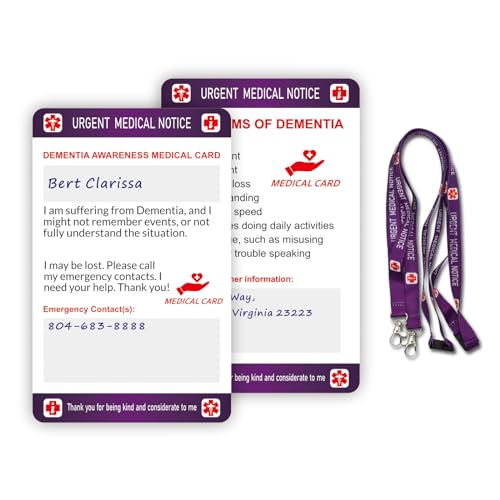
- Writable panel for patient info and emergency contacts
- Includes two cards, sleeves, and lanyards
- Credit-card size for easy wallet or badge use
Best For: Caregivers who want a simple, wearable emergency ID card set for dementia patients.
Best for Fast Identification – Dementia Medical ID Wallet Card
If you’re comparing medical ID products for dementia patients, this wallet card is a simple, low-cost way to keep identification and emergency details on hand. The photo-based design and contact fields make it easy for first responders, carers, or the public to act quickly when someone is confused or cannot speak for themselves.
Best For: People with dementia who need a compact, everyday ID card that can be carried in a wallet and checked quickly in an emergency.
Pros:
- Photo plus two emergency contact spaces help speed up identification and outreach.
- Credit-card size fits neatly in a wallet for everyday carry.
- Made from biodegradable plastic and printed in the USA.
Cons:
- Not as visible as a bracelet or necklace if the wallet is not accessible.
- Requires the user or carer to keep the card up to date.
As a straightforward option among medical ID products for dementia patients, this card stands out for portability and fast-access information rather than flashy features. It’s a practical backup for families who want a discreet ID solution that can live in a wallet every day.
Best Custom Engraving – Personalized Alzheimers ID Bracelet
For shoppers comparing medical ID products for dementia patients, this bracelet is a straightforward way to keep essential identification visible every day. It combines a custom name plate with medical ICE engraving, making it easier for first responders or good Samaritans to identify the wearer quickly.
Best For: People who want a personalized, wearable medical ID bracelet with simple day-to-day comfort and clear emergency identification.
Pros:
- Custom engraving helps include the wearer’s name and key medical details.
- Water-proof, sports-style wristband design supports daily use.
- Unisex styling works for women and men.
Cons:
- Bracelet format may not suit users who prefer a necklace or wallet card.
- Personalization means you need to double-check engraving details before ordering.
As a practical pick among medical ID products for dementia patients, this bracelet focuses on visibility, customization, and wearability rather than extra features. It is a sensible option if you want a simple ID solution that can be worn consistently.
Best for Detailed Care Profiles – MediPal Dementia/Alzheimer’s Alert Seatbelt Tag
If you’re comparing medical ID products for dementia patients, this seatbelt tag stands out for how much useful information it can carry in a format first responders can find quickly. It combines high-visibility placement with a customizable health profile so caregivers can note behaviors, triggers, allergies, contacts, and the best way to respond.
Best For: Caregivers who want a highly visible, customizable dementia ID with room for detailed emergency guidance.
Pros:
- High-visibility red emergency insignia and reflective trim help it stand out in low light.
- Includes space for behaviors, triggers, best responses, allergies, diet, meds, and emergency contacts.
- Works as a printable PDF form, making it easier to update information as needs change.
- Slides on standard seatbelts and can also attach to bags, walkers, and wheelchair bars.
Cons:
- Seatbelt format may not suit shoppers who want a simple wallet card or bracelet.
- Most useful when caregivers take time to fill out the profile thoroughly.
For families who want more than a basic alert tag, this is one of the more practical medical ID products for dementia patients because it balances visibility with detailed, caregiver-specific instructions.
Best for Simple Emergency ID – Medical Dementia ID Card & Lanyard
If you want a straightforward way to identify a loved one in an emergency, this option keeps the essentials visible and easy to update. It’s a practical pick among medical ID products for dementia patients because it combines a writable emergency card, a breakaway lanyard, and a clear holder in one simple setup.
Best For: Caregivers who want an easy-to-complete, low-fuss ID solution for everyday wear.
Pros:
- Writable PVC-style card lets you add personal and emergency contact details.
- Breakaway fabric lanyard adds an important safety feature for daily use.
- Clear double-sided holder helps keep information visible and protected.
- Waterproof card construction is helpful for routine wear.
Cons:
- Information must be written manually, so setup takes a little effort.
- Not a digital or programmable ID solution.
Overall, this is a simple, affordable style of identification that focuses on visibility and ease of use rather than advanced features. For shoppers comparing medical ID products for dementia patients, it makes sense when you want a clear, wearable emergency card without extra complexity.
Best for Instant Location Sharing – NFC & QR Medical ID Bracelet
If you want a practical, low-friction option among medical ID products for dementia patients, this NFC and QR wristband stands out for its scan-to-alert design. It gives helpers quick access to a digital profile while also sending a location email to preset contacts, which can be especially useful in wandering or emergency situations.
Best For: Caregivers and families who want a wearable medical ID with real-time location alerts, no app required access, and easy profile updates.
Pros:
- Scanned band can trigger an email with a location link to family contacts.
- Works with standard smartphone cameras for QR and NFC phones for quick access.
- Lifetime free profile updates with no subscription required.
- Waterproof silicone build is designed for daily, all-day wear.
Cons:
- Location alerts depend on the band being scanned by a helper.
- Uses a digital profile, so setup and maintenance still require online access.
For families comparing medical ID products for dementia patients, this bracelet is appealing because it combines visible ID, fast contact access, and a location alert feature in one wearable. It is a strong choice if your priority is getting a person home quickly without relying on an app or subscription.
Best for Simple Emergency Contact Info – 2pcs Dementia Medical Card Set
2pcs Dementia Medical Card with Writable Panel and Patterned Lanyard Emergency Contact Card
Check Price On AmazonFor shoppers comparing medical ID products for dementia patients, this simple card-and-lanyard set is a practical low-tech option for keeping emergency details close at hand. The credit-card-sized format is easy to carry, and the writable panel lets you add the patient’s key information without relying on electronics or batteries.
Best For: Caregivers and families who want a straightforward, budget-friendly emergency contact solution that can be worn or stored in a wallet.
Pros:
- Writable card makes it easy to add patient details and emergency contacts.
- Includes two cards, two sleeves, and two lanyards for flexible use.
- Standard credit-card size fits easily in a wallet or badge holder.
- Simple, visible design is useful for quick emergency identification.
Cons:
- Does not offer electronic tracking or medical alert features.
- Information must be written clearly and updated by hand.
- Best for basic identification, not detailed medical records.
As a no-frills option among medical ID products for dementia patients, this set works well when the priority is fast access to contact information in a familiar, easy-to-carry format.
How We Picked the Best Medical ID Products for Dementia Patients
We looked for clear identification, easy-to-read formatting, and options that can help first responders or good Samaritans act quickly. Priority went to products that balance visibility, durability, and simple setup for caregivers.
We also considered whether each item is suited to daily wear, carried backup use, or vehicle placement, since the best choice often depends on where the person is most likely to need help.
Quick Comparison
Cards are lightweight and low-cost, bracelets stay with the wearer, and seatbelt tags or lanyards can be useful when multiple locations need coverage. Smart ID options with NFC or QR features add another layer of contact access, especially when caregivers want more than static printed details.
Key Buying Factors for Medical ID Products for Dementia Patients
Readability and Layout
Choose large text, high contrast, and a clear hierarchy for essentials such as name, condition, emergency contact, and allergies. If the product includes writable fields, make sure there is enough space for information to stay legible.
Wearability and Retention
For Medical ID Products for Dementia Patients, the best item is often the one they will actually keep on. Wristbands and bracelets are harder to forget, while cards and lanyards can be easier to remove or misplace.
Durability and Comfort
Look for materials that can handle daily use, moisture, and rubbing without fading. Comfort matters too, since uncomfortable hardware may lead to nonuse or removal.
Information Depth
Some situations call for a simple emergency contact card, while others benefit from behavior notes, triggers, medication lists, and response instructions. More detail can help, but only if it remains quick to scan.
Privacy and Smart Features
QR and NFC-enabled products can store richer information without printing everything on the item itself. That can be useful when you want emergency access with less visible personal data.
Who Should Buy Which Medical ID Products for Dementia Patients?
Choose a bracelet or wristband if you want the most consistent everyday identification. Pick a card or lanyard if you need a low-profile backup for wallets, purses, or care kits. Seatbelt tags are a smart add-on for drivers and transport routines. Smart ID products are best for caregivers who want updateable contact access and broader emergency information.
In most households, the best plan is a layered one: one worn ID, one carried backup, and one visible option for vehicles or bags. That approach gives dementia patients and caregivers more chances to be recognized quickly when it matters most.