Keeping medication on schedule is one of the most important parts of caregiving, but it is also one of the easiest routines to miss. The right reminder device can reduce stress, improve adherence, and make daily care more predictable.
This roundup highlights practical options for different needs, including louder alerts, talking alarms, locked dispensers, and app-connected systems.
Best 10 Medication Reminder Devices for Caregivers Picks for 2026
Monthly Locked Medication Hub
Betife 2nd Gen Automatic Pill Dispenser for Elderly

- 28-slot locked carousel for monthly tracking
- Alarm and light reminders support dosing
- XL display and 6-button setup simplify use
Best For: Caregivers needing a lockable monthly dispenser with simple reminders
Talking Clock Reminder Aid
Digital Talking Medication Alarm Clock for Seniors

- Records personalized voice medication alarms
- Large display is easy to read
- Multiple daily reminders support routines
Best For: Caregivers needing a spoken reminder clock for daily doses
Repeating Missed-Dose Dispenser
Med-Q Electronic Pill Dispenser with Alarm

- Alarm gets louder and repeats until taken
- Flashing light shows the next compartment
- Easy-open tabs with braille improve access
Best For: Caregivers needing a loud dispenser that keeps prompting after missed doses
Monthly Organizer With Voice Alerts
MedCenter 31-Day Pill Organizer System

- 31-day layout organizes a full month
- Four compartments handle morning to night
- Talking alarm reinforces daily dose timing
Best For: Caregivers managing a structured 4-dose daily medication plan
Bluetooth Smart Monthly Dispenser
Betife 28-Day Smart Bluetooth Pill Box

- Bluetooth app setup with up to 6 daily alarms
- Sound, light, and phone alerts for dose timing
- Logs taken and missed doses in the app
Best For: Caregivers who want app-based medication tracking and secure monthly dispensing
Reusable Bottle Tracker
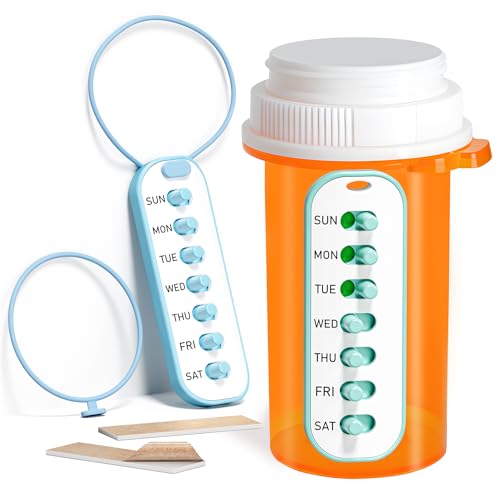
- Bottle-based tracker with sticker or lanyard style
- Reusable and easy to move between medications
- Simple slide-and-click dose confirmation
Best For: Families who want a compact reminder that travels between pill bottles
Triple-Alarm Senior Organizer
Med-Q Digital Pill Box with Alarms

- Flashing lights, beeps, and visual cues for reminders
- Repeats alarms every 30 minutes until taken
- Large lettering and easy-open compartments
Best For: Seniors or patients who need strong audible and visual prompting
Smart 28-Day Dispenser for Caregivers
MOBI WiFi Automatic Pill Organizer

- 28-day rotating tray with automatic dose dispensing
- WiFi app monitoring for caregiver oversight
- Sound, light, and lock features for safer routines
Best For: Caregivers who want remote monitoring and secure monthly medication organization
Talking Day Clock with Voice Alarms
ORKA Recordable Medication Reminder

- Record custom voice messages for reminders
- Up to 8 alarms with 30-minute repeat looping
- Large display with adjustable loud volume
Best For: Users who need spoken reminders and a highly legible bedside clock
Compact 8-Alarm Reminder

- Eight daily alarms for repeat medication times
- Pocket-sized and easy to carry
- Battery-powered with simple three-button setup
Best For: People who want a portable reminder-only device with minimal setup
Monthly Locked Medication Hub – Betife 2nd Gen Automatic Pill Dispenser for Elderly
For caregivers looking at medication reminder devices for caregivers, this automatic pill dispenser focuses on monthly organization and controlled access. It uses a 28-slot locked carousel, alarm and light reminders, and a simple 6-button setup so the routine stays predictable and easy to manage.
Best For: Caregivers who want a lockable monthly dispenser with clear reminders and simple setup.
Pros:
- 28-slot locked carousel supports monthly medication tracking.
- Alarm and light reminders help reinforce dose timing.
- Mix-proof design and key lock add extra protection.
- XL LCD screen and oversized controls make setup easier.
Cons:
- Designed around scheduled dispensing, not flexible as-needed dosing.
- Requires filling and managing the monthly carousel in advance.
This is a strong fit if you want a single device that combines dose security with straightforward reminders. The long-cycle gearbox and easy-read display make it especially practical for ongoing home medication routines.
Talking Clock Reminder Aid – Digital Talking Medication Alarm Clock for Seniors
Among medication reminder devices for caregivers, this talking alarm clock is built for users who need spoken prompts and a highly visible display. It supports personalized medication alarms, multiple daily reminders, and a design aimed at seniors, dementia patients, and people with hearing or vision challenges.
Best For: Caregivers who want a voice-enabled reminder clock for repeated daily medication alarms.
Pros:
- Record personalized voice alarms for medication doses.
- Extra-large digital display is easier to read at a glance.
- Multiple alarms help cover morning, afternoon, and evening meds.
- Loud, clear reminders suit hearing-impaired users.
Cons:
- It is a reminder clock, not a pill storage system.
- Best used alongside another organizer if you need dose sorting.
If your main goal is adherence prompts instead of dispensing, this is a practical and low-friction option. The talking feature and big display make it a sensible choice for simplifying routines without adding complexity.
Repeating Missed-Dose Dispenser – Med-Q Electronic Pill Dispenser with Alarm
If you are comparing medication reminder devices for caregivers, this electronic pill dispenser stands out for its escalating alarm and repeat alerts. It flashes the compartment due next, gets louder over five minutes, and repeats every 30 minutes until the pills are taken, making it built for users who may need extra prompting.
Best For: Caregivers who need a loud, repeating dispenser for seniors or people with memory loss.
Pros:
- Alarm grows louder over five minutes and repeats if missed.
- Red light shows which compartment to open next.
- Big letters, braille, and easy-open tabs support accessibility.
- 14 removable compartments cover a 7-day AM/PM schedule.
Cons:
- Weekly layout may be too small for some monthly routines.
- Requires battery monitoring over time.
This model is a solid option when missed doses are the bigger concern than long-term storage. Its repeating alert system and clear visual cue make it useful for users who need persistent follow-through.
Monthly Organizer With Voice Alerts – MedCenter 31-Day Pill Organizer System
For caregivers shopping medication reminder devices for caregivers, this 31-day organizer combines a full monthly pill system with a talking alarm clock. The four daily compartments and removable boxes make it easier to build a structured routine for complex schedules without relying on memory alone.
Best For: Caregivers managing a full month of medications with four daily dose times.
Pros:
- 31-day system supports long-range medication organization.
- Four labeled compartments cover morning, noon, evening, and night.
- Talking alarm helps reinforce dose timing.
- Large, high-contrast labels are easier for seniors and caregivers to use.
Cons:
- Bulkier than simple reminder-only devices.
- Better suited to structured daily regimens than occasional use.
This is a good choice when you want both organization and reminders in one system. It is especially practical for families helping manage long-term prescriptions or multiple daily medications.
Bluetooth Smart Monthly Dispenser – Betife 28-Day Smart Bluetooth Pill Box
If you want medication reminder devices for caregivers that combine app control with secure storage, the Betife Automatic Pill Dispenser is built for easy monthly scheduling. It pairs with Bluetooth, lets you set up to 6 daily alarms, and can send phone push notifications plus sound and light alerts when it’s time to take a dose.
Best For: Caregivers who want app-based medication tracking with secure, monthly pill management for a family member.
Pros:
- Bluetooth sync with the Pillcalendar app for setting alarms, medication names, and pill images
- On-device controls with LCD icons and physical buttons for manual adjustments
- Sound, light, and phone notifications help reinforce dose timing
- App logs doses taken or missed and shows weekly or monthly adherence stats
Cons:
- App-based setup may be more than some users want for simple reminder needs
- Monthly timer format may be unnecessary if you only need a basic daily tracker
- Fingerprint and lock features add complexity compared with a standard pill box
Overall, this model stands out if you want a connected dispenser that supports both the caregiver and the medication user. The combination of reminders, tracking, and secure access makes it a strong option for organized, monitored routines.
Reusable Bottle Tracker – Odaro Pill Reminder 2-Pack
For caregivers looking for simple medication reminder devices for caregivers without a full pill organizer, the Odaro Pill Reminder offers a low-profile way to mark doses on the bottle itself. It attaches with adhesive or a lanyard style setup, then lets you slide the marker after a dose with a clear clicking feel.
Best For: Families who want a reusable, bottle-based reminder that is easy to move between medications.
Pros:
- Works as either a lanyard or sticker-style reminder
- Reusable design can be switched between pill bottles
- Universal fit is intended for most pill bottle sizes
- Compact, lightweight, and easy to carry or store
Cons:
- Does not organize pills by day like a full dispenser
- Relies on manual slider updates after each dose
- Best for tracking, not for secure storage or alarms
This is a practical pick if your main goal is dose tracking rather than pill sorting or automated reminders. It keeps the setup simple and reusable, which can be helpful when managing several prescriptions over time.
Triple-Alarm Senior Organizer – Med-Q Digital Pill Box with Alarms
The Med-Q Digital Pill Box is a strong fit for caregivers who need medication reminder devices for caregivers with loud, visible alerts and clear compartment guidance. Its flashing lights, escalating beeps, and visual cues are designed to help users stay on schedule, while the lighted compartment layout reduces confusion about which dose to take.
Best For: Seniors or patients with memory challenges who need repeated reminders and easy-to-read medication guidance.
Pros:
- Triple reminders combine flashing lights, beeps, and visual cues
- Repeats alarms every 30 minutes until medication is taken
- Oversized lettering and easy-open compartments suit senior use
- Large compartments fit bigger pills and twice-daily routines
Cons:
- Only covers up to 14 days of medication or supplements
- Bulkier than a simple travel-sized pill organizer
- More specialized than a basic box if you only need one daily reminder
For households managing complex routines, this organizer offers more prompting than a standard pill box. It is especially useful when missed doses are a concern and the caregiver needs a system that keeps repeating until the medication is taken.
Smart 28-Day Dispenser for Caregivers – MOBI WiFi Automatic Pill Organizer
For caregivers looking for medication reminder devices for caregivers, this MOBI dispenser adds structure to daily routines with automatic dispensing, alerts, and remote app monitoring. It is built to organize a full 28-day schedule, help reduce missed or double doses, and keep medication access controlled with a lockable design.
Best For: Caregivers managing a month-long medication routine who want app-based monitoring, alerts, and secure access control.
Pros:
- Automatic rotating tray presents the correct dose at scheduled times.
- WiFi app control lets families monitor and manage schedules remotely.
- Sound and light alerts with adjustable volume help match the home environment.
- Key-lock design adds another layer of dose control and safety.
Cons:
- Requires setup through the touchscreen or MOBI app.
- Best suited to users who need a full 28-day organizer rather than a small portable device.
- Depends on power adapter, with battery backup as support during outages.
This is a strong fit when you want an organized, tech-forward dispenser that supports both independence and caregiver oversight. The UV-protecting lid and backup power add practical value for long-term use.
Talking Day Clock with Voice Alarms – ORKA Recordable Medication Reminder
This ORKA talking clock is a practical option in medication reminder devices for caregivers when the priority is clear, spoken reminders. It combines an extra-large display, custom voice recording, and up to 8 daily alarms to help support seniors who benefit from audible, easy-to-read prompts.
Best For: Seniors with memory, vision, or hearing challenges who need personalized voice reminders and a highly readable clock.
Pros:
- Record your own messages for medication or activity reminders.
- Up to 8 alarms and a 30-minute loop help reinforce important doses.
- Large digits and spelled-out day/time improve readability.
- Adjustable volume up to 90 decibels supports hard-of-hearing users.
Cons:
- Needs AC power to operate, so it is not a cordless bedside clock.
- Dementia-related guidance is helpful, but setup may still require caregiver assistance.
- More of a reminder clock than a pill storage solution.
For households that want spoken reminders instead of app-based tracking, this clock offers a straightforward and comforting setup. Its clear display and custom alarms make it especially useful for daily routine support.
Compact 8-Alarm Reminder – TabTime Portable Pill Timer
When you need a simple tool among medication reminder devices for caregivers, this TabTime pill reminder focuses on repeatable alarms without extra complexity. Its compact size, three-button setup, and battery-powered design make it easy to use at home or on the go.
Best For: Caregivers and users who want a portable, no-frills pill reminder with multiple daily alarms.
Pros:
- Eight independently set daily alarms support multiple medication times.
- Compact and pocket-sized for easy travel use.
- Three-button setup keeps programming straightforward.
- Battery-powered cordless design adds portability.
Cons:
- Does not store pills, so it is only a reminder tool.
- Single-compartment design offers no organization by dose.
- Lacks remote monitoring or app-based caregiver features.
This is the most minimal option of the three, but that can be exactly what some routines need. If the goal is simply dependable alarms in a small, easy-to-carry format, it gets the job done.
How We Picked These Medication Reminder Devices for Caregivers
We focused on features that matter in real caregiving situations: reminder reliability, ease of setup, alert volume and visibility, dosing capacity, lockout or tamper resistance, and whether the device fits the user’s level of independence. We also favored options that support different routines, from simple once-daily reminders to more structured multi-dose schedules.
Quick Comparison: Which Type Fits Your Situation?
If you need the simplest solution, a talking clock or basic pill alarm is usually enough. If the person being cared for forgets doses often, a flashing, beeping organizer or a locked automatic dispenser may be a better fit. For caregivers who want remote oversight, smart app-enabled dispensers can add convenience and peace of mind. Simple trackers and reusable labels work best when the main goal is to support a pill bottle or weekly organizer rather than automate dispensing.
Key Buying Factors for Medication Reminder Devices for Caregivers
Alert Type and Volume
Choose a device with alerts the user can actually notice. Loud beeps, voice prompts, flashing lights, and spoken alarms help in different environments and for different hearing or vision needs.
Medication Capacity and Schedule
Match the device to the dosing routine. Some products are built for 7-day or 28-day organization, while others support multiple daily alarms or large monthly setups.
Ease of Use and Setup
For older adults or people with cognitive decline, straightforward controls matter more than advanced features. Look for clear displays, simple loading steps, and minimal programming complexity.
Safety and Access Control
Locked dispensers and tamper-resistant designs can be important when doses must be supervised. These features may also help prevent double dosing or accidental access.
Caregiver Oversight
If you manage medication remotely, consider Bluetooth or WiFi models that support notifications or app control. These can be especially useful for family caregivers balancing work and care duties.
Who Should Buy Which Medication Reminder Devices for Caregivers?
Pick a talking alarm or timer if the user mainly needs a clear verbal reminder. Choose a monthly or multi-alarm organizer if they handle their own pills but need structure. Select a locked automatic dispenser for dementia care, medication safety concerns, or higher-risk schedules. If you want the least intervention possible from a distance, a smart connected dispenser is often the best long-term choice among Medication Reminder Devices for Caregivers.
For simple adherence support, pill trackers and reusable reminder tags can be a low-cost add-on. The best option is the one that fits the person’s routine, abilities, and level of supervision without making medication harder to manage.