Preparing for an emergency is easier when the right tools are already in place. For households supporting memory loss, the best emergency preparedness products for dementia patients help caregivers respond quickly, communicate clearly, and reduce preventable risks.
This roundup focuses on practical, everyday items that improve safety during falls, power outages, wandering events, and urgent medical situations.
Best 10 Emergency Preparedness Products for Dementia Patients Picks for 2026
Quick-Access ID Tag
Dementia/Alzheimer’s Alert Medical Seatbelt Tag

- Reflective, high-visibility design for emergencies
- Includes behaviors, triggers, meds, contacts, allergies, and diet
- Can be handwritten or customized as a PDF
Best For: Portable emergency ID and response notes for transport and daily carry
Bed Departure Alarm
Smart Caregiver Bed Alarm for Elderly Adults

- Alerts when pressure is removed from the bed pad
- Two volume options and easy reset controls
- Vinyl sensor pad is sealed for easy cleaning
Best For: Nighttime bed-exit alerts and fall prevention
Wallet ID Card Set
Dementia Medical Contact Cards
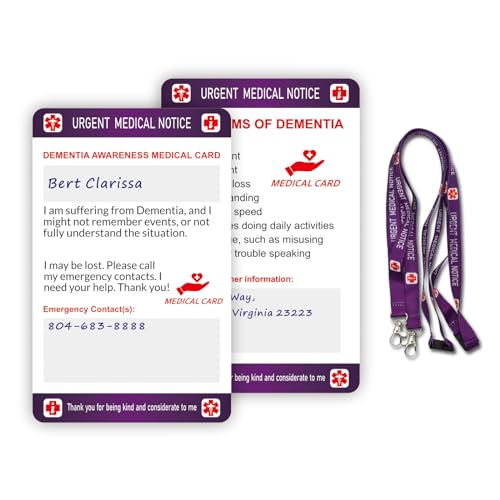
- Credit-card sized and easy to carry
- Writable panel for emergency details
- Includes sleeves and lanyards for wear or storage
Best For: Discreet contact information on person at all times
Wireless Exit Alert Mat
Smart Caregiver Floor Mat Alarm and Pager System

- Wireless pager alerts up to 300 feet away
- Sound or vibration mode reduces disturbance
- Large mat can be used by beds or exits
Best For: Remote notification for bed exits and wandering risk
Medical ID Carry
Red Emergency Wallet Cards for Care Details

- 24-pack with red protective sleeves
- Tri-fold cards hold contact and medication details
- Bright, visible format for urgent situations
Best For: Wallet-size emergency info backups for caregivers
Motion Alert Safety
Bed Sensor Alarm with Caregiver Pager
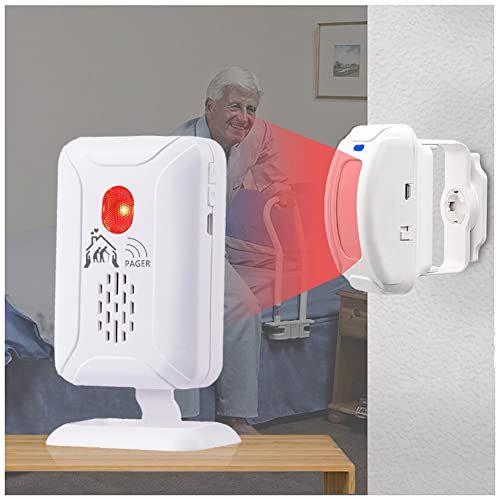
- Alerts caregivers when someone gets out of bed
- Wireless receiver can work away from the patient
- LED and sound reminders plus battery power
Best For: Nighttime bed-exit monitoring for caregivers
Personal ID Card
Customized Alzheimer’s Photo Emergency Card
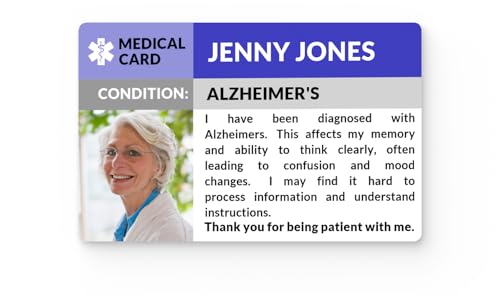
- Custom name, photo, and diagnosis on the front
- Back provides space for two emergency contacts
- Wallet-size biodegradable plastic card
Best For: Quick identification and contact access in public
Wireless SOS Pager
Caregiver Pager Wireless Emergency Button

- No subscription or Wi-Fi needed
- 38 melodies for customizable alerts
- Portable transmitter with plug-in receiver
Best For: Simple home emergency alerts for seniors and dementia care
Dementia Day Clock
SSYA Digital Calendar Alarm Clock

- Large 7-inch display spells out time
- 12 alarm modes for routine reminders
- Auto dimming with 5 brightness levels
Best For: Daily schedule support for seniors with memory loss
Care Log Book

- Tracks meds, meals, vitals, and notes
- Includes emergency contacts and health details
- Large 120-page paper care journal
Best For: Paper-based caregiving records for dementia and senior care
Quick-Access ID Tag – Dementia/Alzheimer’s Alert Medical Seatbelt Tag
For emergency preparedness products for dementia patients, this medical ID seatbelt tag is designed to put critical information where responders are likely to see it fast. It highlights behaviors, triggers, best responses, medications, contacts, allergies, and diet, while the reflective trim and red emergency insignia help it stand out in low light.
Best For: Caregivers who want a highly visible, portable medical ID that can travel between the car, bag, walker, or wheelchair.
Pros:
- Quick-access tri-fold format keeps key emergency details in one place.
- Reflective trim and red insignia improve visibility for nighttime situations.
- Can be filled in by hand or customized with the downloadable PDF version.
- Slides on standard seatbelts and can transfer to other straps or bars.
Cons:
- It is an information tag, not an active alerting device.
- Space is limited by the compact folded size.
- Requires the caregiver to complete and maintain the details.
Overall, this is a practical low-tech backup for identification and response instructions, especially when a patient may need help in a car or during transport. Its main strength is making the right information easy to find quickly.
Bed Departure Alarm – Smart Caregiver Bed Alarm for Elderly Adults
Among emergency preparedness products for dementia patients, this bed alarm focuses on preventing unsafe unassisted exits from bed. The pressure-sensing pad alarms when weight is removed, giving caregivers an early warning that a loved one may be getting up and needs help.
Best For: Caregivers looking for a simple bedside alert system to help with fall prevention and nighttime monitoring.
Pros:
- Pressure-sensitive pad triggers when the user gets out of bed.
- Two volume settings plus a reset button for quick control.
- Includes a soft vinyl pad that is sealed for incontinence resistance.
- Battery included, with optional AC adapter support available separately.
Cons:
- Alarm sounds in the room unless you add the separate wireless kit.
- Designed for bed monitoring, so it does not cover doorways or wandering routes.
- Requires proper pad placement under the fitted sheet.
This is a straightforward, caregiver-friendly option for watching over someone who may try to get up at night. It is especially useful when the goal is early warning rather than a more complex monitoring setup.
Wallet ID Card Set – Dementia Medical Contact Cards
2pcs Dementia Medical Card with Writable Panel and Patterned Lanyard Emergency Contact Card
Check Price On AmazonFor emergency preparedness products for dementia patients, this card set offers a compact way to carry emergency contact and identification details. The cards are credit-card sized, writable, and come with sleeves and lanyards so the information can stay with the patient in a pocket, bag, or around the neck.
Best For: Patients and caregivers who want a simple, low-profile emergency contact card they can keep on hand at all times.
Pros:
- Credit-card size makes it easy to carry discreetly.
- Writable panel allows patient information to be filled in.
- Includes two cards, two sleeves, and two lanyards.
- Useful as a rescue note during emergencies.
Cons:
- Does not include electronic alerting or tracking features.
- Information must be written and kept up to date manually.
- Small format limits how much detail can be included.
This is a simple, practical identification backup for people who may need to communicate quickly in an emergency. Its value comes from portability and immediate visibility rather than advanced monitoring.
Wireless Exit Alert Mat – Smart Caregiver Floor Mat Alarm and Pager System
For emergency preparedness products for dementia patients, this wireless floor mat alarm is built to catch movement at bedsides or exits before it becomes a fall or wandering incident. When the mat is stepped on, the included pager alerts the caregiver with a sound or vibration, keeping the patient undisturbed while still providing fast notice.
Best For: Caregivers who need a wireless alert system for bedside fall prevention or doorway wandering prevention.
Pros:
- Wireless pager alerts up to 300 feet away.
- Sound or vibrate mode helps avoid startling the patient.
- Large 24 x 48 inch mat works by the bed or near an exit door.
- Can be paired with other Smart Caregiver devices for broader monitoring.
Cons:
- Pager requires two AA batteries, which are not included.
- Only alerts when the mat is stepped on, so placement matters.
- Additional compatible devices are sold separately.
This system is a strong fit when you want remote notification without room noise that could agitate the patient. It is especially useful for caregivers managing nighttime movement or exit-risk situations.
Medical ID Carry – Red Emergency Wallet Cards for Care Details
24 Pack Red Emergency Medical ID Wallet - Pocket Size, Medication List, Caretaker Cards
Check Price On AmazonFor emergency preparedness products for dementia patients, this 24-pack medical ID wallet card set gives caregivers a simple way to keep critical contact and medication details close at hand. The tri-fold format offers room for name, DOB, address, condition details, drug dosage, and frequency, while the bright red sleeve and large Star of Life symbol make it easy to spot quickly.
Best For: Families or caregivers who want a wallet-size emergency information card that can speak for the wearer when they cannot explain their needs.
Pros:
- Includes 24 red protective sleeves, making it practical for sharing or keeping backups.
- Fillable tri-fold layout provides space for emergency contacts, medical conditions, and medication information.
- Bright red design and large symbol are easy to notice in urgent situations.
- Wallet-sized when folded, so it can be carried in a purse or pocket.
Cons:
- Requires manual filling in of personal and medical details.
- Not an electronic alert device or tracking system.
This is a straightforward low-tech option for keeping dementia-related emergency information accessible. It works best as a portable backup to a primary care plan rather than a standalone safety device.
Motion Alert Safety – Bed Sensor Alarm with Caregiver Pager
Among emergency preparedness products for dementia patients, this wireless bed sensor alarm is built to help caregivers notice when someone is getting out of bed or leaving a room. The motion sensor can be placed under the bed or near a door, and the receiver keeps the alert away from the patient’s room, which may help avoid startling them.
Best For: Caregivers who want a wireless alert system for monitoring bed exits or room departures.
Pros:
- Detects motion when a patient’s foot is about to touch the floor or when a room is being exited.
- Wireless signal can reach up to 918 feet in open areas.
- Dual reminders use LED light and sound for caregivers.
- Includes battery power, Micro USB option, tape, screw kit, and manual.
Cons:
- Needs setup and testing to confirm sensing range and direction.
- Uses batteries in both the pager and sensor, so ongoing battery management is required.
This is a practical monitoring aid for households that need early notice of movement at night or during unsupervised periods. It is designed for caregiver awareness rather than direct intervention.
Personal ID Card – Customized Alzheimer’s Photo Emergency Card
For emergency preparedness products for dementia patients, this personalized Alzheimer’s medical ID card is a compact way to identify the cardholder and list emergency contacts. It includes the person’s name, photo, and Alzheimer’s diagnosis on the front, with room for two emergency contacts on the back, helping others understand the situation quickly in public or unfamiliar settings.
Best For: People with Alzheimer’s who need a wallet-sized, custom ID card for quick identification.
Pros:
- Custom card includes name, photo, and diagnosis for fast identification.
- Back side provides space for two emergency contacts.
- Wallet and purse friendly credit-card size makes it easy to carry.
- Durable biodegradable plastic is made for everyday use.
Cons:
- Only works if the card is carried with the person.
- Focused on identification and contacts, not active monitoring or alerts.
This card is a strong fit when the priority is clear identification in public and a quick route to emergency contacts. It is a simple, durable tool that complements other care-safety measures.
Wireless SOS Pager – Caregiver Pager Wireless Emergency Button
For emergency preparedness products for dementia patients, this wireless caregiver pager is a straightforward way to help make sure a call for help is heard quickly. It uses a plug-in receiver and a portable transmitter, with no Wi-Fi, phone plan, or monthly subscription required.
Best For: Homes or care spaces that need a simple, no-fee alert system for seniors or patients.
Pros:
- Supports 38 selectable melodies for customizable alerts.
- Claims 1000+ feet range in open areas and about 165 feet indoors.
- Plug-and-play setup with a receiver that fits standard outlets.
- Portable transmitter can be mounted, carried, or worn as a neck pendant.
Cons:
- Uses AC power for the receiver, so an outlet is required.
- Indoor range is much shorter than the open-area claim.
This is a practical alert tool when fast caregiver response matters more than smart features. It is best viewed as a simple, self-contained SOS system for home care and similar settings.
Dementia Day Clock – SSYA Digital Calendar Alarm Clock
This digital clock is a useful pick among emergency preparedness products for dementia patients because it helps reduce confusion around time, day, and routine. The display spells out the time in full, adds date and day information, and includes alarm modes for meals, medicine, and appointments.
Best For: Seniors who need a clear day clock with reminders for daily routines and care tasks.
Pros:
- Large 7-inch HD display with non-abbreviated time wording.
- 12 alarm modes, including daily, weekdays-only, and weekends-only settings.
- Auto night dimming plus 5 brightness levels for easier viewing.
- Supports 8 languages and can be wall mounted or placed on a table.
Cons:
- Requires AC power to operate.
- It is a reminder clock, not a medical alert device.
For caregivers, this clock can support structure and visibility without adding complexity. It is especially helpful when the goal is to make time, date, and reminders easier to understand at a glance.
Care Log Book – Caregiver Daily Log Book
When looking at emergency preparedness products for dementia patients, a written care log can be a practical way to keep important details organized. This log book is built to track medication, meals, vital signs, toileting, behavior notes, appointments, and emergency contacts in one place.
Best For: Caregivers who want a paper system for tracking daily health details and care routines.
Pros:
- Daily pages for medication, meals, mood, alertness, and vital signs.
- Includes emergency contact info, patient health details, and reference charts.
- Works for single-patient or multi-patient caregiving.
- Large 8.5 x 11 size with 120 pages and durable binding.
Cons:
- Paper format requires manual writing and upkeep.
- Does not provide electronic alerts or reminders.
This notebook is less about direct emergency response and more about keeping care records clear and accessible. It can be especially useful when multiple people help manage a loved one’s care.
How We Picked These Emergency Preparedness Products for Dementia Patients
We prioritized products that address the most common safety gaps in dementia care: fast alerting, clear identification, simple communication, and support for day-to-day tracking. We also looked for ease of use, durability, portability, and features that make sense for caregivers under stress.
Quick Comparison
For immediate alerts, look to bed alarms, floor mats, and wireless SOS buttons. For identification and communication, wallet cards, seatbelt tags, medical ID cards, and personalized contact tools are the most practical. For routine support, a dementia-friendly clock and caregiver log book can reduce confusion and help maintain consistent care.
Key Buying Factors for Emergency Preparedness Products for Dementia Patients
Alert Speed and Reliability
In an emergency, caregivers need a product that triggers quickly and consistently. Sensor range, alarm volume, pager coverage, and false-alert resistance matter most for motion-based devices.
Clarity of Information
ID products should clearly display essential details such as diagnosis, emergency contacts, allergies, medications, and best-response instructions. The easier it is for first responders or bystanders to understand, the better.
Ease of Wear and Visibility
For wearable or carried items, choose designs that are lightweight, readable, and hard to misplace. Wallet-size cards, lanyards, tags, and photo-based identifiers are helpful because they can travel with the patient.
Caregiver Workflow
The best Emergency Preparedness Products for Dementia Patients should fit into daily routines, not complicate them. Logs, clocks, and alerts should reduce decision fatigue and help caregivers act faster during stressful moments.
Placement and Environment
Think about where risks are highest: bedside, doorway, bathroom, living room, or vehicle. A floor mat alarm may be useful for wandering at night, while a bed alarm is better when fall prevention is the top concern.
Who Should Buy Which Emergency Preparedness Products for Dementia Patients?
If wandering or nighttime rising is the main concern, choose a bed alarm, floor mat alarm, or motion sensor alert. If the priority is emergency communication, pick medical ID cards, seatbelt tags, or a wearable SOS button. If the household needs better daily structure, a non-abbreviated dementia clock and caregiver log book can improve routine and reduce confusion.
Families often get the best results by combining categories: one alert tool, one identification tool, and one organization tool. That layered approach covers both urgent events and everyday care needs without overcomplicating the setup.