A raised doorway threshold can be a serious obstacle for wheelchair users, people using walkers, and anyone moving carts or mobility equipment through the home. The right ramp creates a smoother transition without requiring a permanent structural change.
These 10 threshold ramps for home use cover common rise heights, doorway widths, materials, and installation styles. Use the buying guide below to match the ramp to your threshold, mobility device, available space, and safety requirements.
Best 10 Threshold Ramps for Home Use Picks for 2026
Heavy-Duty Rubber Access

- 3-inch rise with beveled edges
- 35.5-inch-wide grooved rubber surface
- Supports up to 2,200 pounds
Best For: Higher thresholds, garages, and heavy wheeled traffic
Portable Step Coverage

- Folds for carrying and storage
- Double non-skid aluminum surface
- Designed for 4- to 12-inch steps
Best For: Temporary access over home or garage steps
Everyday Low-Sill Access

- Designed for 1-inch raised thresholds
- Grooved traction for wet or dry conditions
- Cut-to-fit width with adhesive strips
Best For: Low door sills, garages, and everyday home transitions
Portable Aluminum Pick
Nuvium 19-Inch Aluminum Threshold Ramp

- Handles rises up to 4.5 inches
- 700-pound stated capacity
- No assembly required
Best For: Portable doorway access for mobility aids and carts
Heavy-Duty Rubber Pick
VEVOR 4-Inch Rubber Threshold Ramp
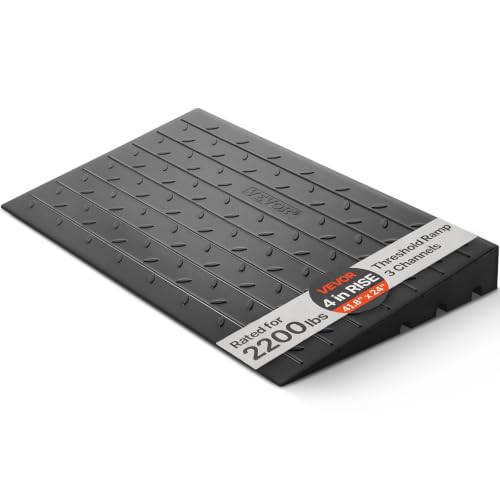
- Supports up to 2,200 pounds
- Three channels protect cables and hoses
- Heavy rubber base helps resist shifting
Best For: Garages, driveways, and taller 4-inch transitions
Best Modular Aluminum Option

- 1,100-pound aluminum capacity
- Modular 15.75- to 31.5-inch width
- Anti-slip design for indoor and outdoor use
Best For: Wheelchairs, scooters, and power chairs needing a customizable transition
Best Low-Profile Rubber Ramp

- 35.5-inch gradual transition
- 1,000-pound rubber construction
- Adhesive pads and textured traction
Best For: Low doorways, bathrooms, garages, and indoor transitions
Best High-Capacity Modular Plastic Ramp
ROBLOCK 3-Inch Rise Threshold Ramp

- 3,000-pound load capacity
- Detachable modular pieces
- 9-degree honeycomb anti-slip slope
Best For: Heavy-duty home steps and entry thresholds for wheelchairs and scooters
Heavy-Duty Rubber Access – 3-Inch VEVOR Threshold Ramp
For challenging door sills and raised entries, this VEVOR model is a substantial option among threshold ramps for home use. Its 3-inch rise, beveled edges, grooved surface, and one-piece rubber construction are designed for wheelchairs, scooters, carts, and other wheeled traffic.
Best For: Higher thresholds, garages, barns, and indoor or outdoor locations needing a wide, heavy-duty transition.
Pros:
- 3-inch rise with beveled edges for smoother approaches from multiple sides
- 35.5-inch width accommodates wheelchairs up to 26.8 inches wide
- Grooved rubber surface provides traction, while the one-piece design needs no assembly
- Supports up to 2,200 pounds according to the product notes
Cons:
- At 29 pounds, it is less convenient to reposition than smaller threshold ramps
- The substantial 17.7-inch depth may require more floor space at the entry
- A slight rubber smell may be present initially
This is a practical choice when stability and load capacity matter more than portability. Measure the threshold and available approach space carefully before ordering.
Low-Profile Doorway Access – LIEKUMM 3/8-Inch Threshold Ramp
This LIEKUMM ramp is a compact solution for low door sills and is especially easy to customize. As threshold ramps for home use go, it combines a 3/8-inch rise with a 36-inch width, textured traction, a cable channel, and a cuttable rubber design.
Best For: Low indoor or outdoor thresholds, doorways with cables underneath, and users who need a lightweight ramp that can be trimmed or paired with another.
Pros:
- Low 3/8-inch rise helps address small threshold lips
- Built-in cable groove keeps wires from being trapped beneath the ramp
- Can be cut to fit and combined with additional ramps for wider access
- Textured surface is designed to resist slipping when wet, and included tape helps secure placement
Cons:
- The low rise is not suitable for taller thresholds
- Its 2-inch depth provides a shorter transition than larger ramps
- Adhesive tape works best on clean, dry, smooth surfaces
Choose this model when you need a discreet transition rather than a long incline. Confirm the threshold height and cable placement, then trim or combine units if necessary.
Portable Step Coverage – VNN 4-Foot Folding Ramp
For steps rather than just a narrow door sill, the VNN 4-foot model offers a longer portable path. It is one of the more versatile threshold ramps for home use, folding for storage and combining an aluminum frame with a textured, non-skid surface and safety features.
Best For: Home or garage steps measuring 4 to 12 inches high, plus temporary access for wheelchairs, scooters, carts, strollers, and pets.
Pros:
- Folds for carrying and storage, with a comfortable handle
- Double non-skid protection comes from the folded aluminum surface and added non-skid layer
- Side baffles, reflective warning stickers, and transition plates support safer use
- Stainless steel hinges are designed to resist corrosion and rust
Cons:
- Limited to step heights of 4 to 12 inches according to the product notes
- 800-pound maximum capacity is lower than some solid rubber threshold ramps
- At 23.8 pounds, it is portable but not especially lightweight
This ramp makes more sense for a raised step or temporary access route than for a small door saddle. Follow the stated height and weight limits, and note that the ramp may flex or sink during use before rebounding.
Everyday Low-Sill Access – 1-Inch Rubber Threshold Ramp
This 1-inch rubber ramp is sized for common low transitions, making it a straightforward pick among threshold ramps for home use. Its 35.5-inch width, grooved surface, adhesive strips, and cut-to-fit design support access for wheelchairs, power chairs, scooters, carts, bicycles, and robot vacuums.
Best For: One-inch door sills, garage thresholds, workshops, and other low indoor or outdoor transitions.
Pros:
- 1-inch rise suits low raised thresholds
- Deep grooves provide traction in wet or dry conditions
- Can be trimmed for narrower openings or placed side by side for wider access
- Included adhesive strips help reduce shifting on suitable clean, dry surfaces
Cons:
- It is intended for a 1-inch rise and may not suit taller thresholds
- Natural rubber may have a mild odor or arrive slightly curved
- Adhesive strips may be less effective on rough, dirty, or damp flooring
This is a useful everyday option when the threshold height matches its 1-inch profile. Measure vertically before buying, and allow the rubber to flatten in a ventilated area if needed.
Modular Indoor Pick – HOXWELL 2-Inch Modular Threshold Ramp
For threshold ramps for home use, the HOXWELL modular design offers adjustable coverage for doorways and low steps. The two included pieces can be arranged into 16-inch or 32-inch-wide configurations, with 1-inch or 2-inch rise options.
Best For: Indoor doorways and users who need a configurable ramp with substantial load capacity.
Pros:
- Modular pieces can be vertically joined or separated for different threshold sizes.
- Honeycomb tread pattern and a 9-degree slope help provide a more secure, gradual transition.
- Supports up to 3,000 pounds and includes cable channels for routing wires, tubes, or pipes.
- Can be secured with adhesive or bolts, though bolts are not included.
Cons:
- Plastic construction may not offer the same feel as metal or heavy rubber.
- Installation hardware must be supplied separately if using the bolt holes.
- The 2-inch configuration may not suit thresholds higher than its available rise.
Choose this model when flexibility, indoor use, and a very high stated weight capacity matter more than having a single-piece ramp. Measure the threshold and desired width before arranging the modules.
Portable Aluminum Pick – Nuvium 19-Inch Aluminum Threshold Ramp
This Nuvium model is a practical choice among threshold ramps for home use when portability and a longer approach are priorities. Its 19-inch ramp surface creates a more gradual transition for thresholds up to 4.5 inches, while the aluminum construction keeps it suitable for indoor or outdoor use.
Best For: Doorways, low steps, and users who want a portable ramp for wheelchairs, scooters, walkers, or carts.
Pros:
- Longer 19-inch surface provides a more gradual approach than the shorter model described in the notes.
- Supports up to 700 pounds and is made from corrosion-resistant aluminum.
- Requires no complicated installation or assembly.
- Can be stored in a cabinet, vehicle trunk, garage, or other compact space.
Cons:
- Its 700-pound capacity is lower than the heavier-duty alternatives in this roundup.
- Fit depends on accurately measuring the threshold height and available landing space.
- The portable design may require careful positioning before each use.
This is the most convenient option for households that need to move or store a ramp regularly. Confirm the threshold height, ramp footprint, and approach angle before purchase.
Heavy-Duty Rubber Pick – VEVOR 4-Inch Rubber Threshold Ramp
For threshold ramps for home use at taller transitions, the VEVOR rubber ramp covers a 4-inch rise and provides a broad 24-inch width. Its heavy, one-piece construction is designed for doorways, driveways, curbs, garages, and other uneven surfaces.
Best For: Heavy-duty home, garage, or outdoor access where a stable rubber ramp and cable protection are useful.
Pros:
- Supports up to 2,200 pounds for wheelchairs, scooters, walkers, and household vehicles.
- Raised-button rubber surface is designed for slip resistance, while the weight helps resist shifting.
- Three channels accommodate and protect cables, wires, or hoses.
- One-piece design requires no tools for assembly or disassembly.
Cons:
- At 65 pounds, it is considerably less portable than lightweight aluminum options.
- The approximately 14-degree incline is recommended only with assistance for wheelchair users.
- Its large footprint may be excessive for narrow indoor thresholds.
This ramp makes sense when stability, a 4-inch rise, and high load capacity outweigh portability. Because the incline is relatively steep, users with significant mobility limitations should plan for assistance.
Best Modular Aluminum Option – Nuvium 3-Inch Threshold Ramp
For shoppers comparing threshold ramps for home use, the Nuvium 3-inch model offers a sturdy aluminum transition for doorways, steps, curbs, and similar access points. Its modular panels can be combined for a wider setup or separated for narrower wheels.
Best For: Wheelchairs, scooters, power chairs, bikes, and other equipment needing a durable indoor or outdoor transition.
Pros:
- Supports up to 1,100 pounds and uses corrosion-resistant aluminum.
- Modular width adjusts from 15.75 inches to 31.5 inches.
- Anti-slip grooves, textured strips, and an underside mat improve traction and stability.
- Includes accessories for assembly and can accommodate height options from 1 to 6 inches.
Cons:
- The 8.5-pound aluminum construction may be less convenient to move than a lighter rubber ramp.
- Its modular assembly may require more setup than a ready-to-use single-piece ramp.
The Nuvium stands out when load capacity, width flexibility, and indoor/outdoor durability matter. It is a practical choice for households that need one adaptable ramp system for several access situations.
Best Low-Profile Rubber Ramp – 1-Inch Door Threshold Ramp
This 1-inch rubber ramp is a straightforward choice among threshold ramps for home use, particularly for low door lips, bathroom transitions, and garage access. Its 35.5-inch length creates a gradual transition while the rubber construction remains suitable for indoor and outdoor conditions.
Best For: Wheelchairs, scooters, carts, and mobility aids crossing a 1-inch threshold.
Pros:
- Flexible, wear-resistant rubber is designed for all-weather use.
- Textured top grooves and a non-slip bottom pattern help maintain traction.
- Supports up to 1,000 pounds.
- Includes 10 adhesive pads for securing the ramp to smooth floors or tiles.
Cons:
- Its 1-inch rise is intended for smaller thresholds rather than taller steps.
- The 5.3-inch width may not suit every doorway or mobility device.
- Adhesive-pad installation is most applicable to smooth surfaces.
Choose this model when you want a low-profile, ready-to-use ramp with a generous length and rubber traction. Its dimensions make it best suited to modest height differences rather than large entry steps.
Best High-Capacity Modular Plastic Ramp – ROBLOCK 3-Inch Rise Threshold Ramp
The ROBLOCK 3-inch model is a strong contender for threshold ramps for home use when a high load rating and adaptable configuration are priorities. Its detachable pieces can be combined for different threshold heights, while the 9-degree slope is designed to make access easier for wheelchairs and scooters.
Best For: Home steps and entry thresholds used by wheelchairs, scooters, carts, and other heavy equipment.
Pros:
- Supports up to 3,000 pounds.
- Detachable modular pieces can be combined or separated for different heights.
- Honeycomb anti-slip surface and a 9-degree slope support safer passage.
- New eco-friendly material is designed without a pungent odor for indoor use.
Cons:
- Bolts are not included for bolt-hole installation.
- The plastic construction may offer a different feel than an aluminum ramp.
- Installation may involve either adhesive placement or separately sourced bolts.
The ROBLOCK is a compelling option for demanding applications because its 3,000-pound capacity exceeds the other listed models. Its modular design is useful when one threshold ramp must accommodate more than one home entry point.
How We Picked the Best Threshold Ramps for Home Use
We focused on the details that matter most in everyday doorway access: compatible threshold height, usable ramp width, weight capacity, surface traction, material durability, portability, and installation requirements. The selection includes rubber, aluminum, and molded plastic designs, along with low-profile ramps for small lips and taller models for substantial rises.
We also considered whether a ramp is suitable for indoor or outdoor use, whether it can accommodate power wheelchairs and scooters, and how easily it can be repositioned or removed. Always confirm the manufacturer’s specifications before purchase, especially when using a heavy mobility device.
Quick Comparison
| Ramp type | Best suited for | Advantages | Watch for |
|---|---|---|---|
| Rubber threshold ramp | Fixed doorways and modest rises | Stable, weather-resistant, often easy to place | Heavy and may require trimming or precise sizing |
| Aluminum ramp | Portable or frequently moved access | Lightweight, durable, and easy to carry | May need securing to prevent movement |
| Modular ramp | Changing access needs or taller thresholds | Adjustable or detachable configuration | More parts and setup considerations |
| Low-profile ramp | Small door lips and sliding surfaces | Minimal slope and unobtrusive appearance | Not suitable for high thresholds |
Key Buying Factors for Threshold Ramps for Home Use
Measure the Threshold Rise
Measure vertically from the lower floor surface to the highest point of the threshold. Choose a ramp designed for that exact rise or a compatible range. A ramp that is too short or too low can leave a bump, while an unsuitable high-rise model may create an unnecessarily steep approach.
Check Width, Length, and Clearance
The ramp should be wide enough for the wheelchair, walker, or cart, with extra clearance when possible. Confirm that its length fits the available floor space and that doors can still open, close, and latch. Check both sides of the doorway if the interior and exterior floor heights differ.
Prioritize Traction and Stability
Look for a textured, non-slip surface, particularly for exterior entrances or damp areas. Rubber models often provide natural grip, while aluminum ramps may use patterned or coated surfaces. A ramp should sit flat without rocking; adhesive, fasteners, or an anti-skid base may be necessary depending on the surface.
Match Capacity to the Complete Load
Weight capacity must exceed the combined weight of the user and mobility device. Consider dynamic loads created when a powered chair or scooter starts, stops, or turns. For frequent use, choose a durable material with a comfortable safety margin rather than relying on the minimum rating.
Who Should Buy Which Threshold Ramps for Home Use?
- For a small threshold lip: Choose a low-profile rubber or aluminum ramp with a gentle transition.
- For a 1- to 3-inch rise: A solid rubber ramp is often the simplest choice for a frequently used doorway.
- For taller steps: Look for a longer or modular model that provides a manageable slope and adequate support.
- For temporary or multi-location use: An aluminum or detachable ramp is generally easier to transport and store.
- For outdoor entrances: Favor weather-resistant construction, strong traction, and a design that will not shift on the ground.
Before ordering, verify the exact threshold height, doorway width, ramp dimensions, load rating, and surface conditions. If a wheelchair or scooter will be used, test the approach angle and turning space whenever possible.