Looking for an AccuMed CMS-50D1 Fingertip Pulse Oximeter review that tells you whether it is actually useful?
This compact fingertip monitor is built for quick oxygen and pulse spot checks without hassle.
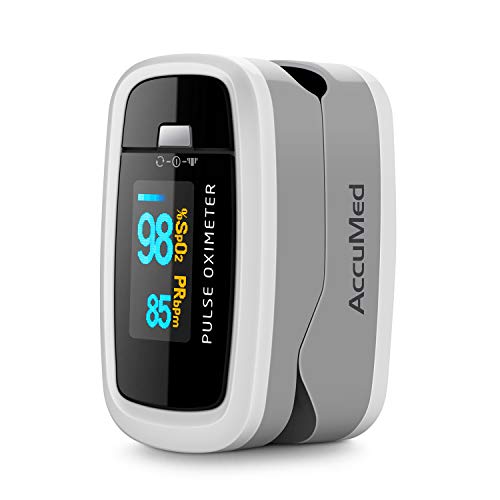
AccuMed CMS-50D1 Review Summary
The AccuMed CMS-50D1 Fingertip Pulse Oximeter is a smart buy for anyone who wants fast, simple, and portable oxygen saturation checks at home or on the go. It is especially appealing to travelers, fitness users, hikers, cyclists, and families who want a lightweight device that is easy to carry and easy to read.
If your priority is a straightforward finger pulse oximeter rather than advanced medical monitoring, the AccuMed CMS-50D1 Fingertip Pulse Oximeter fits the brief well.
What stands out most is the balance of convenience and usability.
The device gives results in roughly 8 to 10 seconds, includes a rotating LED display, and comes with batteries, a travel case, and a lanyard.
That combination makes it a practical choice for quick checks before exercise, during travel, or for occasional household use.
The trade-off is that it works best when your hand is still, so it is not the right pick for active movement or anyone expecting clinical-grade monitoring.
Scorecard
| Category | Score | Why it matters |
|---|---|---|
| Reading Speed | 9.0 | Delivers oxygen saturation and pulse rate readings in about 8 to 10 seconds. |
| Display Clarity | 8.0 | Rotating LED display helps readability in different orientations. |
| Portability | 9.0 | Compact, lightweight, and easy to stash in a bag or travel kit. |
| Battery Efficiency | 8.0 | Uses two AAA batteries, includes them, and adds auto shutoff. |
| Ease of Use | 8.0 | Simple one-finger setup and quick results make it beginner friendly. |
| Fit and Usability | 8.0 | Designed for a broad range of finger sizes from children above 4 to adults. |
| Motion Sensitivity | 6.0 | Accuracy depends on staying still, which limits use during movement. |
In practical terms, the AccuMed CMS-50D1 Fingertip Pulse Oximeter is best for spot-checks, not ongoing monitoring.
If that is your use case, it offers a solid feature set and a very user-friendly design.
Key Features and Specifications of AccuMed CMS-50D1
The AccuMed CMS-50D1 Fingertip Pulse Oximeter is a compact health monitor designed to measure blood oxygen saturation (SpO2) and pulse rate in one device.
It is non-invasive, painless, and intended for quick readings rather than diagnostic use.
Below are the core specs and the features that matter most when comparing fingertip pulse oximeters.
| Specification | Details |
|---|---|
| Brand | AccuMed |
| Model | CMS-50D1-White |
| Product dimensions | 3 x 1 x 2 inches |
| Weight | 1.76 ounces |
| Device weight claim | 50 grams |
| Battery type | 2 AAA batteries |
| Batteries included | Yes |
| Display | Rotating LED display |
| Power feature | Auto shutoff |
| Read time | 8 to 10 seconds |
| Fit range | Children above 4 years old to adults |
| Intended use | Home use, exercise, sports, hiking, cycling, aviation/travel |
- Fast spot-check readings: useful when you want a quick oxygen and pulse snapshot before or after activity.
- Rotating LED display: the screen can be viewed in portrait or landscape orientation, which helps in awkward hand positions.
- Portable build: at about 1.76 ounces and roughly 3 x 1 x 2 inches, it is easy to carry.
- Travel-friendly extras: the included case and lanyard improve convenience for gym bags, backpacks, and carry-ons.
- Battery-ready out of the box: two AAA batteries are included, which reduces setup friction.
- Automatic power-off: helps conserve battery life when the device is left idle.
For buyers comparing fingertip pulse oximeters, these specs point to a device that prioritizes simplicity, speed, and portability.
It does not try to be a multiparameter health tracker, and that design choice keeps it easy to use.
Pros and Cons of AccuMed CMS-50D1
Understanding the AccuMed CMS-50D1 Fingertip Pulse Oximeter pros and cons helps set realistic expectations.
This is not a complicated device, and that is part of the appeal.
| Pros | Cons |
|---|---|
| Fast readings for oxygen saturation and pulse rate | Accuracy depends on staying still |
| Lightweight and easy to carry | Not intended for medical use |
| Travel case and lanyard included | Limited to basic monitoring |
| Simple operation with minimal setup | Less suitable during motion or exercise |
| Rotating display improves readability | No advanced features like app syncing or alarms |
| Battery-saving auto shutoff and included batteries | Best used for spot checks, not continuous tracking |
Best strengths: quick operation, easy portability, and a very approachable design for first-time users.
Main drawback: the AccuMed CMS-50D1 Fingertip Pulse Oximeter is only as good as the conditions around it, and movement can affect reliability.
Who Should Buy AccuMed CMS-50D1?
The AccuMed CMS-50D1 Fingertip Pulse Oximeter is a strong fit for buyers who want a simple pulse oximeter for occasional personal checks.
It is especially useful if you want something that is ready to use quickly and easy to toss into a travel bag.
- Travelers: useful for flights, airport trips, and general travel when portability matters.
- Fitness and outdoor users: good for pre- and post-activity checks after hiking, cycling, or workouts.
- Households: practical for families wanting a basic fingertip pulse oximeter for occasional monitoring.
- Parents of older children: the fit range includes children above 4 years old, which adds flexibility.
- Anyone new to pulse oximeters: the setup is simple enough for beginners who do not want app-based complexity.
Who should skip it? If you need medical-grade monitoring, frequent trend tracking, alarms, or Bluetooth app connectivity, the AccuMed CMS-50D1 Fingertip Pulse Oximeter will likely feel too basic.
Design, Fit, and Everyday Usability
One of the strongest aspects of this device is its straightforward physical design.
The finger clip format is familiar, and the product does not overload the user with menus or settings.
That matters because with pulse oximeters, buyers usually want fast and legible data, not a learning curve.
The lightweight body and compact dimensions make it easy to store in a desk drawer, gym kit, suitcase, or first aid pouch.
AccuMed also includes a travel case, which is a practical touch because it protects the device and makes it less likely to get lost in a bag.
The lanyard adds another layer of convenience if you want to keep the unit close by.
The fit range is another plus.
The listing says it can work for children above 4 years old through adults, so it is more versatile than some fingertip monitors that feel narrow or awkward on smaller fingers.
That said, fit alone does not guarantee good readings; finger placement still needs to be stable and comfortable.
For everyday use, the AccuMed CMS-50D1 Fingertip Pulse Oximeter scores well because it keeps the process simple. Insert finger, wait for the reading, remove it.
That is the kind of design many buyers prefer.
How Accurate Readings Depend on Stillness
In any fingertip pulse oximeter review, motion sensitivity is one of the most important decision factors.
The AccuMed CMS-50D1 Fingertip Pulse Oximeter is clearly aimed at stationary spot-checks, not measurements while you are moving around.
The listing emphasizes that accurate results require a still hand and finger.
That is common for this category, but it is worth highlighting because many first-time buyers expect better performance than the device can realistically deliver.
If you are walking, climbing, breathing heavily after a sprint, or shifting positions constantly, the reading may be less dependable.
This does not make the product weak.
It just defines the job it is designed to do.
For example, it can be a useful pre-workout check or a quick recovery check after exercise, but it should not be treated as a performance tracker during the activity itself.
Buyer takeaway: if you can sit still for a few seconds, the AccuMed CMS-50D1 Fingertip Pulse Oximeter is a better match.
If you need motion-tolerant monitoring, look higher up the product ladder.
Using the Oximeter for Sports and Travel
This is where the AccuMed CMS-50D1 Fingertip Pulse Oximeter makes the most sense.
Its compact size and quick read time line up well with sports, hiking, cycling, and aviation use.
In other words, it is tailored for people who need a simple wellness tool that is easy to bring along.
For travel, the biggest benefit is convenience.
It is small enough for a carry-on, and the included case means you do not have to toss a delicate clip directly into a bag.
Travelers who are sensitive to altitude changes or simply want a basic oxygen check during flights may appreciate the format.
For sports and outdoor use, the product works best before or after exertion.
It is not a live sports telemetry device, and that is okay.
The important thing is that it gives a fast snapshot when conditions are calm enough to support a decent reading.
If you want a lightweight, non-invasive monitor for travel or post-activity checks, this model is well aligned with that purpose.
Display, Rotation, and Readability
The rotating LED display is one of the better design decisions in this model.
It lets you read the screen in different orientations, which is helpful when your hand is angled awkwardly or you are checking the device on yourself instead of someone else.
Display clarity matters more than many buyers realize.
Even a fast-reading oximeter can be annoying if the numbers are hard to read in low light or if the screen orientation feels upside down.
The AccuMed CMS-50D1 Fingertip Pulse Oximeter handles this with a display that is designed to be easy to read and flexible in use.
That flexibility also helps in real-world situations, such as when a child is wearing it, someone is checking it one-handed, or you are doing a quick reading in a dim hotel room.
It is not a premium medical display, but it is a thoughtful, user-friendly one.
Battery Life, Auto Shutoff, and Included Accessories
Battery efficiency is another reason the AccuMed CMS-50D1 Fingertip Pulse Oximeter feels practical.
It runs on two AAA batteries, and the fact that batteries are included means it is ready to use straight from the box.
That is a small but meaningful convenience.
The automatic power-off feature helps reduce unnecessary battery drain, and the listing claims up to 20 continuous hours of battery life.
For a device like this, that is a reasonable level of efficiency because most users are not running it constantly anyway.
The included accessories also matter.
A travel case and lanyard may not sound exciting, but they improve ownership experience right away.
The case protects the oximeter during transport, while the lanyard makes it easier to carry and harder to misplace.
Small accessory bundle, better everyday usability. That is the practical advantage here.
Comparable Alternatives to Consider
If you are comparing options, there are a few broad alternatives worth checking before you buy.
The right choice depends on whether you want simplicity, alerts, app syncing, or a more clinical-style experience.
- medical-grade fingertip pulse oximeter if your priority is stricter monitoring and a more clinical feature set.
- fingertip pulse oximeter with alarms if you want audible alerts for thresholds or reminders.
- pulse oximeter for sports and travel if you want a broader set of travel-friendly options.
- Bluetooth pulse oximeter if you want app-based tracking and trend visibility over time.
Compared with those options, the AccuMed CMS-50D1 Fingertip Pulse Oximeter wins on simplicity and portability, but it does not compete on advanced tracking or features.
Who Should Use a Fingertip Pulse Oximeter
A fingertip pulse oximeter is best for people who want a fast read on oxygen saturation and pulse rate without needing a larger monitor or professional setup.
The AccuMed CMS-50D1 Fingertip Pulse Oximeter is a classic example of that category.
It is useful for occasional household checks, pre-activity readings, travel situations, and basic wellness monitoring.
It is not meant to replace a doctor, a clinical device, or any prescribed health equipment.
That distinction matters because it keeps expectations realistic and prevents disappointment.
The right buyer wants convenience, not complexity. If that sounds like you, this category makes sense.
Is AccuMed CMS-50D1 Worth It?
So, is AccuMed CMS-50D1 Fingertip Pulse Oximeter worth it?
For most buyers seeking a dependable, easy-to-use spot-check monitor, yes.
It offers the right mix of speed, portability, readable display design, and out-of-the-box convenience.
The strongest reasons to buy are clear: quick 8 to 10 second readings, a rotating LED screen, a lightweight body, a travel case, included batteries, and simple operation.
Those are exactly the details that matter most in a fingertip pulse oximeter review, because they affect real-world use more than flashy extras.
The reasons to hesitate are also clear: it depends on stillness, it is not intended for medical use, and it does not offer advanced tracking.
If you need a more robust health monitor, one of the alternative categories above may suit you better.
Final verdict: the AccuMed CMS-50D1 Fingertip Pulse Oximeter is worth buying if you want a portable, beginner-friendly device for quick oxygen and pulse checks. It is not the most advanced option, but it is a very sensible one for travel, sports, and simple home monitoring.