The best arm bike for home workouts makes low-impact upper-body exercise easier to fit into your daily routine. These compact pedal exercisers and multifunction machines can support arm, leg, and total-body movement without requiring a full-size gym setup.
We selected 10 options spanning desk-friendly mini bikes, adjustable magnetic-resistance models, foldable designs, and senior-oriented equipment. Use the guide below to match resistance, stability, portability, and comfort to your goals.
Best 10 Arm Bike for Home Workouts Picks for 2026
Compact Quiet Pick

- 10 adjustable resistance levels
- Quiet, compact design for home or office
- LCD tracks time, rotations, and calories
Best For: Light upper-body movement on smooth, hard surfaces
Most Versatile Choice
DeskCycle MagneTrainer Arm and Leg Bike

- Works as an arm or leg exerciser
- Smooth, quiet magnetic resistance
- Step-less dial and LCD workout tracking
Best For: Seated users wanting upper- and lower-body exercise
Best Accessory Package
Lifepro Flexcycle Arm Pedal Exerciser

- Includes arm pedals, leg pedals, bands, and mat
- Eight resistance levels for varied workouts
- LCD tracks five workout metrics
Best For: Portable upper- and lower-body seated exercise
Full-Body Upgrade
Foldable 5-in-1 Magnetic Exercise Bike

- 16 levels of quiet magnetic resistance
- 300-pound capacity with adjustable fit
- Folds for storage and includes a phone holder
Best For: Full-size indoor cycling with flexible storage
Gentle Full-Body Pick
Seated Arm and Leg Pedal Exerciser

- Supports seated arm-and-leg movement
- LCD tracks key workout data
- Stable steel design for low-impact use
Best For: Seniors and users needing gentle seated exercise
Versatile Cardio Choice
Foldable Magnetic Exercise Bike

- Includes five workout modes
- Offers 16 quiet resistance levels
- Folds and supports up to 330 pounds
Best For: Home cardio users needing adjustable resistance and compact storage
Adjustable Rehab Option

- Adjusts for different body types
- Includes bands, massage, and tension control
- Stable base with non-slip suction cups
Best For: Users wanting adjustable seated exercise and rehabilitation features
Best Overall
BARWING 5-in-1 Foldable Exercise Bike

- Arm and leg bands add total-body training
- 16 magnetic resistance levels
- Foldable, adjustable, and rated for 350 pounds
Best For: Versatile home cycling with upper-body exercise
Best Compact Seated Option
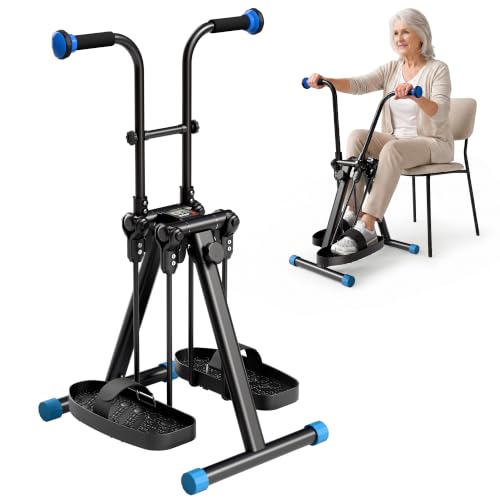
- Seated, low-impact arm and leg movement
- LCD tracks five basic workout metrics
- Steel frame with four corner feet
Best For: Gentle daily exercise and seated routines
Best for Rehab Support
ZIDAFIT Arm and Leg Pedal Exerciser

- Pedaling, resistance bands, and massage function
- Five resistance levels with adjustable height
- Stability-focused base with suction cups
Best For: Gentle seated exercise and therapy-support routines
Compact Quiet Pick – Adjustable Arm Bike Exerciser
This compact arm bike for home workouts is designed for light daily movement, upper-body exercise, and convenient use at a desk or table. Its adjustable resistance, quiet operation, and LCD tracking make it practical for gradual training, while the suction cups require a smooth, hard surface for secure placement.
Best For: Light upper-body workouts, shoulder-focused movement, and home or office users who want a compact arm exerciser.
Pros:
- Ten resistance levels support gentle activity through more demanding endurance work.
- Quiet operation suits home and office environments.
- LCD tracks time, rotations, and calories.
- Massage handles include optional foam sleeves for a different grip feel.
Cons:
- Suction cups work only on smooth, hard surfaces such as glass, marble, or bare desks.
- The suction cups require firm pressure to lock securely.
- It is intended for light daily activity rather than a full-size strength machine.
Choose this model if portability, quiet use, and simple resistance adjustment matter most. Confirm that your workout surface is compatible with the suction-cup base before buying.
Most Versatile Choice – DeskCycle MagneTrainer Arm and Leg Bike
The DeskCycle MagneTrainer is a versatile arm bike for home workouts that can also function as a seated leg exerciser. Its magnetic resistance, molded pedals, and step-less intensity dial provide smooth, quiet movement with easy control for gradual training or mobility-focused exercise.
Best For: Users who want one compact pedal exerciser for both arm and leg workouts, including seated exercise and physical-therapy-style movement.
Pros:
- Can be used with the arms or with the feet.
- Premium magnetic resistance provides smooth, quiet motion.
- Step-less resistance adjustment allows precise intensity changes.
- LCD displays speed, distance, time, and estimated calories.
Cons:
- At 23 pounds, it is heavier than many compact pedal exercisers.
- The display requires two AA batteries.
- It uses a manual, self-powered operation with no preset workout programs.
This is a strong choice when flexibility matters more than minimum weight. Its arm-and-leg design makes it especially useful for households with varied exercise needs.
Best Accessory Package – Lifepro Flexcycle Arm Pedal Exerciser
The Lifepro Flexcycle combines an arm bike for home workouts with a seated leg exerciser and under-desk pedal design. It includes arm pedals, leg pedals, resistance bands, an exercise mat, and stabilizer legs, while eight resistance levels and an LCD monitor support adjustable, trackable movement.
Best For: Seniors, office workers, and home users who want a portable upper- and lower-body exerciser with included stability and workout accessories.
Pros:
- Includes interchangeable arm and leg pedals plus resistance bands.
- Eight resistance levels accommodate gentle movement and stronger workouts.
- Quiet operation is suitable for desk or home use.
- LCD tracks time, speed, distance, calories, and RPM.
Cons:
- Its 18.1-pound weight may be less convenient to move than a smaller arm-only unit.
- The LCD requires three AAA batteries.
- The larger footprint measures 17.5 by 20.9 by 13.2 inches.
The Flexcycle stands out for its included accessories and dual-purpose design. Consider it if you want more than an arm-only machine and have room for a moderately sized pedal exerciser.
Full-Body Upgrade – Foldable 5-in-1 Magnetic Exercise Bike
This foldable stationary bike is a larger alternative to a compact arm bike for home workouts, with a 5-in-1 format, 16 magnetic resistance levels, and a 300-pound capacity. Its quiet operation, adjustable fit, phone holder, and folding frame make it suited to users who want a broader indoor cycling setup.
Best For: Home users seeking a foldable full-size exercise bike with multiple resistance settings and a higher weight capacity.
Pros:
- Sixteen magnetic resistance levels provide broad intensity control.
- Quiet design is rated below 20 dB in the supplied specifications.
- Folding structure and front rollers support storage and repositioning.
- Adjustable fit accommodates users from about 4 feet 11 inches to 6 feet 6 inches.
Cons:
- At 38 pounds, it is substantially less portable than compact arm exercisers.
- Its 32-by-17-by-45-inch dimensions require dedicated floor space when set up.
- The supplied notes describe a stationary bike rather than a dedicated arm-cycle design.
Pick this model when you want a more complete indoor cycling station rather than a small tabletop arm exerciser. Its foldable frame helps, but it still needs more space and setup than the other options here.
Gentle Full-Body Pick – Seated Arm and Leg Pedal Exerciser
If you want an arm bike for home workouts that can be used from a chair, this pedal exerciser provides gentle upper- and lower-limb movement. Its self-powered design, LCD tracking, and steel construction make it a practical option for low-impact daily exercise.
Best For: Seniors, users with muscle weakness, and people seeking seated exercise or rehabilitation support.
Pros:
- Supports synchronous arm-and-leg movement and cross-body exercise.
- LCD monitor tracks time, distance, swing counts, and calories burned.
- Steel tubing and four corner feet provide a stable base.
- Supports users up to 264 pounds.
Cons:
- Designed for low-impact seated training rather than intense cardio.
- Its display requires one AAA battery, even though the exerciser itself is self-powered.
- Includes a six-month warranty.
This is a straightforward choice when accessibility and gentle movement matter most. The seated format and simple progress display are especially useful for maintaining a consistent home routine.
Versatile Cardio Choice – Foldable Magnetic Exercise Bike
For shoppers seeking an arm bike for home workouts with broader cardio capability, this foldable stationary bike offers five workout modes, a comfortable backrest design, and 16 magnetic resistance levels. Its quiet operation and transport wheels suit shared spaces and compact homes.
Best For: Home users who want adjustable indoor cycling, space-saving storage, and a higher-capacity frame.
Pros:
- Offers five workout modes for cardio and strength training.
- Provides 16 levels of quiet magnetic resistance.
- Folds for storage and includes transport wheels.
- Heavy-duty frame supports up to 330 pounds.
Cons:
- At 50.6 pounds, it is considerably heavier than a compact pedal exerciser.
- The product is primarily a stationary cycling bike rather than a dedicated arm pedal machine.
- Some assembly is required.
This model is a better fit for users prioritizing full-bike workouts, resistance range, and storage convenience. Choose it over a compact arm-and-leg exerciser if you want a more traditional seated cycling setup.
Adjustable Rehab Option – Seated Arm Bike With Massage
This arm bike for home workouts is built around adjustable seated training, with height and base-length adjustments for different body types. It combines arm and leg pedaling with resistance bands, adjustable tension, and a massage function for a more varied low-impact routine.
Best For: Seniors, sedentary users, and people who want adjustable seated exercise with rehabilitation-oriented features.
Pros:
- Adjusts in height from 31 to 43 inches and supports stepless base-length adjustment.
- Includes arm and pedal tension adjustment plus four resistance levels.
- Adds resistance-band exercises and a massage function.
- Triangular base and suction cups help keep the unit steady.
Cons:
- Offers only four resistance levels.
- Its 40.5-inch height and larger frame may require more setup space.
- Includes a six-month warranty.
The adjustable fit makes this a strong choice for households with different users or specific positioning needs. It is more feature-rich than a basic pedal exerciser, while remaining focused on gentle, seated movement.
Best Overall – BARWING 5-in-1 Foldable Exercise Bike
If you want an arm bike for home workouts that also provides seated cycling, the BARWING is a versatile option. Its upright, reclined, and folding positions, arm and leg resistance bands, and 16 magnetic resistance levels support varied training in a relatively quiet setup.
Best For: Home users who want a foldable total-body exercise bike with adjustable positioning and higher weight capacity.
Pros:
- Combines cycling with arm and leg resistance bands for a total-body workout.
- Offers 16 magnetic resistance levels and three workout postures.
- Foldable design, adjustable seat, and a stated 350-pound capacity.
- Quiet belt-driven operation is designed for shared living spaces.
Cons:
- Its larger exercise-bike format may require more space than a compact pedal exerciser.
- The console tracks basic workout data but is not described as offering advanced training programs.
The BARWING stands out when you want one machine for light upper-body work and conventional indoor cycling. Its adjustable seat and backrest can also make it more adaptable for different users and workout positions.
Best Compact Seated Option – Full-Body Pedal Exerciser
This compact arm bike for home workouts is designed for seated, low-impact movement. The pedal exerciser supports arm, leg, hand, elbow, and knee exercises, making it a practical choice for gentle daily activity, physical therapy support, or exercising while seated.
Best For: Seniors and users seeking a simple seated exerciser for gentle arm-and-leg movement at home.
Pros:
- Supports cross-body movement, synchronous motion, and lateral wobble for varied activity.
- Designed for seated use and low-impact exercise.
- LCD display tracks time, distance, count, total count, and calories.
- Steel frame and four corner feet are intended to improve stability.
Cons:
- Manual, battery-powered operation does not provide the adjustment range of a full exercise bike.
- The supplied maximum weight recommendation is 6.9 kg, so buyers should verify that specification before purchase.
Choose this model when portability and seated access matter more than intense resistance training. Its straightforward display and broad movement description make it suitable for gentle routines, though the listed weight specification deserves careful checking.
Best for Rehab Support – ZIDAFIT Arm and Leg Pedal Exerciser
For shoppers looking for an arm bike for home workouts with rehabilitation-oriented features, the ZIDAFIT combines seated pedaling, resistance bands, and massage handles. Its adjustable height and base, five resistance levels, and low-impact design are aimed at gentle arm and leg exercise.
Best For: Seniors and users who want a seated arm-and-leg exerciser for gentle fitness or therapy-support routines.
Pros:
- Combines pedaling, resistance-band work, and a built-in massage function.
- Five resistance levels support gradual adjustments.
- Handle height and base length adjust for different seated setups.
- Triangular base, U-shaped pipes, and four suction cups are designed for stability.
Cons:
- Its larger footprint is less compact than a basic under-desk pedal exerciser.
- The manual design and simple LCD focus on basic tracking rather than programmed workouts.
- Rehabilitation users should follow appropriate professional guidance for their individual needs.
The ZIDAFIT is the most feature-rich seated option in this group for gentle upper- and lower-body movement. Adjustable positioning and stability features add flexibility, while the included resistance band expands exercise beyond pedaling.
How We Picked the Best Arm Bike for Home Workouts
We focused on the features that matter most for consistent, low-impact exercise at home: adjustable resistance, smooth pedaling, stability, portability, display information, and ease of use. We also considered whether each machine supports arm and leg exercise, since many pedal exercisers are designed for more than upper-body training.
Because the lineup includes compact mini bikes and larger foldable stationary bikes, we compared them according to intended use rather than treating every model as interchangeable. Capacity, footprint, handle design, and setup requirements are especially important for seniors, rehabilitation-oriented users, and anyone exercising from a chair.
Quick Comparison
| Type | Best for | What to look for |
|---|---|---|
| Mini arm and leg bike | Desk use and light daily movement | Stable base, suction cups, low-noise operation |
| Seated pedal exerciser | Upper-body or lower-body workouts from a chair | Adjustable tension, comfortable pedals, easy controls |
| Foldable 5-in-1 bike | More varied home workouts | Resistance range, weight capacity, folding mechanism |
| Rehabilitation-oriented exerciser | Gentle movement and supported exercise | Stability, low starting resistance, accessible positioning |
Key Buying Factors for an Arm Bike for Home Workouts
Resistance and Motion
Look for adjustable resistance so you can begin comfortably and increase the challenge gradually. Magnetic resistance is generally quieter and smoother than basic friction systems, while a simple tension knob may be preferable for light exercise and straightforward operation.
Stability and Positioning
An arm bike can slide when placed on a table or smooth floor, particularly at higher resistance. Wide feet, suction cups, a heavier base, and textured surfaces can improve control. Check the recommended positioning and ensure the table or chair height allows a natural range of motion.
Size, Storage, and Noise
Measure your available space before buying. Mini exercisers are easier to store and use under a desk, while foldable bikes offer more features but need additional room during workouts. If you share a room or work while exercising, prioritize quiet operation.
Comfort and Usability
Large, secure pedals and comfortable handles help reduce hand and foot strain. An LCD display can make sessions easier to track, but it should not come at the expense of simple controls. Users with limited mobility may benefit from lightweight construction and accessible resistance adjustment.
Who Should Buy Which Arm Bike for Home Workouts?
Choose a mini pedal exerciser if you want occasional arm or leg movement at a desk, in front of a chair, or in a small apartment. These models are typically the easiest to store.
Choose a seated arm-and-leg exerciser if low-impact movement, rehabilitation support, or senior-friendly operation is the priority. Favor stability and gentle resistance over maximum intensity.
Choose a foldable 5-in-1 stationary bike if you want more workout positions, a broader resistance range, and a higher-capacity frame. These are better suited to regular full-body training but require more floor space.
Before using any equipment for rehabilitation, stroke recovery, joint pain, or another medical concern, follow guidance from a qualified healthcare professional. Start with low resistance and stop if exercise causes pain, dizziness, or unusual discomfort.