Choosing the right monitoring setup can make overnight care safer and less stressful. The best options help you catch bed exits, wandering, and hallway movement early.
Below, we focus on practical bedroom monitoring devices for elderly parents that balance alert speed, ease of use, and the right level of noise, vibration, or silent notification.
Best 10 Bedroom Monitoring Devices for Elderly Parents Picks for 2026
Wireless Motion Bed Alert
Motion Sensor Caregiver Pager for Seniors
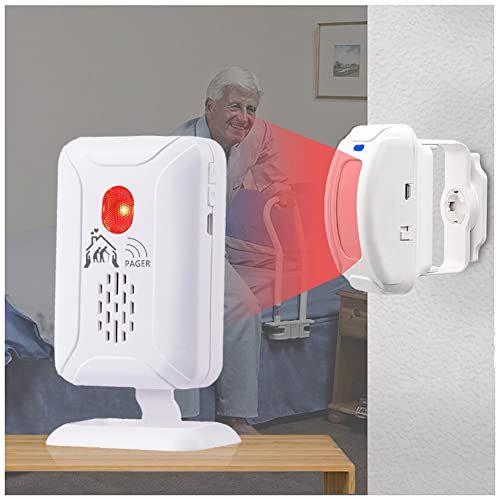
- Places under the bed or by a door
- Sends alerts to a separate receiver
- LED light and sound reminder options
Best For: wireless bedside or doorway monitoring without an in-room alarm
Bed & Chair Exit System
Smart Caregiver Bed and Chair Alarm System

- Includes both bed and chair sensor pads
- Alerts immediately when pressure is removed
- Volume control and status lights on monitor
Best For: bed-and-chair fall prevention with one monitor
No-WiFi Motion Door Alert
Motion Sensor Bed Exit Alert with Plug-In Receiver

- Two motion sensors and a plug-in receiver
- No app, WiFi, or wearable needed
- Chime and flashing light notifications
Best For: one-room motion monitoring with a simple plug-in alert
Pressure Pad Bed Alarm
Classic Bed Pressure Alarm for Elderly Adults
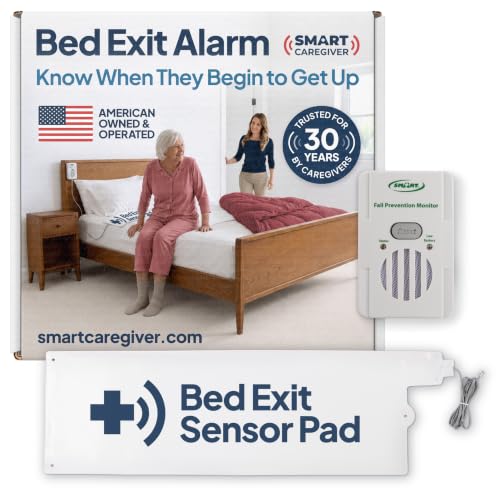
- Instant alert when pressure leaves the pad
- Sealed 10" x 30" vinyl sensor pad
- Optional wireless add-on kit available
Best For: simple bed-exit monitoring with a durable pressure pad
Whole-Home Bed Exit Monitoring
2 Motion Sensors and 2 Plug-in Receivers

- Monitors two movement points for broader home awareness.
- Uses chime and flashing-light alerts in two rooms.
- No WiFi, app, monthly fee, or wearable required.
Best For: Multi-room bed exit and doorway monitoring in larger homes.
Remote Motion Paging System
Wireless Bed or Door Monitoring

- Sends remote alerts for bed or doorway movement.
- Helps with fall and wandering prevention.
- Standalone system with one pager and one sensor.
Best For: Caregivers wanting a simple wireless paging setup for one area.
Silent Bed Exit Alarm
Portable Motion Sensor with Vibrate Mode

- Detects feet touching the ground before full standing.
- Has volume, ringtone, silent, and vibration options.
- Portable receiver with Type-C charging.
Best For: Quiet, flexible bed-exit alerts in a single-room setup.
Bed-Edge Motion Alert
Professional Bed Sensor Alarm for Elderly Care
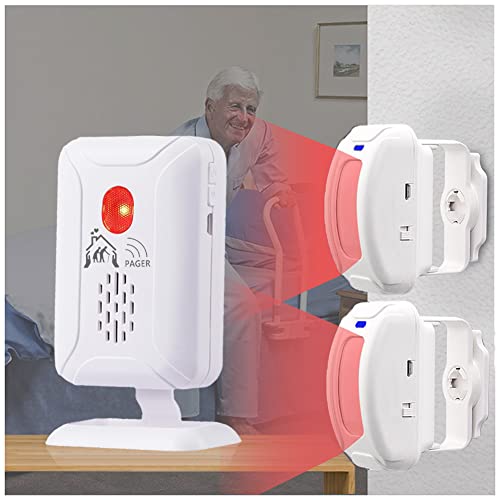
- Wireless motion sensor for bed or doorway placement
- Up to 918 feet open-area transmission range
- 4 alert modes with sound, light, and 113 dB alarm
Best For: Long-range bedside or doorway motion alerts for elderly care
Plug-In Doorway Chime
Motion Sensor Bed Alarm for Elderly Care

- Plug-in receiver with audible and flashing-light alerts
- No Wi-Fi, app, monthly fee, or hardwiring required
- Good for bedroom doors, hallways, and indoor paths
Best For: Simple fixed-location indoor monitoring without charging or Wi-Fi
Wireless Room Watch
Caregiver Pager Motion Sensor Alarm

- Detects motion within 16.4 ft and 110°
- 58 ringtones and 5 volume levels
- Plug-in receiver with flashing light and sound
Best For: Customizable indoor motion alerts for bedrooms and entryways
Wireless Motion Bed Alert – Motion Sensor Caregiver Pager for Seniors
For bedroom monitoring devices for elderly parents, this motion-sensor alarm is a practical option when you want to know if someone is getting out of bed or leaving the room without placing a pad directly under them. The sensor can be placed on the floor under the bed to detect a foot touching down, or at a doorway to watch for room exits, and the receiver alerts caregivers from up to 918 ft in an open area.
Best For: Caregivers who want a wireless, no-pad bedside or doorway alert that keeps the alarm out of the patient’s room.
Pros:
- Motion sensor can be placed under the bed or at the door for flexible monitoring
- Alarm signals a separate receiver, so it does not sound in the patient’s room
- Dual reminder with LED light and sound helps make alerts easier to notice
- Includes battery-powered parts plus Micro USB support and mounting accessories
Cons:
- Requires testing sensing range and direction before fixing in place
- Needs a brief self-test period when first powered on
This setup fits homes that want simple motion-based monitoring without wearable devices or bed pads. Its strength is the discreet placement and separate receiver, while the setup works best once you confirm the sensor angle and coverage area.
Bed & Chair Exit System – Smart Caregiver Bed and Chair Alarm System
If you want a classic approach to bedroom monitoring devices for elderly parents, this bed and chair exit alarm focuses on pressure-sensor pads that alert the caregiver the moment someone starts to get up. The included bed pad and chair pad make it useful for both nighttime bed monitoring and daytime chair monitoring, while the monitor can be clipped nearby for easy access.
Best For: Caregivers who want one monitor that can be used with both a bed pad and a chair pad.
Pros:
- Includes both a 10″ x 30″ bed pad and a 10″ x 15″ chair pad
- Immediate alert when pressure is removed from the pad
- Adjustable high/low volume plus reset button on the monitor
- Low-battery and sensor status lights help confirm operation
Cons:
- Uses a corded connection from the pad to the monitor
- Designed around clip-on placement rather than a fully wireless setup
This is a strong fit if you prefer proven pad-based fall prevention and want clear alerts without app dependence. The dual-pad design adds versatility, especially if you need to move the monitor between bed and chair care.
No-WiFi Motion Door Alert – Motion Sensor Bed Exit Alert with Plug-In Receiver
For bedroom monitoring devices for elderly parents, this motion-based alert system is designed for simple bedside and doorway monitoring without WiFi, apps, or wearables. The set includes two motion sensors and a plug-in receiver with chime and flashing light, making it a straightforward option when you want an alert in a central room while monitoring a specific path or bedroom area.
Best For: Caregivers who want a no-WiFi motion alarm for one main monitoring area such as a bed, doorway, or hallway.
Pros:
- Includes two motion sensors plus one plug-in receiver
- Chime and flashing light help make alerts noticeable
- No app, no WiFi, and no wearable device required
- 500 ft maximum range offers flexible placement
Cons:
- Best suited to one key monitoring area rather than multiple rooms at once
- Placement needs care to avoid curtains, pets, fans, and direct sunlight
This is a practical choice when you want quick setup and a simple indoor motion alert. It works especially well for caregivers who need coverage for a bedside path or doorway and prefer a basic system that stays easy to manage.
Pressure Pad Bed Alarm – Classic Bed Pressure Alarm for Elderly Adults
When comparing bedroom monitoring devices for elderly parents, this pressure-pad alarm is a straightforward option for knowing when someone gets out of bed. The sensor pad sits under the fitted sheet and triggers the monitor as soon as pressure is removed, with the option to use an add-on wireless kit later if you want alerts sent to the caregiver instead of sounding in the room.
Best For: Caregivers who want a simple bed-exit alarm with a sealed pressure pad and optional quieter alert path.
Pros:
- Triggers immediately when pressure is removed from the pad
- Includes a 10″ x 30″ soft vinyl sensor pad with foam interior
- Pad is sealed for incontinence protection and easy cleaning
- Two volume levels and low-battery/status lights support daily use
Cons:
- Base setup alarms in the room unless you add the wireless kit separately
- Requires a cord between the pad and monitor
This model works well if you want a proven bed-exit solution with clear, immediate alerts and a durable pad. It is especially useful for caregivers who value a sealed sensor pad and may later want to expand into wireless alerting.
Whole-Home Bed Exit Monitoring – 2 Motion Sensors and 2 Plug-in Receivers
If you want bedroom monitoring devices for elderly parents without relying on WiFi or an app, this bed alarm system is built for simple whole-home awareness. It monitors two movement points and sends chime and flashing-light alerts to plug-in receivers in different rooms, making it easier to notice when a senior gets up or moves through the house.
Best For: Families who need bed exit, doorway, or hallway alerts across multiple rooms with a no-WiFi setup.
Pros:
- Includes 2 motion sensors and 2 plug-in receivers for monitoring more than one area.
- Chime plus flashing light alerts help caregivers notice movement from different rooms.
- Works without WiFi, an app, monthly fees, wearable device, or hardwiring.
- Suitable for nighttime bed exit alerts, doorway monitoring, and larger homes.
Cons:
- Motion sensor placement matters to reduce false alerts from curtains, fans, sunlight, pets, or busy walkways.
- Requires 6 AAA batteries for the sensors.
This is a practical choice if you want a straightforward alert system that covers both bedside and room-entry movement. The main tradeoff is that it depends on careful placement, but the dual-receiver design adds useful flexibility for home caregiving.
Remote Motion Paging System – Wireless Bed or Door Monitoring
This wireless motion sensor alarm is a simple option for bedroom monitoring devices for elderly parents when you want to keep alarm noise away from the bedside. The standalone pager and motion sensor are designed to alert a caregiver remotely when movement is detected at a bed or doorway, helping with fall and wandering prevention.
Best For: Caregivers who want a straightforward wireless motion alarm with remote paging and bedside-free alerts.
Pros:
- Monitors movement remotely so the alarm noise stays away from the bedside.
- Works for bed or door movement and supports fall and wandering prevention.
- Includes an adjustable mounting bracket for placement flexibility.
- Standalone paging system does not depend on other Smart Caregiver products.
Cons:
- Batteries are sold separately for both the pager and motion sensor.
- Only one motion sensor and one pager are included.
This system is a practical pick if you want basic motion-triggered alerts without adding other connected products. It is best suited to one monitored area and caregivers who value a simple, dedicated paging setup.
Silent Bed Exit Alarm – Portable Motion Sensor with Vibrate Mode
For bedroom monitoring devices for elderly parents, this bed alarm focuses on early bed-exit detection with flexible alert modes. The floor-side motion sensor detects feet touching the ground before the person is fully standing, while the receiver offers adjustable volume, silent mode, and vibration to match day or night use.
Best For: Caregivers who want a portable bed-exit alert with quiet operating options and flexible placement.
Pros:
- Detects movement near the bed before the person fully stands.
- Offers 5 volume levels, 18 ringtones, plus silent and vibration modes.
- Portable receiver with Type-C charging makes it easier to move around the home.
- Sensor is designed to reduce false alarms from restless sleep or incontinence-related movement.
Cons:
- Uses a very short stated maximum range of 10 feet.
- Only one sensor and one receiver are included.
This model stands out when you need a bedside alarm that can stay quiet yet still alert you quickly. It is especially useful if you want early warning and more control over how the alert sounds or vibrates.
Bed-Edge Motion Alert – Professional Bed Sensor Alarm for Elderly Care
If you’re comparing bedroom monitoring devices for elderly parents, this bed sensor alarm is built for simple motion-based alerts when someone gets out of bed or leaves a room. It uses a wireless PIR sensor with a long open-area range, making it practical for caregivers who need an early warning without adding a wearable or Wi‑Fi setup.
Best For: Caregivers who want a long-range, easy-to-place bed or doorway motion alert for elderly or dementia care.
Pros:
- Wireless motion sensor can be placed under the bed or in a doorway for movement alerts.
- Long open-area transmission range up to 918 feet.
- Receiver offers 4 alert modes, including sound plus flashing light and a 113 dB alarm.
- Battery or micro-USB power options help avoid occupying a socket.
Cons:
- Careful testing is needed before fixing the sensor in place.
- Motion-based alerts may require tuning to the right sensing direction and range.
Overall, this is a straightforward option for families who want a strong, configurable alert system for bedroom exits or bed leave events. Its main strengths are range, simple setup, and multiple alert styles.
Plug-In Doorway Chime – Motion Sensor Bed Alarm for Elderly Care
For shoppers looking at bedroom monitoring devices for elderly parents, this motion sensor alert is a simple plug-in setup designed to catch movement near a bedroom door, hallway, or bed path. It keeps the receiver powered in the wall and gives both sound and flashing-light alerts, which can be helpful when you want a fixed monitoring point without apps or charging routines.
Best For: Families who want a no-WiFi plug-in caregiver alert for indoor bedroom and hallway monitoring.
Pros:
- Plug-in receiver stays powered in an outlet for a fixed alert location.
- Works without Wi‑Fi, app setup, monthly fees, or hardwiring.
- Includes audible chime plus flashing light for visual notice.
- Suitable for bedroom doors, hallways, entry paths, and similar indoor spaces.
Cons:
- Single sensor and single receiver setup is basic rather than expandable.
- Placement must be tested carefully to reduce false alerts from curtains, fans, sunlight, or pets.
This model makes sense if you want a simple caregiver pager that focuses on one monitored path. It’s practical, easy to place, and avoids the complexity of connected systems.
Wireless Room Watch – Caregiver Pager Motion Sensor Alarm
If your search for bedroom monitoring devices for elderly parents is really about a flexible indoor alert system, this wireless caregiver pager is a solid fit. It pairs a motion sensor with a plug-in receiver, and the sensor can detect movement within a short range while sending alerts across an open area, making it useful for bedrooms, entry points, and other indoor monitoring spots.
Best For: Caregivers who want a wireless motion alert with customizable sound and light notifications for indoor monitoring.
Pros:
- Motion sensor detects movement within a 16.4 ft range and 110° angle.
- Plug-in receiver offers visual flashing alerts and sound notifications.
- 58 ringtones and 5 volume levels provide more customization.
- Sensor can run on battery or USB power for flexible placement.
Cons:
- Best results depend on proper placement and testing before use.
- Open-area transmission is much shorter than some larger-range alternatives.
This option works well when you want a simple but customizable motion alert for a bedroom or doorway. Its main draw is the mix of visual and audible alerts with enough personalization for everyday caregiver use.
How We Picked the Best Bedroom Monitoring Devices for Elderly Parents
We prioritized devices that are simple to install, reliable in everyday use, and suited to common overnight care needs. For Bedroom Monitoring Devices for Elderly Parents, the biggest factors are whether the alert is fast, whether it reaches the caregiver in time, and whether the system fits the room layout.
Quick Comparison
Some setups use a weight-sensing bed pad, which is usually best for detecting when someone gets out of bed. Others rely on motion sensors, which can also cover doors, hallways, or bedside movement. Pager-style systems are a good fit when the caregiver is in another room, while plug-in receivers work well for homes that want a louder, always-on alert.
Key Buying Factors for Bedroom Monitoring Devices for Elderly Parents
Alert Type
Choose between audible chimes, silent vibration, or pager notifications based on hearing needs and whether multiple caregivers need to be informed. If the person in the room is a light sleeper, quieter alerts may be preferable.
Sensor Style
Weight-sensing bed pads are often best for direct bed-exit detection. Motion sensors can be more flexible, especially if you also want doorway or hallway coverage. Some homes benefit from both.
Range and Placement
Consider how far the caregiver may be from the bedroom. Wireless systems and multiple receivers can improve coverage in larger homes or across floors.
Ease of Setup
Look for systems that are quick to mount, plug in, and test. The best Bedroom Monitoring Devices for Elderly Parents should be easy enough for family caregivers to manage without frequent troubleshooting.
Day-To-Day Fit
Think about mobility level, nighttime toileting, wandering risk, and whether the parent uses a walker or needs extra fall prevention support. The right device should match the person’s routine, not just the room.
Who Should Buy Which Bedroom Monitoring Devices for Elderly Parents?
If your main concern is bed exits, choose a bed sensor or weight pad. If wandering or doorway movement is the bigger issue, a motion sensor system is usually the better fit. If you need a solution for shared caregiving, pick a pager-based or multi-receiver model so alerts can reach more than one person. For households wanting the simplest setup, a plug-in receiver with one sensor is often the easiest place to start.
In short, the best choice depends on how your parent moves at night, how far away you are, and how quickly you need to know when they get up.