Nighttime wandering calls for fast, reliable alerts without creating unnecessary noise or stress in the room. The right setup can help caregivers respond sooner while preserving dignity and sleep quality.
Below, we’ve rounded up 10 practical options for different care environments, from bedside alarms and floor mats to wireless sensors and app-connected systems.
Best 10 Bedroom Monitoring Devices for Nighttime Wandering Picks for 2026
Early-Alert Bed Monitor
Wireless Pager System for Caregivers

- Wireless pager alerts caregiver before bed exit
- No Wi-Fi, app, or tools needed
- Pad and pager are built for quiet nighttime use
Best For: caregivers needing a discreet early warning for bed exit
Privacy-Safe Property Monitor
Noise, Occupancy, and Intrusion Alerts

- Tracks noise and room activity with radar sensing
- No cameras or audio recording
- App dashboard stores history with no subscription
Best For: privacy-safe monitoring of room activity in rentals or shared spaces
Expandable Bed Exit Alarm

- Alerts when bed pressure is removed
- Pager can vibrate or sound
- Expandable with compatible sensors
Best For: families building a simple, expandable fall-prevention alert system
Wi‑Fi Door Alert System
Multi-Sensor Wandering Monitor

- Covers four doors or windows with contact sensors
- Receiver identifies which sensor opened
- Free app alerts with privacy-first design
Best For: nighttime doorway and window monitoring for wandering risk
Economy Floor-Mat Alert
Floor Exit Alarm for Bedside Wandering

- Pressure-sensing mat triggers when stepped on
- Adjustable volume plus visual alert and status light
- Works with 3 AA batteries; mat is non-slip
Best For: Simple bedside or doorway exit monitoring
Wireless Motion Monitor
Under-Bed Sensor Pager for Nighttime Exit Alerts
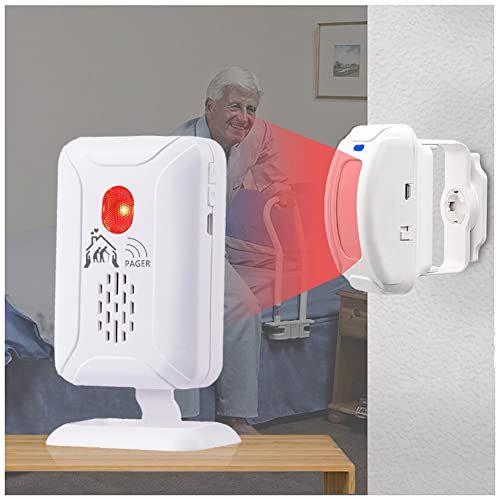
- Wireless pager alerts caregiver instead of sounding in-room
- Sensor can sit under bed or by the door
- Includes LED and sound reminders plus batteries
Best For: Caregivers wanting a remote wireless alert
In-Room Bed Pad Alarm
Weight-Sensing Bed Exit Monitor
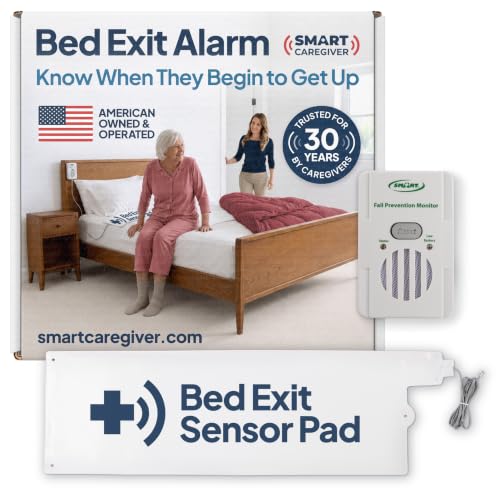
- Pressure-removal alarm for bed exits
- Sealed vinyl pad is easy to clean
- Two volume levels and status lights included
Best For: Traditional bed-exit monitoring with simple controls
Fast-Setup Motion Alert

- Wireless motion sensor for bed exits and room departures
- LED, 110dB sound, and vibration alert options
- Pre-paired system with battery or USB power
Best For: Quick, no-fuss nighttime wandering monitoring
Quiet Floor-Mat Alert
Smart Caregiver Floor Mat Alarm

- Pressure mat triggers when stepped on
- Pager can vibrate or sound away from the room
- Can be placed beside a bed or near an exit
Best For: Quiet bedside or doorway wandering prevention
Portable Motion Pager

- Infrared sensor can alert before standing
- 5 volume levels, 18 ringtones, and vibration mode
- Portable receiver with Type-C charging
Best For: Portable monitoring with customizable alerts
Early-Alert Bed Monitor – Wireless Pager System for Caregivers
If you’re comparing bedroom monitoring devices for nighttime wandering, this bed alarm is built to warn you before your loved one actually gets out of bed. It uses a wireless pressure pad and a portable pager, so there’s no loud in-room alarm and no need for Wi-Fi, an app, or tools.
Best For: Caregivers who want an early bed-exit alert with a quiet, portable pager.
Pros:
- Wireless alert goes to the pager you carry, not a bedside siren.
- Pre-rise pad placement is designed to alert before the user fully leaves the bed.
- No Wi-Fi, app, or tools required for setup.
- Pager includes adjustable volume, vibration-only mode, clip, and wall mount bracket.
Cons:
- Works as a bed alarm rather than a full-room monitoring system.
- Requires battery management for the pad and pager.
- Best suited to bed-exit detection, not general home surveillance.
This is a practical choice if your main goal is quiet nighttime bed-exit monitoring with a fast caregiver alert. The included long-range pager and simple setup make it easier to use in real homes and care settings.
Privacy-Safe Property Monitor – Noise, Occupancy, and Intrusion Alerts
For bedroom monitoring devices for nighttime wandering in a property or office context, this unit focuses on noise, occupancy, and motion-style alerts rather than personal recording. It uses radar-based motion detection and a privacy-safe decibel meter, with app alerts and history logs for remote oversight.
Best For: Hosts or managers who need privacy-safe monitoring of noise, occupancy, and unexpected room activity.
Pros:
- Tracks noise levels 24/7 and sends alerts when thresholds are crossed.
- Radar-based occupancy sensing can flag unusual activity and guest-count changes.
- No cameras or audio recording, which supports privacy-first use.
- Includes smart dashboard, remote access, and no subscription fees.
Cons:
- Designed for rentals, office, and home monitoring rather than bedside care.
- Requires USB power and app-based management.
- Does not provide a dedicated bedside alarm or pager.
This is a strong fit when you need room-level awareness without recording conversations or using a camera. It’s better for detecting activity patterns and rule violations than for direct caregiver-style wandering response.
Expandable Bed Exit Alarm – Wireless Caregiver Pager Kit
If you’re shopping for bedroom monitoring devices for nighttime wandering, this bed exit alarm is focused on alerting a caregiver as soon as pressure is removed from the bed. The wireless pager supports sound or vibration, and the system can expand to cover other monitoring points with compatible sensors.
Best For: Families who want a simple bed-exit alert with room to build a broader fall-prevention setup.
Pros:
- Wireless bed pad alerts when pressure is removed and the user gets up.
- Pager offers both vibrate and sound alert modes.
- Supports up to six Smart Caregiver sensors for broader coverage.
- Extra-large contact sensor is designed to reduce false alarms.
Cons:
- Needs proper pad placement for best early-alert performance.
- Maximum range is 300 feet, which is less than some alternatives.
- Works with compatible sensors for expansion, so the broader system adds cost.
This kit stands out for caregivers who want a dependable bed-exit alert and may later add chair or doorway coverage. The included pager and expandable sensor support make it flexible for nighttime supervision.
Wi‑Fi Door Alert System – Multi-Sensor Wandering Monitor
For bedroom monitoring devices for nighttime wandering, this system is aimed at doors and windows rather than the bed itself. It combines four contact sensors, a receiver with ID display, and app alerts so caregivers can tell which entry point opened and respond quickly.
Best For: Caregivers who need doorway and window alerts for dementia wandering or home security.
Pros:
- Four door/window sensors help cover multiple exit points.
- Receiver shows which sensor triggered with a red ID display.
- Free app alerts and history logs support remote monitoring.
- No cameras or audio recording, preserving privacy.
Cons:
- Requires 2.4GHz Wi-Fi for app-based alerts.
- Not a bed alarm, so it doesn’t detect when someone rises from bed.
- Optional SMS or phone call alerts require in-app purchase.
This is the better pick when wandering risk is tied to doors and windows, not just bed exits. The multi-sensor setup and clear ID display make it easier to track which opening needs attention.
Economy Floor-Mat Alert – Floor Exit Alarm for Bedside Wandering
Floor Mat Exit Alarm for Seniors Fall Prevention & Anti-Wandering - Economy System
Check Price On AmazonIf you want bedroom monitoring devices for nighttime wandering that alert the moment someone steps out of bed, this floor-mat system is a straightforward option. Place the pressure-sensing mat beside the bed, chair, or doorway, and it sounds an audible alarm at the monitor when weight is applied.
Best For: Caregivers who want a simple, pressure-based exit alert at bedside or doorways.
Pros:
- 24" x 48" non-slip floor mat with beveled edges for placement near beds or doorways
- Adjustable volume, variable tone options, and blinking visual alert on the monitor
- Status light and low-battery warning help confirm the system is working
- Runs on 3 AA batteries for the monitor, with battery or AC power option noted for the alarm
Cons:
- Does not work with AC adapters
- Batteries are not included for the monitor
- Requires the mat to be physically stepped on to trigger an alert
This is a practical no-frills choice if your main goal is to catch a bed exit before wandering starts. The mat-and-monitor setup is easy to understand and emphasizes audible notification over advanced features.
Wireless Motion Monitor – Under-Bed Sensor Pager for Nighttime Exit Alerts
For bedroom monitoring devices for nighttime wandering, this wireless motion-based alarm focuses on detecting movement before someone fully leaves the room. The sensor can be placed under the bed to catch a foot touching the floor, or near a doorway to monitor exits without sounding inside the room.
Best For: Caregivers who want a wireless alert sent to a pager instead of an in-room alarm.
Pros:
- Wireless signal reaches up to 918 ft in open areas
- Can be placed under the bed or at the door for flexible monitoring
- Dual reminder with LED light and sound on the receiver
- Includes batteries, Micro USB cable, tape, screw kit, and manual
Cons:
- Requires testing of sensing range and direction before permanent placement
- Uses a motion sensor rather than a pressure pad, so setup position matters
- Open-area range may be lower in real homes with walls and obstacles
This model is a good fit when you want the caregiver alerted away from the bedroom, reducing the chance of startling the person in bed. Its flexible placement options make it useful for both bed-exit and doorway monitoring.
In-Room Bed Pad Alarm – Weight-Sensing Bed Exit Monitor
If your priority is a dependable bed-exit alarm for nighttime wandering, this weight-sensing pad gives a clear signal when pressure is removed. The pad sits under the fitted sheet and the monitor can alert in the room, or work with an optional wireless add-on kit sold separately.
Best For: Caregivers who want a classic bed pad alarm with simple setup and in-room alerting.
Pros:
- 10" x 30" soft vinyl sensor pad is sealed for incontinence protection and easy cleaning
- Monitor includes low-battery and sensor status lights
- Two volume settings and a reset button make it easy to manage
- Battery included, with AC adapter compatibility available separately
Cons:
- In-room alarm may startle some users
- Wireless caregiver alert requires an optional add-on kit sold separately
- Requires placing the pad correctly under the lower sheet to work as intended
This is a solid traditional option if you want a direct response when someone gets out of bed. The sealed pad and status indicators add practical reliability for everyday caregiving use.
Fast-Setup Motion Alert – 2026 Bed Alarm for Seniors
If you want bedroom monitoring devices for nighttime wandering that are quick to deploy, this bed alarm is built for simple exit alerts without requiring a complicated setup. The wireless motion sensor can be placed under the bed or by a doorway to flag movement, while the receiver provides sound, LED, or vibration notifications for caregivers.
Best For: Caregivers who want an easy-to-start motion alert system for bed exits and room departures.
Pros:
- Detects bed exits and room departures with a wireless motion sensor
- Offers dual alerts with LED light and up to 110dB sound, plus silent vibration mode
- Runs on 3 AA batteries or Micro USB for flexible power options
- Pre-paired setup claims activation in about 20 seconds with self-test confirmation
Cons:
- Includes only 1 sensor and 1 receiver, so coverage is limited to one monitored area
- Motion-sensor placement and direction still need to be tested for best results
- Alarm settings may take a little adjustment to match nighttime use preferences
This is a straightforward option if you need a portable alert system with a long claimed range and flexible notification modes. It focuses on fast deployment and practical nighttime monitoring rather than a more elaborate multi-device setup.
Quiet Floor-Mat Alert – Smart Caregiver Floor Mat Alarm
For bedroom monitoring devices for nighttime wandering, a floor mat can be useful when you want an alert only after someone steps out of bed or approaches an exit. This Smart Caregiver system uses a pressure-sensing mat and a wireless pager, so the notification goes to the caregiver instead of making loud noise in the patient’s room.
Best For: Caregivers who prefer a quiet floor-mat alert beside the bed or door.
Pros:
- Pressure-sensing mat alerts when someone steps on it
- Pager can sound or vibrate, helping avoid loud in-room alarms
- Claims up to 300 feet of wireless range
- Mat can be placed by the bedside or near an exit door
Cons:
- Requires 2 AA batteries for the pager, and they are not included
- Works as a single floor-mat setup unless paired with other Smart Caregiver devices
- Floor-mat format may not suit users who prefer motion-based detection before a step is taken
This model is a good fit when you want a more discreet monitoring approach with alerts delivered to the caregiver. It trades early motion detection for a simple contact-based trigger that can be easier to understand and position.
Portable Motion Pager – CallToU Bed Alarm System
If you need bedroom monitoring devices for nighttime wandering that are easy to move around the house, this CallToU bed alarm emphasizes portability and flexible alert settings. Its infrared motion sensor can be placed under the bed, and the receiver offers multiple volume levels, ringtones, plus silent or vibration modes for nighttime use.
Best For: Families wanting a portable motion sensor alarm with adjustable alerts.
Pros:
- Infrared motion sensor is designed to alert before the foot touches the ground
- Receiver includes 5 volume levels and 18 ringtones
- Silent and vibration modes help avoid disturbing the patient
- Portable receiver with Type-C charging and a 360° rotating sensor
Cons:
- Uses AAA batteries for the sensor, so ongoing battery replacement is part of ownership
- Motion-based setup still requires testing for range and direction
- Alarm sensitivity and placement may need adjustment to reduce missed or unwanted alerts
Overall, this is a flexible bedside alert choice when you want more control over volume and notification style. It is best suited to caregivers who value portability and simple setup over a more specialized mat system.
Choosing Bedroom Monitoring Devices for Nighttime Wandering comes down to how quickly you need to know someone is getting up, how far away the caregiver is, and whether the alert should stay local or travel through a phone, pager, or app. The best setup balances early warning, comfort, and ease of use.
How We Picked the Best Bedroom Monitoring Devices for Nighttime Wandering
We focused on alert speed, sensor type, installation simplicity, portability, and alert delivery. We also favored systems that are practical for dementia care, fall prevention, and overnight monitoring, with options for both home use and more flexible caregiver setups.
Quick Comparison
Bed pads and bed exit alarms are usually best for early detection when someone begins to rise. Floor mats work well when you want an alert after a foot touches the ground. Door and window sensors are useful when wandering is more about leaving the room. Wireless pagers and app alerts help caregivers who are not always in earshot.
Key Buying Factors for Bedroom Monitoring Devices for Nighttime Wandering
Alert Timing
Decide whether you need an early alert at the edge of the bed or a later alert at the floor or doorway. Earlier alerts give caregivers more reaction time, but may create more nuisance alerts if the sleeper shifts frequently.
Alarm Delivery
Some systems sound in-room, while others notify a pager or smartphone. For shared bedrooms or memory care settings, quieter caregiver-only alerts can be more appropriate.
Sensor Placement
Bed pads, floor mats, motion sensors, and door alarms each solve a different problem. Choose the sensor that matches the wandering pattern you are trying to manage.
Noise, Range, and Reliability
Look for adjustable volume, strong wireless range, and dependable connection quality. These details matter in real homes, especially when alerts must reach another room.
Who Should Buy Which Bedroom Monitoring Devices for Nighttime Wandering?
If you need early warning before a person stands, a bed alarm or weight-sensing pad is usually the best fit. If falls often happen after the first step, a floor mat alarm may be better. If the concern is leaving the room or house, consider door and window sensors. Caregivers who want remote notification should prioritize wireless pager or app-based systems. For most households, the best choice is the one that fits the person’s routine, the layout of the bedroom, and the level of supervision available overnight.