A tracking smartwatch can help caregivers locate a loved one, respond to an SOS call, or learn about a possible fall. But those features only help when the watch is comfortable enough to wear and reliable where the person spends their time.
These five senior-focused options emphasize GPS, 4G connectivity, and emergency alerts. Here’s what to check before choosing one for someone living with dementia.
Best 5 Dementia Tracking Smartwatches Picks for 2026
Best for Video Check-Ins
4G Fall Detection Watch with GPS
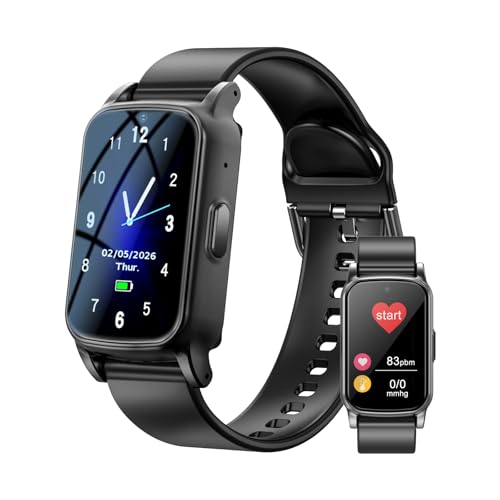
- HD video calling is advertised
- GPS geofencing and fall alerts
- One year of data; voice SIM needed for calls
Best For: Families seeking location alerts and video check-ins
Best for Simple Voice Check-Ins

- GPS geofencing and fall alerts
- Voice chat with a voice-enabled SIM
- One year of data included
Best For: Families prioritizing location monitoring and voice contact
Best for Included Data

- One year of data included
- GPS geofencing and fall alerts
- Voice calls need another SIM
Best For: Caregivers wanting location alerts with included initial data
Best for Video Calls

- 4G video and voice calls
- GPS geofencing and fall alerts
- Compatible Nano SIM required
Best For: Families seeking video check-ins and location alerts
Best for Video Check-Ins – 4G Fall Detection Watch with GPS
Among dementia tracking smartwatches, this model stands out for its advertised HD video calling alongside GPS location, geofencing, fall alerts, and SOS. It offers families several ways to check in, but its included SIM has an important calling limitation.
Best For: Families who want location alerts and the option for face-to-face check-ins.
Pros:
- GPS tracking and geofence alerts help caregivers monitor departures from designated areas.
- Fall detection can notify preset contacts when the wearer cannot press SOS.
- Large touchscreen, magnetic charging, and IP67 rating support everyday use.
- Preinstalled data-only SIM includes one year of data service.
Cons:
- The included data-only SIM does not support voice calls; calling requires a separate voice-enabled SIM.
- Blood pressure readings are described as reference data, not a substitute for medical measurement.
The video feature is the key differentiator, but confirm SIM requirements before buying if calls are central to your care plan.
Best for Predictable Data Costs – Fajocru V46 GPS Safety Watch
This Fajocru V46 is a practical option among dementia tracking smartwatches if you want the ongoing location-data cost stated upfront. Its app supports live GPS location, route history, and geofences, while fall detection adds another way to alert contacts.
Best For: Caregivers who want route history and clear information about data renewal.
Pros:
- GPS location, route history, and safe-zone alerts support day-to-day monitoring.
- Fall detection can send app alerts to preset contacts.
- Includes one year of location data; the listed renewal is about $30 per year, with no app fee.
- Medication and sedentary reminders add routine-support features.
Cons:
- Voice calls and SOS calls require a separate SIM with voice service; the included SIM is data-only.
- Blood pressure information is reference data rather than a clinical reading.
The explicit renewal estimate makes this easier to budget for, but factor in a voice plan if calling is essential.
Best for Simple Voice Check-Ins – GPS Fall Detection Watch
For shoppers comparing dementia tracking smartwatches, this model combines app-based GPS tracking and geofencing with fall detection and an SOS function. It also advertises two-way voice communication, provided you install a suitable voice-enabled SIM.
Best For: Families who want location monitoring and straightforward voice contact without prioritizing video calls.
Pros:
- Real-time GPS and geofence alerts can flag exits from designated areas.
- Fall detection can notify preset emergency contacts.
- Large, high-contrast touchscreen, magnetic charging, and IP67 rating suit daily wear.
- Included data-only SIM comes with one year of data service.
Cons:
- The included SIM cannot make voice calls; a separate voice-service SIM is required.
- Heart rate and blood pressure reference features should not be relied on for medical decisions.
This is a location-first choice with a voice-call option, not a ready-to-call device straight from the box.
Best for Included Data – 4G GPS Safety Watch
Among dementia tracking smartwatches, this model is worth considering if you want GPS location tracking, geofence alerts, and automatic fall detection without arranging a data plan immediately. Its pre-installed data-only SIM includes one year of data service.
Best For: Caregivers who prioritize location and fall alerts and want included data for initial setup.
Pros:
- GPS tracking and geofence alerts help caregivers monitor wandering.
- Automatic fall detection can notify preset emergency contacts.
- IP67-rated design, large touchscreen, and magnetic charging support everyday use.
Cons:
- The included data-only SIM does not support voice calls; calling requires a separate voice-capable SIM.
- Blood pressure readings are described as a reference, not a medical measurement.
The included data is a practical advantage, but confirm your SIM and calling needs before relying on two-way voice communication.
Best for Video Calls – Red 4G GPS Safety Watch
If face-to-face contact matters, this option stands out among dementia tracking smartwatches for its advertised 4G video calling alongside GPS tracking, geofence alerts, and automatic fall detection. It requires a compatible Nano SIM with calling and mobile data service; none is included.
Best For: Families who want video check-ins as well as wandering and fall alerts.
Pros:
- Supports 4G video calls and two-way voice communication.
- GPS tracking and geofencing provide location and boundary alerts.
- Automatic fall alerts, an SOS function, and an IP67-rated design add everyday safety features.
Cons:
- No SIM card is included, so you must arrange compatible service.
- The SIM must be inserted before first power-on; inserting it later may require a restart.
Choose this version if video contact is a priority, and check SIM compatibility and service costs before buying.
How We Picked These Dementia Tracking Smartwatches
We focused on the features named in the five selected listings: GPS tracking, fall detection, SOS alerts, 4G connectivity, and, on two listings, HD video calling. We also considered practical buying questions such as ease of use, wearability, cellular requirements, and caregiver access. The supplied listings do not establish how accurately each watch detects falls or reports its location, so confirm those details with the seller rather than treating any alert as guaranteed.
Quick Comparison: Which Features Matter Most?
All five listings emphasize fall detection, GPS, and SOS access. Two also advertise HD video calls, which may suit families who want face-to-face check-ins. The other listings keep the focus on tracking and emergency communication; one has a shorter feature description, so check its complete specifications before comparing it with the others. Because several product names are nearly identical, compare the exact listing, seller, supported network, and included service plan—not just the watch title.
Key Buying Factors for Dementia Tracking Smartwatches
Location and Cellular Coverage
Ask how frequently the caregiver app updates location, whether it shows location history, and whether it supports alerts when the wearer leaves a designated area. GPS may be less reliable indoors, while 4G calling and alerts depend on compatible cellular coverage. Confirm SIM, activation, and monthly service requirements before purchase.
Emergency Alerts and Caregiver Workflow
Check whether a fall alert reaches caregivers automatically, what happens if the wearer does not respond, and whether false alarms can be canceled. An SOS button should be easy for the wearer to find and press. Find out how many caregivers can receive notifications and whether alerts arrive by app, text, or phone call. No watch replaces an agreed emergency plan or regular check-ins.
Comfort, Charging, and Ease of Use
A watch left on a charger cannot provide on-wrist alerts. Look for a comfortable strap, a simple charging routine, and battery life that fits the wearer’s habits. Consider whether they can tolerate wearing a watch, recognize the SOS button, and manage calls without confusing menus. “Waterproof” is not specific enough on its own: verify the stated water-resistance rating and care instructions.
Who Should Buy Which Dementia Tracking Smartwatches?
Choose a video-call listing if visual check-ins are important and the wearer can comfortably answer calls. If straightforward safety features are the priority, start with a GPS/SOS listing and verify its fall-alert process and cellular compatibility. For someone likely to remove or forget the watch, prioritize wearability and a workable charging routine over extra features. If the person cannot reliably keep a watch on, discuss other location and care options with their support team.