When a child has epilepsy, overnight monitoring can offer another way to notice a possible problem—but devices differ sharply in what they measure and how they alert you. A seizure-focused monitor is not the same thing as a baby movement sensor or a video camera.
These eight options span contact-free health monitors, infant movement and vital-sign devices, and video monitors. The right choice depends on your child’s age, seizure patterns, and the monitoring plan you’ve discussed with their clinician.
Best 8 Epilepsy Monitoring Devices for Kids Picks for 2026
Video Room Monitor
Sense-U Battery Baby Monitor Camera

- 1080p video and night vision
- Background audio and two-way talk
- Not a seizure detector
Best For: Video-and-audio room checks alongside a separate monitoring plan
Contact-Free Bedside Sensor
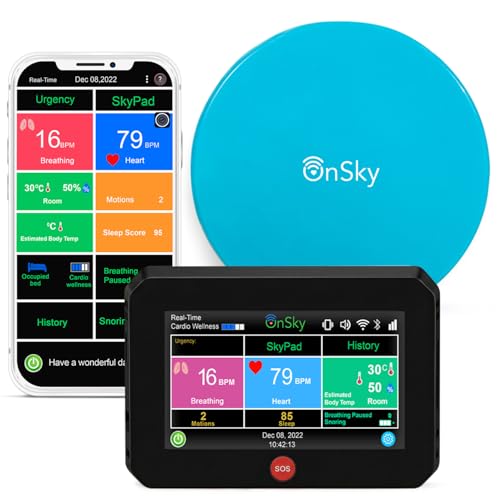
- Contact-free bedside sensor pad
- Listing states convulsion monitoring
- Remote app; no required subscription
Best For: Bedside monitoring for children age 1 or older
Portable Infant Movement Monitor

- Diaper-clip movement sensing
- Vibration, then audible alarm
- Not a medical device
Best For: General movement monitoring for healthy infants
Contact-Free Bedside Alternative

- Non-contact bedside monitoring
- 5-inch hub with SOS button
- App access without subscription
Best For: Bedside monitoring with a touchscreen hub for ages 1 and up
Non-Wearable Movement Pick
Babysense 7 Under-Mattress Monitor

- Two under-mattress movement pads
- Alerts when movement slows or stops
- No Wi-Fi or infant-worn sensor
Best For: Non-wearable infant movement monitoring
Infant Vital-Signs Pick

- Tracks pulse rate and oxygen
- Alerts via base station and phone
- Designed for healthy infants 1–18 months
Best For: Infant pulse and oxygen monitoring
Private Video Pick

- No Wi-Fi or cloud connection
- Night vision and sound-activated screen
- Up to 19 hours of video battery life
Best For: Private nursery video and audio checks
Wide-View Video Pick
Firskids 4.3-Inch Baby Monitor

- 4.3-inch screen with remote pan and tilt
- Wi-Fi-free video connection
- Night vision and two-way talk
Best For: Adjustable nursery video viewing
Video Room Monitor – Sense-U Battery Baby Monitor Camera
Among epilepsy monitoring devices for kids, this Sense-U camera is a way to watch and listen, not a device that detects seizures. Its 1080p video, night vision, and background audio can help caregivers check on a child from their phone.
Best For: Families who want a video-and-audio view of a child’s room alongside a separate seizure-monitoring plan.
Pros:
- 1080p video, night vision, and two-way audio.
- Background audio continues while the app runs in the background.
- Supports multiple-camera viewing and has a rechargeable battery.
Cons:
- Sound and motion detection are not described as seizure detection.
- Remote viewing depends on Wi-Fi and a smartphone.
This is a flexible room camera, but its alerts should not be mistaken for epilepsy-specific monitoring.
Contact-Free Bedside Sensor – SkyPad Health Monitor
For shoppers comparing epilepsy monitoring devices for kids, SkyPad is a contact-free bedside option described as monitoring convulsions alongside heart rate, breathing, movement, and sleep patterns. The supplied listing says it is FDA-cleared and suitable for children age 1 and older.
Best For: Caregivers seeking bedside health monitoring without attaching a wearable to a child age 1 or older.
Pros:
- Sensor pad can be placed beneath or beside a pillow.
- Tracks multiple measures, including movement and convulsions, according to the listing.
- Offers remote app viewing without a required subscription.
Cons:
- Designed for use at a bed, not for monitoring a child throughout the day.
- Emergency phone calls are described for SOS-button presses; the notes do not specify which sensor events trigger calls.
SkyPad’s contact-free setup may suit overnight care, but ask the child’s clinician whether its stated monitoring capabilities fit their seizure-monitoring needs.
Portable Infant Movement Monitor – Snuza Hero SE
When researching epilepsy monitoring devices for kids, it is important to distinguish general movement monitors from medical devices. The Snuza Hero SE clips to an infant’s diaper to sense movement, but its listing explicitly says it is not a medical device and is intended for healthy infants.
Best For: Parents of healthy infants who want a simple, portable movement alert rather than seizure monitoring.
Pros:
- Vibrates after 15 seconds without detected movement, then sounds an alarm after another 5 seconds.
- Needs no Wi-Fi, app, cord, or sensor pad.
- Replaceable battery is rated for up to six months.
Cons:
- Not intended to diagnose, treat, or prevent a medical condition.
- Not suitable for co-sleeping or bed-sharing.
Its straightforward movement alerts may reassure some parents, but it should not be selected as an epilepsy-specific monitor.
Contact-Free Bedside Alternative – SkyPad-4 Health Monitor
SkyPad-4 is another bedside choice among epilepsy monitoring devices for kids. Its supplied listing describes FDA-cleared, contact-free monitoring of convulsions, breathing, heart activity, movement, and sleep for users age 1 and older.
Best For: Families wanting a non-contact bedside sensor with a touchscreen hub and remote app access.
Pros:
- Sensor pad sits beneath or beside a pillow, with no skin contact needed.
- Includes a 5-inch touchscreen hub with an SOS button.
- Health data can be viewed through the free OnSky Health app; no subscription is required.
Cons:
- Bedside placement limits its usefulness away from the bed.
- The notes do not establish how reliably it identifies particular seizure types.
Based on the supplied notes, SkyPad-4 shares the core monitoring features of the other SkyPad listing. Check the model and included components before choosing between them, and discuss fit with the child’s clinician.
Non-Wearable Movement Pick – Babysense 7 Under-Mattress Monitor
Among products shoppers may consider when searching for epilepsy monitoring devices for kids, the Babysense 7 is an infant movement monitor—not a seizure detector. Its two under-mattress pads track movement across the crib without touching the baby.
Best For: Families wanting non-wearable movement alerts for a newborn or infant in a compatible crib.
Pros:
- Audible alarm if movement stops for 20 seconds or slows.
- Two pads provide coverage across the crib or bed area.
- No Wi-Fi or wearable sensor required.
Cons:
- Does not identify seizures or monitor brain activity.
- Requires a hard bed base; memory-foam mattresses are not compatible.
Choose this for passive infant movement monitoring, not as a substitute for a clinician-recommended epilepsy monitoring plan.
Infant Vital-Signs Pick – Owlet Dream Sock
For parents comparing epilepsy monitoring devices for kids, the Owlet Dream Sock provides pulse-rate and oxygen readings with alerts when they leave preset zones. It is intended for healthy infants ages 1–18 months, not for detecting seizures.
Best For: Parents of healthy infants who want foot-worn pulse and oxygen monitoring alongside sleep insights.
Pros:
- Real-time pulse-rate and oxygen alerts reach the base station and phone.
- Fabric sock includes a sensor with up to 16 hours of battery life.
- App provides predictive sleep information.
Cons:
- Not presented as a seizure detector or intended for children beyond infancy.
- Requires 2.4 GHz Wi-Fi for setup and is a U.S.-only version.
Its vital-sign alerts may appeal to parents seeking more data, but they do not replace epilepsy-specific guidance from a child’s clinician.
Private Video Pick – VTech VM819 Baby Monitor
The VTech VM819 is a conventional video option for families researching epilepsy monitoring devices for kids. It lets you see and hear a child through a dedicated parent unit, but it does not detect seizures or measure movement or vital signs.
Best For: Families who want a Wi-Fi-free nursery view with sound-triggered screen activation.
Pros:
- Encrypted 2.4 GHz FHSS connection needs no internet or cloud service.
- Infrared night vision and 2x digital zoom help with visual checks.
- Parent unit offers up to 19 hours of continuous video use per charge.
Cons:
- Sound activation responds to noise, not seizure-specific activity.
- The 2.8-inch display may feel small for detailed viewing.
This is a practical choice for nearby visual and audio check-ins; a quiet event could go unnoticed if you rely on sound activation alone.
Wide-View Video Pick – Firskids 4.3-Inch Baby Monitor
For shoppers looking at epilepsy monitoring devices for kids, this Firskids monitor offers a larger screen and remote camera positioning for visual checks. Despite its cry-detection and video features, it is a baby monitor rather than a seizure-detection device.
Best For: Families who want a Wi-Fi-free camera they can pan and tilt remotely while watching a child’s room.
Pros:
- 4.3-inch IPS display with 320° pan, 120° tilt, and 2x zoom.
- No-Wi-Fi 2.4 GHz connection with a stated range of up to 1,000 feet.
- Automatic infrared night vision and two-way audio.
Cons:
- ECO/VOX mode wakes the screen in response to crying, not silent events.
- No stated seizure, movement, or vital-sign detection.
The adjustable view can help with routine observation, but it should not be relied on to identify seizures or replace a clinician-recommended monitoring approach.
How We Picked the Best Epilepsy Monitoring Devices for Kids
We grouped these products by their stated purpose: seizure-related monitoring, infant movement or vital-sign tracking, and video or audio observation. We prioritized practical differences buyers can check before purchase, including age fit, sensor placement, alert delivery, connectivity, and ongoing costs. Product claims and regulatory status should be verified on the current listing and, where relevant, with the manufacturer; inclusion here is not a claim that every device detects seizures.
Quick Comparison: What Each Type Does
The SkyPad and SkyPad-4 are the seizure-monitoring entries in this group; compare their current specifications, supported ages, and alert methods rather than assuming the versions work identically. The Snuza Hero and Babysense 7 focus on infant movement, while the Owlet Dream Sock and Sense-U offer baby-focused monitoring features that vary by model and setup. The VTech and long-range camera monitors provide a way to see or hear a child, but they do not automatically identify a seizure. Check whether an alert reaches you when you are asleep, away from the monitor, or disconnected from Wi-Fi.
Key Buying Factors for Epilepsy Monitoring Devices for Kids
Match Detection to the Child’s Seizures
Ask your child’s epilepsy care team which events you need to notice, particularly overnight. A device that tracks movement, breathing, heart rate, or sound may miss seizures without a detectable change in that signal. False alarms are also possible. No home monitor can guarantee detection or replace a clinician-approved seizure response plan.
Check Age, Placement, and Sleeping Arrangements
Infant wearables and under-mattress pads may not suit older children, shared beds, or certain mattress setups. Confirm the stated age and weight limits, installation requirements, and whether a child can comfortably and safely use the sensor. Contact-free devices may be easier to live with, but still require correct positioning.
Plan for Alerts and Outages
Compare on-device alarms, caregiver notifications, range, battery backup, and what happens if power or internet fails. Decide who will respond, how they will hear an alarm, and whether they need a second alert location. If the listing uses terms such as “FDA-cleared,” verify exactly which device and functions the clearance covers; clearance does not mean all seizures will be detected.
Who Should Buy Which Epilepsy Monitoring Devices for Kids?
For a child with diagnosed epilepsy, start with devices specifically marketed for seizure monitoring and review their suitability with the care team. For an infant whose primary need is movement or vital-sign awareness, compare the Snuza, Babysense, Owlet, and Sense-U by supported age and alert setup—not by an assumption that they are epilepsy detectors. Choose a VTech or other dedicated video monitor when your main need is visual or audio check-ins, ideally alongside—not in place of—any clinically recommended monitoring. The best choice is the one whose limits you understand and whose alerts fit your household’s response plan.