Nighttime seizures can make the edge of a bed a concern, but no bed rail can make a sleeping space seizure-proof. The right choice depends on the person’s movements, mattress, bed frame, and ability to get out of bed safely.
These five options include rigid support rails and soft foam bolsters. Use the guide below to compare their different purposes and identify safety checks to make before buying.
Best 5 Epilepsy Safe Bed Rails Picks for 2026
Best Adjustable Rail
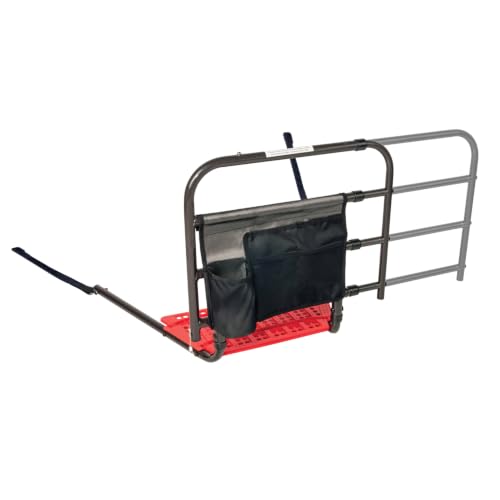
- ASTM F3186-17 tested
- 20–30-inch adjustable guard
- Standing handle and storage pouch
Best For: Adults using compatible traditional beds who also need a standing handle
Best Soft Bolsters

- Pair of high-density foam wedges
- Adjustable straps and Velcro
- Removable, washable covers
Best For: Care setups needing soft, repositionable bedside cushioning
Best for Steel-Frame Hospital Beds

- Pair of half-length steel rails
- Design addresses lodging between bars
- Fits most steel-frame hospital beds
Best For: Adults with compatible steel-frame hospital beds
Certified Steel Pick

- ASTM F3186-17 independently tested
- 300 lb stated user limit
- Tool-free setup with two straps
Best For: Adults seeking an ASTM-tested transfer handle
Six-Pocket Pick

- Lab tested to hold up to 300 lb
- Fits 7–13-inch mattresses
- Six-pocket bedside organizer
Best For: Adults with standard beds who want transfer support and storage
Best Adjustable Rail – Stander EZ Adjust Bed Rail
For shoppers comparing epilepsy safe bed rails, the Stander EZ Adjust offers a 20- to 30-inch adjustable guard and a handle for getting in and out of bed. It has been independently tested to the ASTM F3186-17 adult portable bed rail standard, but suitability for a person with seizures still needs individual assessment.
Best For: Adults who need a certified portable rail on a compatible traditional bed, plus support when standing.
Pros:
- Passes the ASTM F3186-17 adult portable bed rail standard.
- Adjusts from 20 to 30 inches and supports up to 300 pounds.
- Includes a safety strap and a multi-pocket bedside pouch.
Cons:
- Not intended for adjustable or hospital beds.
- Specified for mattresses 10–14 inches thick.
The combination of adjustable coverage and a standing handle makes this a practical option when the bed meets its fit requirements. Certification does not replace checking rail placement and seizure-specific risks with a clinician.
Best Soft Bolsters – AOSSA Foam Bed Rail Bolsters
If you are exploring softer alternatives to rigid epilepsy safe bed rails, the AOSSA set provides two high-density foam wedges that strap to the bed. They can serve as bedside cushions or be repositioned for body support; they are not a substitute for an individually assessed seizure-safety plan.
Best For: Care setups that call for soft, repositionable bedside bolsters rather than a metal grab rail.
Pros:
- Two foam wedges provide cushioning on both sides of a bed.
- Straps and Velcro allow positioning adjustments.
- Removable, zippered covers can be washed.
Cons:
- Foam bolsters do not provide a rigid handle for standing.
- Secure placement depends on fastening and positioning the wedges appropriately.
These are worth considering when cushioning and flexible positioning matter most. Check how the bolsters fit the mattress and whether they could create gaps or restrict movement for the intended sleeper.
Best for Steel-Frame Hospital Beds – Drive Medical No Gap Rails
For a steel-frame hospital bed, these half-length rails are a more specialized option in a search for epilepsy safe bed rails. Drive Medical describes their no-gap design as intended to keep users from becoming lodged between the bars, but the bed and the sleeper’s needs must still be assessed before use.
Best For: Adults with a compatible steel-frame hospital bed who need a pair of half-length rails.
Pros:
- Includes two half-length steel rails.
- No-gap design is intended to address lodging between bars.
- Designed for straightforward installation on most steel-frame hospital beds.
Cons:
- Not for beds with a pan-style bed surface.
- Hospital-bed compatibility should be confirmed before purchase.
Choose this pair for its specific hospital-bed application, not as a universal bedside rail. Confirm frame fit and review entrapment and seizure-related concerns with the care team.
Certified Steel Pick – GYMVIEW Bed Rail
If you’re comparing epilepsy safe bed rails, the GYMVIEW offers an adult bedside support rail with independently tested ASTM F3186-17 compliance. Its steel frame is rated to hold 350 lb, while the stated user limit is 300 lb. That testing is useful to know, but it does not establish seizure-specific safety.
Best For: Adults who need a transfer handle and want an ASTM-tested rail with a stated 300 lb user limit.
Pros:
- Independently tested to ASTM F3186-17.
- Tool-free installation uses two securing straps.
- Padded handle and detachable storage pouch add bedside convenience.
Cons:
- Not described as a padded rail or a seizure-specific protective barrier.
- The stated 350 lb frame rating is higher than its 300 lb user limit.
Its testing and straps make it worth considering for adult transfer support. For someone who has seizures, check bed compatibility and discuss rail use with a clinician before relying on it at night.
For shoppers researching epilepsy safe bed rails, the PELEGON is an adjustable adult transfer rail with a non-slip handle, safety strap, and six-pocket organizer. It is lab tested to hold up to 300 lb, but the supplied details do not establish seizure-specific protection.
Best For: Adults with a compatible standard bed who want transfer support and organized bedside storage.
Pros:
- Adjusts from 17.3 to 21 inches high.
- Fits listed standard bed sizes with mattresses 7 to 13 inches thick.
- Tool-free assembly, non-slip grip, and six storage pockets.
Cons:
- Not suitable for adjustable, water, or inflatable beds, or extremely soft mattresses.
- Not described as a padded or seizure-specific protective rail.
The fit guidance is helpful: measure the mattress and confirm the bed type before buying. If seizures are the reason for considering a rail, ask a clinician whether this style is appropriate.
How We Picked the Best Epilepsy Safe Bed Rails
We compared the five selected options by barrier type, intended use, stated safety standards, adjustability, and the fit information a buyer needs to verify. A rigid rail may help someone steady themselves while getting in or out of bed; a foam bolster offers a softer edge cue. Neither is automatically appropriate for a person who has seizures. Product claims, including ASTM compliance, should be checked against the specific model and instructions, not treated as a guarantee of seizure safety.
Quick Comparison: Which Type Fits the Need?
The Stander EZ Adjust and PELEGON rails are adjustable handle-style options to consider when transfer support matters. The other ASTM F3186-labeled adult rail is another handle-style candidate, but confirm its exact dimensions and mounting requirements. Drive Medical’s No Gap half-length steel rails are a more substantial option intended for compatible medical-style beds; check the specified bed and mattress combination before ordering. AOSSA foam bolsters offer a padded alternative when a hard rail is undesirable, but they do not provide a stable handhold or reliably contain forceful movements.
Key Buying Factors for Epilepsy-Safe Bed Rails
Start with an Individual Safety Assessment
Ask the treating clinician or an occupational therapist whether a rail is appropriate, especially if seizures involve rolling, thrashing, confusion, or attempts to climb over obstacles. A rail can introduce impact, climbing, or entrapment hazards. It should not be used as a restraint or as a substitute for a seizure-response plan.
Check Entrapment Risk and Bed Compatibility
Follow the manufacturer’s directions for the exact bed frame, mattress thickness, and installation method. Check gaps between the rail and mattress, beneath the rail, and at the headboard and footboard; a shifting or compressed mattress can change those gaps. Recheck the fit after changing bedding, moving the bed, or adjusting mattress height. If the product is not approved for an adjustable or hospital bed, do not assume it will fit safely.
Plan for Movement and Exit
Consider whether the person needs a clear route out of bed, a reachable handle, or a softer bedside environment. Make sure caregivers can access the bed quickly. Where advised by a clinician, a low bed and appropriate floor protection may address fall concerns without adding a rigid barrier.
Who Should Buy Which Epilepsy Safe Bed Rails?
For an adult who needs a handhold and has been assessed as able to use one safely, compare the Stander, PELEGON, and ASTM F3186-labeled adult rail by fit and handle position. For a compatible medical-style bed where a half-length barrier is appropriate, consider the Drive Medical pair after confirming the manufacturer’s compatibility requirements. If avoiding a hard contact surface is the priority, discuss the AOSSA bolsters with the care team and verify that they stay positioned without creating gaps. When seizures involve climbing, forceful movement, or significant entrapment risk, seek individualized advice before buying any of these products.