Choosing the right alert system can make everyday caregiving safer and less stressful. The best motion sensors for elderly parents help you notice movement, wandering, or bed exits early—without adding unnecessary noise or confusion.
In this roundup, we focus on practical features like wireless range, alert type, ease of setup, and comfort, so you can match the right sensor to your parent’s needs and your home layout.
Best 10 Motion Sensors for Elderly Parents Picks for 2026
Best for Entry Alerts
Wireless Caregiver Pager Motion Sensor Alarm

- Includes 1 plug-in receiver and 1 motion sensor
- 58 ringtones, 5 volume levels, and LED visual alerts
- Good for doorways, bedrooms, garages, and mailboxes
Best For: Caregivers who need an easy indoor motion alert for elderly parents or home entry points.
Best Budget Motion Alert
Smart Caregiver Economy Wireless Monitor

- Affordable wireless monitor plus one motion sensor
- Swivel bracket helps target beds, doors, or hallways
- Expandable up to 6 cordless components
Best For: Families needing a low-cost motion alert system for a single room or doorway.
Best for Early Fall Alerts
Lunderg Wireless Early Alert Bed Alarm

- Alerts caregivers before bed exit
- Wireless pager avoids in-room alarm
- Simple setup with no Wi-Fi or app
Best For: Families who need an easy-to-use early-warning bed alarm for dementia care and nighttime fall prevention.
Best for Long-Range Monitoring
METAK Wireless Motion Door Chime

- 110° detection up to 26 ft for entryway coverage
- 32 chimes and 5 volume settings for customization
- Expandable to 20 sensors with 500 ft wireless range
Best For: Families needing a simple motion alert for elderly parents, dementia care, or busy entrances.
Best for False-Alarm Reduction
PILSAMAS Bed Alarms with Sensor ID Display

- Infrared sensing helps cut false alarms from bed movement
- Sensor ID display makes alert location easy to identify
- No monthly fees, local-only alerts, and privacy-focused design
Best For: Caregivers who need a privacy-friendly, whole-home alert system with fast room identification.
Best for Two Monitoring Zones
Bed Alarm with 1 Motion Sensor

- Covers bedside and doorway/hallway movement
- Chime plus flashing-light receiver
- No WiFi, app, or hardwiring required
Best For: Caregivers who need a simple indoor alert system for two important monitoring points.
Best for Bed-Exit Alerts
CallToU Bed Alarm with Vibration

- Detects feet touching the floor before a full stand-up
- Silent, vibrate, and multi-volume alert options
- Portable receiver with flexible sensor placement
Best For: Caregivers monitoring nighttime bed exits, wandering risk, or fall prevention.
Best for Bed Exit Alerts
Smart Caregiver Bed Exit Alarm with Pager

- Detects bed exit with a pressure-sensitive pad
- Wireless pager supports sound and vibration alerts
- Expandable with up to six Smart Caregiver sensors
Best For: Caregivers who need quick overnight bed-exit alerts for an elderly parent.
Best Heavy-Duty Pick

- Works as a doorbell, entry alert, and caregiver reminder
- Useful for basic monitoring of seniors and dementia patients
- Easy option for homes, bedrooms, or small businesses
Best For: Caregivers who need a simple, budget-friendly alert for doors or rooms.
Best Simple Pick
Upgraded Bed Sensor Alarm for Elderly
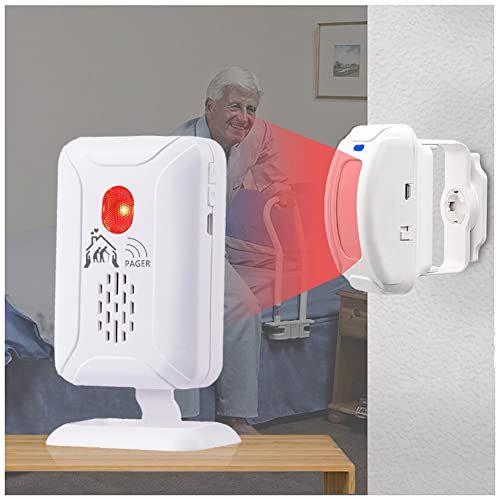
- Detects bed exits or doorway departures
- Caregiver receiver keeps alerts out of the bedroom
- Wireless, with LED/sound alerts and dual power
Best For: Caregivers monitoring elderly parents at night for bed exits, wandering, or fall risk.
Best for Entry Alerts – Wireless Caregiver Pager Motion Sensor Alarm
If you want a simple alert system for caregiving, this motion sensor pager is a practical option for monitoring movement in another room. It’s a useful pick for families comparing motion sensors for elderly parents because it adds a loud, customizable notification without requiring a complicated setup.
Best For: Caregivers who want an affordable indoor motion alert for doorways, bedrooms, or hall monitoring.
Pros:
- Includes one plug-in receiver and one motion sensor for quick setup
- Offers 58 ringtones, 5 volume levels, and visual LED alerts
- Battery-powered sensor can also use USB, with up to 20 transmitters per receiver
- Works well as an entry alert for rooms, garages, mailboxes, and driveways
Cons:
- Only one sensor is included, so larger homes may need extras
- Detection range may need testing before permanent mounting
- Best suited to motion alerts, not full fall-detection monitoring
This is a solid low-friction choice if you mainly need an audible and visual cue when someone moves through a monitored area. For shoppers focused on motion sensors for elderly parents, it stands out more for convenience and alert flexibility than for advanced health monitoring.
Best Budget Motion Alert – Smart Caregiver Economy Wireless Monitor
If you want a simple, affordable way to track movement, this Smart Caregiver setup is a practical pick for motion sensors for elderly parents. It pairs a cordless monitor with one wireless motion sensor, making it easy to watch for bed exits, room departures, or doorway activity without a complicated install.
Best For: Families who need a low-cost motion alert system for a single room, doorway, or bedside setup.
Pros:
- Includes a monitor and a motion sensor for basic wireless coverage
- Swivel bracket helps aim the sensor at beds, doors, or pathways
- Adjustable monitor volume gives you some flexibility for day or night use
- Expandable system supports up to 6 cordless components
Cons:
- Batteries and AC adapters are not included
- Only one motion sensor is included in the box
- More basic than full-featured caregiver alert systems
This is a straightforward entry-level option if you mainly need dependable movement alerts rather than smart features. For motion sensors for elderly parents, it stands out as an economical way to monitor one important area and expand later if your needs grow.
Best for Early Fall Alerts – Lunderg Wireless Early Alert Bed Alarm
If you’re comparing motion sensors for elderly parents, this Lunderg system stands out for one key reason: it alerts you before your loved one fully gets out of bed. The wireless setup avoids in-room alarms, and the pager-style receiver is designed for caregivers who want simple, fast notifications without extra tech.
Best For: Caregivers looking for a no-app, no-Wi-Fi early-warning bed alarm for dementia care, nighttime wandering, or fall prevention.
Pros:
- Early-alert design aims to notify caregivers before the user leaves the bed
- Wireless pager keeps the alarm out of the room, which may reduce distress
- Simple setup with no Wi-Fi, app, or tools required
- Adjustable volume and vibration mode make it easier to fit different homes
Cons:
- Works best for bed-exit monitoring, not general room motion tracking
- Requires placing the sensor pad correctly for reliable early alerts
- Single-purpose design may be more than some families need
For families prioritizing bedside safety, this is a focused solution rather than a broad smart-home sensor. Among motion sensors for elderly parents, it’s a strong fit if your main concern is catching bed exits early and avoiding a loud alarm in the room.
Best for Long-Range Monitoring – METAK Wireless Motion Door Chime
This motion sensor door chime is a practical pick if you want motion sensors for elderly parents and need a simple alert system for entries, hallways, or garage access points. It’s designed to notify you when movement is detected, with enough range and customization to fit home or small-business use.
Best For: Families who want an easy-to-place motion alert for elderly parents, dementia monitoring, or busy doorways.
Pros:
- 110° detection with up to 26 ft coverage helps monitor common entry areas.
- 32 chimes and 5 volume levels make it easier to tune alerts to your space.
- 500 ft wireless range and support for up to 20 sensors suit larger homes.
- Dual power options add flexibility for either portable or continuous use.
Cons:
- It’s an alert chime, not a camera or two-way communication system.
- Performance depends on placement and may need testing to reduce false alerts.
For shoppers comparing motion sensors for elderly parents, this model stands out for its easy expansion, flexible mounting, and straightforward audible alerts. It’s a solid choice when you mainly need dependable notification rather than a full smart-home security setup.
Best for False-Alarm Reduction – PILSAMAS Bed Alarms with Sensor ID Display
If you’re comparing motion sensors for elderly parents, this PILSAMAS system is built to reduce false alarms while making it easier to identify exactly which room or exit triggered the alert. The infrared sensors track floor footsteps instead of bed movement, and the pager shows a sensor ID so caregivers can respond faster without checking every room.
Best For: Caregivers who want a privacy-friendly, no-subscription alert system for fall monitoring, room exits, and whole-home coverage.
Pros:
- Infrared motion sensing helps avoid false alarms from shifting in bed or incontinence.
- Pager displays the exact sensor ID, so you know where help is needed right away.
- No monthly fees, no audio/video capture, and local alerts only for better privacy.
- 1000 ft range, multiple alert modes, and expandable sensor coverage for larger homes.
Cons:
- Works best with careful placement, which may take a little testing to reduce pet triggers.
- Primarily an alert system, so it won’t replace hands-on caregiving or medical monitoring.
- Battery management is another small task if you’re using multiple sensors.
For families shopping motion sensors for elderly parents, this is a strong fit if you value quick room identification, privacy, and fewer nuisance alerts over app-based extras. It’s especially appealing for homes where the caregiver needs reliable whole-house coverage without monthly fees.
Best for Two Monitoring Zones – Bed Alarm with 1 Motion Sensor
If you want motion sensors for elderly parents that cover more than one important area, this bed alarm is a practical choice. It lets you place a sensor by the bed and another near a doorway or hallway, so caregivers get a clearer alert when someone gets up and starts moving around.
Best For: Caregivers who want a simple, no-WiFi alert system for monitoring bed exits plus a second movement area in the home.
Pros:
- Monitors two key zones, such as bedside and doorway, for better movement tracking
- Plug-in receiver gives both a chime and flashing light for easier noticing
- No app, WiFi, phone pairing, or hardwiring needed
- Flexible enough for hallways, entryways, kids’ rooms, or pet areas too
Cons:
- Indoor use only, so it is not meant for outdoor monitoring
- Placement takes some care to reduce false alerts from pets, sunlight, or busy walkways
For families comparing motion sensors for elderly parents, this model stands out for its simple setup and two-point coverage without relying on WiFi. It is a good fit when you want a straightforward alert system that helps you notice bed exits and nearby movement in time.
Best for Bed-Exit Alerts – CallToU Bed Alarm with Vibration
If you’re comparing motion sensors for elderly parents, this CallToU bed alarm is built to catch bed exits early, before a full stand-up happens. The floor-side sensor looks for feet touching down, and the portable receiver gives you flexible alert options for home or care settings.
Best For: Caregivers who want an early-warning bed-exit alert for an older adult who may wander, stand abruptly, or get up at night.
Pros:
- Detects movement at the bed edge before the person is fully standing
- 5 volume levels, 18 ringtones, plus silent/vibrate modes for night use
- Sensor rotates 360° to help reduce false alarms from restless sleep
- Portable receiver and replaceable AAA batteries make placement flexible
Cons:
- Designed for bed-exit monitoring, not general room-wide motion detection
- Battery-based sensor requires occasional replacements
- Alert quality depends on correct placement beside the bed
This is a practical pick if you need motion sensors for elderly parents that prioritize early bed-exit warnings over broad smart-home features. It’s especially useful when quiet overnight monitoring and fewer nuisance alerts matter most.
Best for Bed Exit Alerts – Smart Caregiver Bed Exit Alarm with Pager
If you’re comparing motion sensors for elderly parents, this bed-exit alarm is a simple, practical way to catch movement as soon as a loved one starts getting up. The wireless pager gives caregivers an early warning without needing a phone app or complicated setup, making it a solid fit for home use.
Best For: Families who want dependable overnight bed-exit alerts and a pager-based system for fall prevention.
Pros:
- Soft 10″ x 30″ bed pad senses pressure loss and alerts quickly when the user rises
- Wireless pager includes sound and vibration options for flexible caregiver notifications
- Expandable system can work with multiple Smart Caregiver sensors for broader coverage
- U.S.-based company with long-term customer support
Cons:
- Only monitors bed exit, so it won’t track general room movement
- Requires placing the pad correctly for the best alert timing
- Not a full smart-home or app-based monitoring system
This is a focused option for caregivers who want a reliable alert at the point of bed exit rather than a broader tracking system. For motion sensors for elderly parents, it stands out as a straightforward fall-prevention tool that favors simplicity and fast response.
Best Heavy-Duty Pick – HENDUN Motion Sensor Doorbell
If you want a simple alert system rather than a full monitoring setup, this HENDUN unit is a practical option among motion sensors for elderly parents. It works as a doorbell, entry alert, and reminder alarm, making it useful for tracking movement, notifying caregivers, and helping with everyday supervision.
Best For: Caregivers who want an affordable, multi-use alert for doors, rooms, or bedside monitoring.
Pros:
- Multi-purpose design for door alerts, room entry notification, and bedside use
- Helpful for caregiver reminders and basic monitoring of seniors with dementia
- Simple setup for homes, small businesses, or temporary coverage areas
Cons:
- Not a smart app-based system with remote notifications
- More of an alert buzzer than a true medical fall-detection device
- Best for basic awareness, not advanced tracking or automation
For families comparing motion sensors for elderly parents, this is a straightforward pick if you mainly need audible alerts and low-friction monitoring. It is a good fit when simplicity matters more than high-tech features.
Best Simple Pick – Upgraded Bed Sensor Alarm for Elderly
If you’re comparing motion sensors for elderly parents, this bed-exit alarm is built for one very specific job: alerting a caregiver when someone gets up or leaves the room. The floor-placed sensor can detect a foot touching down near the bed, and the receiver can stay with the caregiver instead of sounding in the bedroom.
Best For: Caregivers who want a simple wireless alert system for bed exits, room departures, and dementia wandering monitoring.
Pros:
- Floor or doorway placement gives flexible monitoring options.
- Alarm stays with the caregiver, helping avoid startling the person in bed.
- Wireless range reaches up to 918 ft in open areas.
- LED and sound alerts plus dual power options add convenience.
Cons:
- Needs a quick self-test and positioning check before use.
- Not a full room monitoring system; it’s focused on exit detection.
- Battery setup and sensor placement may take a little tuning.
This is a practical pick for motion sensors for elderly parents when the main concern is noticing bed exits early, especially for fall prevention and nighttime supervision.
How We Picked the Best Motion Sensors for Elderly Parents
We looked for Motion Sensors for Elderly Parents that prioritize fast alerts, simple installation, and dependable range. We also favored systems with caregiver-friendly receivers, adjustable volume or vibration, and options that work well for dementia care, bed-exit monitoring, or general doorway awareness.
Quick Comparison
Not every setup serves the same purpose. Some products are best for bed exit and fall prevention, while others are better for doorway monitoring or room-to-room movement. Consider whether you need an early warning before someone stands up, a general motion alert, or a portable pager that can follow you around the house.
Key Buying Factors for Motion Sensors for Elderly Parents
Alert Style
Choose between chime, flashing light, vibration, silent pager, or a combination. For caregivers who sleep nearby, vibration and silent alerts can be especially useful. For daytime use, a louder chime may be more practical.
Sensor Type and Placement
Bed sensors, motion detectors, and doorway alarms solve different problems. Bed sensors are ideal for fall prevention and wander risk. Motion detectors work well for hallways, entries, and shared spaces. Placement matters as much as the device itself, so make sure the sensor covers the exact area of concern.
Range and Reliability
If you need coverage across multiple rooms, check the wireless range and whether walls or floors may reduce signal strength. A strong, stable connection is especially important in larger homes or when the caregiver spends time in another room.
Ease of Use
Look for simple pairing, clear indicator lights, and controls that are easy to understand during a stressful moment. The best systems for Motion Sensors for Elderly Parents are usually the ones that are easiest to live with every day.
Who Should Buy Which Motion Sensors for Elderly Parents?
Choose a bed exit alarm if the main concern is nighttime wandering or fall prevention. Pick a motion detector or doorway chime if you want awareness of movement in halls, entrances, or shared living spaces. If the caregiver needs flexibility, a portable pager with adjustable alerts is often the most versatile choice.
For dementia care, prioritize early warning, quiet operation, and reliable notification. For more general aging-in-place support, a simple wireless motion sensor with a plug-in receiver may be enough. The best option is the one that fits the parent’s habits, the caregiver’s routine, and the home’s layout.