Choosing motion sensors for senior bedrooms is about more than convenience. The right setup can help caregivers notice nighttime movement, reduce fall risk, and respond faster when someone gets out of bed.
Below, we focus on practical options for home monitoring, bedside alerts, and simple room-entry detection so you can match each product to the needs of the senior, caregiver, and space.
Best 10 Motion Sensors for Senior Bedrooms Picks for 2026
Best for Easy Bedside Alerts
Bed Alarm with 2 Motion Sensors

- Two motion sensors with a plug-in chime receiver
- No Wi-Fi, app, or wearable needed
- Good for bed exit, doorway, or hallway alerts
Best For: Caregivers who want a simple indoor alert for a senior bedroom or nearby path.
Best for Existing CMU Systems
Motion Sensor for 433-EC/433-CMU

- Connects to 433-EC or 433-CMU monitors
- Keeps the bedroom quiet while sending alerts
- Good add-on for caregiver monitoring
Best For: Households that already own a compatible central monitor and need a quiet motion alert sensor.
Best for Dual-Sensor Coverage
Bed Alarm Caregiver Pager with 2 Motion Sensors

- Two wireless sensors widen bedroom and doorway coverage
- Portable pager offers chime or alarm alerts
- Flexible mount options for wall or flat-surface placement
Best For: Caregivers needing flexible indoor monitoring for seniors across bedsides and doorways.
Best for Remote Monitoring
Wireless Caregiver Motion Sensor Alarm

- Motion-activated alerts for room monitoring
- LED plus sound notifications with adjustable volume
- Easy plug-in receiver and battery/USB sensor setup
Best For: Caregivers monitoring seniors, dementia patients, or other loved ones from another room.
Best Budget Wireless Alert
Smart Caregiver Economy Monitor

- Starter kit with 1 monitor and 1 motion sensor
- Expandable up to 6 cordless components
- Good for bed-exit and doorway alerts
Best For: Caregivers seeking an affordable wireless alert system for senior bedrooms and doorways.
Best for Easy Setup
Bed Sensor Alarm with Motion Detection
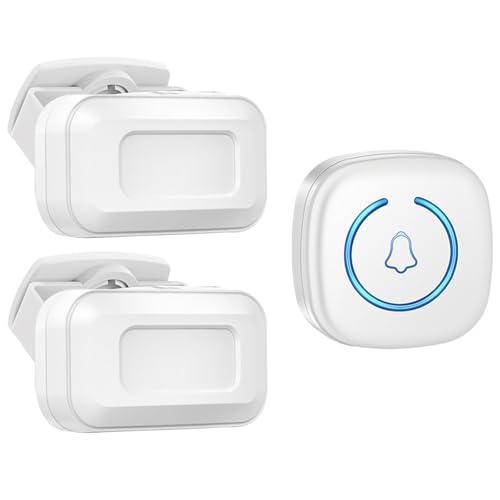
- Pre-programmed for quick installation
- Works under the bed or at the door
- Offers sound, LED, vibration, and volume control
Best For: Caregivers who want a simple alert system for bed exits and room monitoring.
Best with Extra Features
Guankai 8-Pack Motion Sensor Lights

- Warm motion-activated lighting for dark rooms and hallways
- Battery-powered with simple stick-on installation
- Eight-pack coverage works well across multiple spaces
Best For: Seniors, caregivers, and families needing quick-install night lighting.
Best for Fall Prevention Alerts
HENDUN Wireless Motion Doorbell Alarm

- Wireless setup is quick and pre-paired
- Silent/light-only mode works well at night
- 918 ft range keeps caregivers connected from afar
Best For: Caregivers monitoring seniors at night who want an easy wireless motion alert.
Best for Caregiver Alerts
Bed Sensor Alarm for Elderly Adults
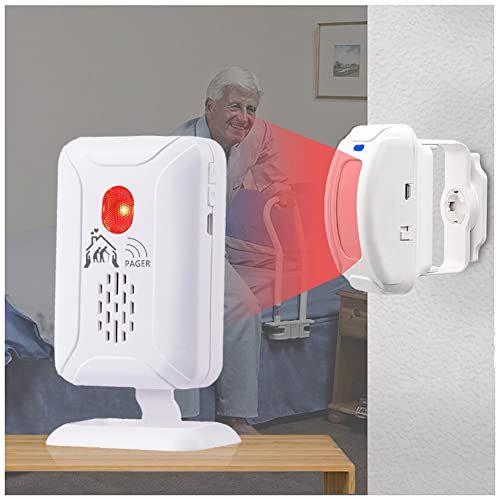
- Wireless caregiver pager for remote alerts
- 5 adjustable volume levels
- Helpful for bed-exit and fall-prevention monitoring
Best For: Caregivers monitoring seniors at night who need simple bed-exit alerts.
Best for Easy Bedside Alerts – Bed Alarm with 2 Motion Sensors
This bed alarm is a practical option for motion sensors for senior bedrooms when you want a simple alert that does not rely on Wi‑Fi, apps, or wearables. With two motion sensors and a plug-in receiver, it can watch a bedside area, doorway, or hallway path and notify caregivers with a chime and flashing light.
Best For: Caregivers who want an easy, no-network alert system for one key bedroom or hallway monitoring area.
Pros:
- Two motion sensors plus a plug-in receiver for flexible indoor placement
- Chime and flashing light make alerts easy to notice from another room
- No Wi-Fi, app, or wearable required for quick setup
- Useful for bed exit, doorway, hallway, or entry-point monitoring
Cons:
- Best suited to monitoring a limited area rather than full-home coverage
- Requires careful positioning to reduce false alerts from pets or busy walkways
For families comparing motion sensors for senior bedrooms, this model stands out for straightforward alerting and low setup friction. It is a solid pick if you want reliable bedside awareness without adding a smart-home system or a wearable device.
Best for Existing CMU Systems – Motion Sensor for 433-EC/433-CMU
If you already use a compatible alarm monitor, this motion sensor is a straightforward add-on for motion sensors for senior bedrooms. It sends a wireless signal to the 433-EC or 433-CMU central monitoring unit, so it can help alert caregivers without making noise in the room.
Best For: Homes that already have a 433-EC or 433-CMU monitor and want a simple motion-triggered alert setup.
Pros:
- Works with the 433-EC and 433-CMU monitoring units
- Room stays quiet since alerts go to the monitor, not the bedroom
- Simple wireless sensor design for adding coverage
- Useful for caregiver monitoring in senior bedrooms
Cons:
- Requires a compatible 433-EC or 433-CMU monitor to function
- Not a standalone alarm system
- 90-day warranty is shorter than many alternatives
For buyers comparing motion sensors for senior bedrooms, this model makes sense only if you already own the matching monitor. If you do, it’s an efficient way to add motion-based alerts without introducing extra noise in the room.
Best for Dual-Sensor Coverage – Bed Alarm Caregiver Pager with 2 Motion Sensors
If you need motion sensors for senior bedrooms that can cover more than one area, this kit stands out with two wireless sensors and a portable pager. It’s a practical pick for monitoring bedroom exits, bedside movement, or nearby doorways without placing a loud alarm inside the room.
Best For: Caregivers who want flexible bedside and doorway monitoring for seniors, especially in dementia care or shared home setups.
Pros:
- Includes two wireless motion sensors for broader coverage
- Portable pager can alert by chime or continuous alarm
- Up to 500 feet range in open areas for caregiver mobility
- Can be wall-mounted or placed on a flat surface
Cons:
- Not a medical-grade fall detection system
- Works best in straightforward indoor layouts
- Alert style may be too loud for some homes in alarm mode
For motion sensors for senior bedrooms, this is a versatile option if you want coverage beyond a single bed area and prefer a simple pager-based alert system. It’s especially useful when caregivers need freedom to move around the house while still getting notified quickly.
Best Motion-Activated Dimmer – ECOELER Motion Sensor Dimmer Switch
If you want motion sensors for senior bedrooms that do more than just turn lights on, this in-wall dimmer adds hands-free control plus adjustable brightness. It’s a practical pick for nighttime safety, especially where a softly lit path or lower light level is easier on the eyes.
Best For: Seniors or caregivers who want a motion-activated bedroom light switch with dimming control and customizable auto-on/auto-off settings.
Pros:
- Motion and ambient light sensing help keep lighting automatic without constant switch use.
- Occupancy and vacancy modes let you choose auto-on or manual-on behavior.
- Adjustable dimming is useful for nighttime comfort in bedrooms, halls, and bathrooms.
- Single-pole, in-wall design keeps the setup clean and familiar.
Cons:
- Neutral wire required, which may limit compatibility in older homes.
- Not suitable for 3-way circuits.
- Installation may be less convenient than a plug-in motion light.
For motion sensors for senior bedrooms, this ECOELER switch stands out because it combines automatic activation with dimming, making it easier to balance safety and comfort at night. It’s a strong choice if you want a built-in wall switch rather than a standalone lamp solution.
Best for Remote Monitoring – Wireless Caregiver Motion Sensor Alarm
If you want a simple alert system for motion sensors for senior bedrooms, this wireless caregiver pager is built to notify you when movement is detected in the room. The plug-in receiver and motion sensor are easy to set up, and the adjustable range makes it useful for monitoring bedrooms, hallways, or entry points without needing a full security system.
Best For: Caregivers who want an easy, low-maintenance motion alert for seniors, dementia patients, or anyone who may need quick remote monitoring at home.
Pros:
- Motion-triggered alerts help caregivers know when someone gets up or moves around.
- Works with visual LED alerts plus 58 ringtones and 5 volume levels for flexible notification.
- Simple plug-in receiver and battery/USB-powered sensor keep installation straightforward.
Cons:
- Detection range and placement need testing to avoid missed alerts or false triggers.
- Only one sensor and one receiver are included in the base package.
Overall, this is a practical pick if you need motion sensors for senior bedrooms without complicated wiring or app-based setup. It focuses on straightforward bedside and room monitoring rather than advanced smart-home features, which can be a plus for caregivers who just want dependable alerts.
Best Budget Wireless Alert – Smart Caregiver Economy Monitor
If you want a simple way to monitor movement in motion sensors for senior bedrooms, this Smart Caregiver set gives you a basic wireless alert system without adding extra complexity. It’s designed to notify caregivers when someone gets out of bed or moves through a doorway, making it a practical fit for light-duty home monitoring.
Best For: Caregivers who want an affordable, expandable motion alert system for bedroom or doorway monitoring.
Pros:
- Includes a cordless monitor and one motion sensor to get started right away.
- Swivel bracket helps aim the sensor at bedsides, doorways, or other key areas.
- Expandable system supports up to 6 cordless components as needs grow.
- Adjustable monitor volume offers basic control for different rooms and routines.
Cons:
- Batteries and AC adapters are not included.
- Only one sensor is included, so larger rooms may need extra components.
- More basic than app-based or smart-home monitoring options.
For shoppers comparing motion sensors for senior bedrooms, this is a straightforward budget pick that covers the essentials: bed-exit or doorway detection, wireless alerts, and room to expand later. It’s a good fit when simplicity and value matter more than advanced features.
Best for Easy Setup – Bed Sensor Alarm with Motion Detection
If you want motion sensors for senior bedrooms that are simple to deploy and flexible enough for bedside or doorway monitoring, this bed alarm is a practical pick. It arrives pre-programmed, supports multiple alert modes, and uses a wireless receiver with a wide open-area range, making it a straightforward caregiving aid for home use.
Best For: Caregivers who need an easy-to-set-up alert system for monitoring bed exits, room departures, or entry points.
Pros:
- Pre-programmed setup keeps installation fast and beginner-friendly.
- Wireless sensor placement works under the bed or near a doorway.
- Multiple alert choices include melodies, LED flash, vibration, and adjustable volume.
- Wide detection range and 1000 ft open-area transmission support home coverage.
Cons:
- Detection range and placement need testing to reduce false triggers.
- The many modes may feel more complex than a basic single-alert sensor.
For households comparing motion sensors for senior bedrooms, this model stands out for quick setup and versatile alerts rather than advanced smart-home features. It is a solid choice if you want a simple alarm that can help flag bed exits or room movement without much configuration.
Best with Extra Features – Guankai 8-Pack Motion Sensor Lights
If you want a simple, low-cost way to light up dark paths at night, these battery-powered stick-on lights are a practical pick for motion sensors for senior bedrooms. They turn on automatically in low light, use a warm frosted glow, and avoid the hassle of wiring.
Best For: Seniors, caregivers, and families who want easy-to-install night lighting for bedrooms, hallways, closets, or bathrooms.
Pros:
- Motion-activated in darkness with a wide 120° sensing angle
- Soft warm light is easier on sleepy eyes than harsh LEDs
- Battery operated and stick-on installation keeps setup simple
- Eight-pack offers good coverage for multiple rooms or walkways
Cons:
- Requires 3 AAA batteries per light, which are not included
- No manual on/off switch, so it relies on the sensor behavior
- Adhesive mounting may need checking over time to avoid detachment
For buyers comparing motion sensors for senior bedrooms, this Guankai set stands out for straightforward installation and gentle nighttime illumination. It’s a sensible choice when you want basic automatic lighting without hardwiring or complicated controls.
Best for Fall Prevention Alerts – HENDUN Wireless Motion Doorbell Alarm
If you need motion sensors for senior bedrooms, this HENDUN alarm is built around quick, wireless alerts rather than complex monitoring. Place the sensor near a bedroom door or floor area and keep the receiver with you, so you can hear or see movement immediately without staying bedside.
Best For: Caregivers who want an easy-to-set-up motion alert for elderly loved ones, especially those with dementia, sleepwalking, or nighttime fall risk.
Pros:
- Wireless, pre-paired setup makes installation fast and simple
- Selectable ringtones, volume levels, and silent/light-only mode for night use
- Long 918 ft range gives caregivers more freedom around the home
- Floor placement can help detect feet-on-ground movement sooner than bed pads
Cons:
- Sensor placement matters for reliable detection in a bedroom layout
- Not a full fall-detection system, despite the marketing angle
- Receiver battery/cable setup may be less convenient than always-plugged units
For motion sensors for senior bedrooms, this is a practical alert device when you want simple, immediate awareness without cameras or invasive monitoring. It’s especially useful if you value ease of setup, adjustable alerts, and the option to hear movement at night without startling the person being monitored.
Best for Caregiver Alerts – Bed Sensor Alarm for Elderly Adults
If you’re comparing motion sensors for senior bedrooms, this bed sensor alarm is a practical pick for alerting caregivers when someone gets up or moves unexpectedly. It pairs a wireless caregiver pager with adjustable volume, making it useful for overnight monitoring without a complicated setup.
Best For: Caregivers who want a straightforward bed-exit alert for seniors, dementia care, or fall-prevention routines.
Pros:
- Wireless pager lets caregivers receive alerts from another room.
- 5 volume levels help match the alarm to quiet nights or louder environments.
- Designed for bed-exit monitoring, which can help reduce fall risk.
- Simple setup is appealing for home use and daily caregiving.
Cons:
- Focused on bed alerts, so it is not a general room-motion system.
- May need testing and placement adjustments for the most reliable results.
For families shopping motion sensors for senior bedrooms, this unit stands out as a targeted alert solution rather than a full smart-home system. It is a good fit when the priority is quick caregiver notification and a clear, easy-to-hear warning.
How We Picked the Best Motion Sensors for Senior Bedrooms
We looked for Motion Sensors for Senior Bedrooms that prioritize reliable detection, straightforward setup, flexible alert methods, and clear everyday usefulness. Since these devices are often used overnight, we also favored models with adjustable volume, multiple alert styles, plug-in or wireless convenience, and options that support caregiver monitoring without making the room feel overly technical.
Quick Comparison
For a fast decision, think in three categories: bed-exit and room-motion alerts for fall prevention, doorway and entry alerts for simple awareness, and lighting-oriented sensors for safer nighttime navigation. The best pick depends on whether you need immediate caregiver notification, gentle prompting, or better visibility in the bedroom and hallway.
Key Buying Factors for Motion Sensors for Senior Bedrooms
Alert Type
Choose between chimes, pager alerts, alarms, or light activation. For overnight care, a louder and more customizable alert can help. For more independent seniors, a softer chime or light may be less disruptive.
Sensor Placement
Placement matters as much as the device itself. Bedside motion detection is useful for bed-exit monitoring, while doorway or hallway sensors work better for tracking room entry and exit. Make sure the sensor coverage matches the route the senior actually uses.
Volume and Sensitivity Controls
Look for adjustable volume, sensitivity, and melody options. These features make it easier to tune Motion Sensors for Senior Bedrooms to the environment, especially in homes where false alarms could become frustrating.
Power and Installation
Wireless and plug-in systems are often easiest for caregivers to deploy quickly. If you want lighting support instead of an audible alert, battery-operated or in-wall options may be better suited to hallway and closet areas near the bedroom.
Caregiver Fit and Reliability
The best system is the one that caregivers can trust and seniors can live with comfortably. Prioritize clear alerts, simple controls, and dependable operation over extra features you will not use.
Who Should Buy Which Motion Sensors for Senior Bedrooms?
If you need bed-exit awareness or dementia monitoring, choose a motion-based alarm or caregiver pager system with strong alert options. If your priority is safer nighttime movement, a motion-activated light or stair light may be the better fit. If you only need entry awareness, a door chime-style sensor can provide a simple, low-stress solution. For many households, combining two types of Motion Sensors for Senior Bedrooms offers the best balance of safety and convenience.