Choosing the right mattress can make daily care safer, more comfortable, and less physically demanding. The best options help reduce pressure points while supporting better rest for the person in bed.
This roundup of pressure relief mattresses for caregivers focuses on practical features, ease of use, and the balance between comfort, support, and maintenance.
Best 10 Pressure Relief Mattresses for Caregivers Picks for 2026
Alternating Air Relief

- 130-cell alternating air system
- Quiet 22 dBA pump with settings
- Waterproof topper supports 300 lbs
Best For: Bedridden patients needing quiet pressure redistribution
Foam Redistribution
Drive Medical Gravity 7 Mattress

- Three-layer latex-free foam build
- Heel offloading and edge support
- Fluid-proof, low-shear cover
Best For: Long-term care and safer patient transfers
Ultra Quiet Air Pad
MedVance Premium Mattress Topper

- Under-20 dB digital pump
- 6-minute alternating pressure cycle
- Waterproof, easy-clean vinyl
Best For: Quiet home or facility care
Decompressing Foam Support
Drive Medical Quick 'N Easy Mattress

- Foam design for comfort and support
- Removable fluid-resistant cover
- Non-slip bottom with corner straps
Best For: Homecare setups needing secure foam support
Quiet Alternating Comfort

- 23 dBA quiet pump
- Static mode for steadier rest
- Waterproof pad with easy setup
Best For: Caregivers needing quieter alternating support with a static option
Medical-Grade Replacement System

- Alternating pressure with low air loss
- 20 replaceable bladders and pillow feature
- Alarm and pressure monitoring included
Best For: Home or facility caregivers wanting a full replacement system
Quiet Bubble Pressure Care
KEKOY Alternating Mattress Pad
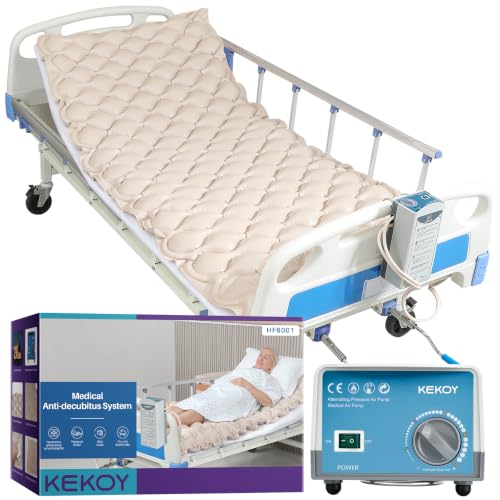
- 130 air cells for pressure redistribution
- Quiet pump with 5 pressure levels
- Waterproof and FSA/HSA eligible
Best For: Caregivers wanting quiet, adjustable daily pressure-care support
Quiet Hospital-Grade System
MedVance 8" Alternating Air Mattress

- Less than 20 dB pump for quieter bedside use
- 8-inch cell-on-cell design helps prevent bottoming out
- Digital screen and CPR pull-tag improve control and safety
Best For: Long-term hospital-bed care needing quiet, adjustable pressure support
Comfort-Added Alternating Pad
Lunderg PressuRelief Air Mattress Pad

- Snap-2-Pad comfort layer adds extra softness
- Static mode offers a steadier surface when needed
- 23 dBA pump with soft-to-firm adjustment control
Best For: Users who need alternating pressure relief with added comfort and static mode
Portable Pressure Redistribution Pad
Alternating Pressure Relief Air Mattress Pad
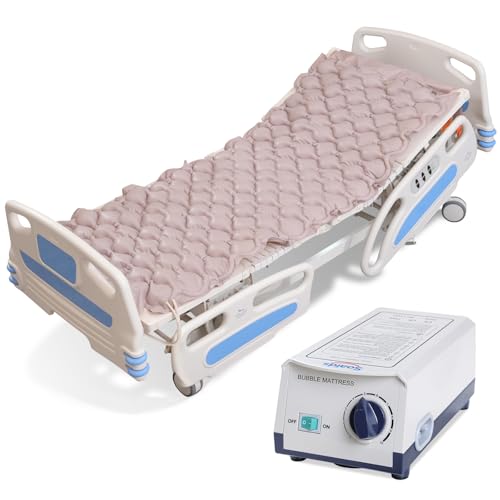
- 130 bubble cells move pressure on a 5-minute cycle
- Lightweight 6.6-pound build is easy to store or move
- Waterproof PVC surface simplifies cleaning
Best For: Short-term home care that needs a portable, easy-to-clean pressure pad
Alternating Air Relief – Vive Quiet Pump Mattress Pad
If you’re comparing pressure relief mattresses for caregivers, this alternating air pad is built for bedridden patients who need frequent pressure redistribution without adding much bulk. The 130 air cells alternate inflation and deflation to help reduce pressure spots, while the whisper-quiet pump is designed to keep sleep interruptions to a minimum.
Best For: Caregivers looking for a lightweight alternating-air topper for bed sore prevention and daily home use.
Pros:
- 130 air cells use wave-like alternating pressure to redistribute weight.
- Quiet pump runs at 22 dBA with customizable pressure levels.
- Waterproof vinyl pad fits over an existing mattress and supports up to 300 lbs.
- Flexible, non-binding hoses make setup easier.
Cons:
- Requires a pump, so it is not a standalone mattress.
- Hand-wash-only care may be less convenient for some households.
For caregivers focused on pressure management and easier day-to-day comfort, this model offers a practical alternating-air solution with a strong emphasis on quiet operation and durability.
Foam Redistribution – Drive Medical Gravity 7 Mattress
Drive Medical 15770 Gravity 7 Pressure Redistribution Mattress, Blue, 6.6 Foot (Pack of 1)
Check Price On AmazonFor caregivers who want a foam option in the pressure relief mattresses for caregivers category, this 3-layer hospital bed mattress focuses on redistribution, shear reduction, and heel offloading. Its high-density foam perimeter and fire-retardant, fluid-proof cover make it a practical choice for long-term care settings.
Best For: Long-term care situations where foam pressure redistribution and safer transfers matter.
Pros:
- Three layers of latex-free foam provide therapeutic pressure redistribution.
- Visco foam heel section helps offload pressure from vulnerable heels.
- High-density foam perimeter adds edge support and helps with patient transfers.
- Fluid-proof, tear-resistant, low-shear cover is easy to clean.
Cons:
- Heavier than air-pad toppers at 21.6 lbs.
- Listed capacity varies across provided details, so verify fit and load needs.
This is a solid foam-based option if you prefer a mattress-style solution over a pump system and want a design aimed at comfort, support, and skin-friendly care.
Ultra Quiet Air Pad – MedVance Premium Mattress Topper
This pressure relief mattress topper is aimed at caregivers who want a quieter alternating-air setup for home care or facility use. The digital pump stays under 20 dB, and the system cycles every six minutes to help redistribute weight and support bed sore prevention.
Best For: Care settings that prioritize ultra-quiet operation and easy pressure adjustments.
Pros:
- Ultra-quiet digital pump is rated under 20 dB.
- Alternating pressure cycle helps reduce pressure buildup and improve circulation.
- Waterproof, breathable medical-grade vinyl is designed for easier cleaning.
- Universal fit works with most standard hospital beds.
Cons:
- It is a topper, not a full replacement mattress.
- Best suited to standard full-size hospital bed use.
If quiet operation is a top priority, this model stands out for delivering alternating pressure relief with straightforward controls and low-maintenance materials.
Decompressing Foam Support – Drive Medical Quick 'N Easy Mattress
If you’re shopping pressure relief mattresses for caregivers and want a foam mattress with a removable cover, this decompression model offers a straightforward support-focused design. Its fluid-resistant, vapor-permeable cover and non-slip bottom are aimed at making day-to-day care simpler while helping protect skin from friction and moisture.
Best For: Homecare users who want a secure, removable-cover foam mattress with pressure-relief support.
Pros:
- Decompressing foam construction provides comfort and support.
- Removable nylon stretch cover is fluid resistant and vapor permeable.
- Non-slip bottom plus four corner straps help keep the mattress in place.
- Side carry handles make placement and lifting easier.
Cons:
- Weight capacity is lower than some alternatives at 275 lbs.
- Needs 24-72 hours to fully regain shape after unpacking.
This is a practical pick for caregivers who want a stable foam mattress with easier handling and a cover designed for frequent cleaning and moisture control.
Quiet Alternating Comfort – Lunderg Pressure Relief Pad
For caregivers comparing pressure relief mattresses for caregivers, this Lunderg alternating air mattress pad focuses on comfort, pressure redistribution, and simpler nightly care. It uses alternating air cells with a quiet pump and a static mode, making it a practical option for helping reduce pressure on skin and bony areas while still allowing a more stable rest when needed.
Best For: Caregivers who want a quieter alternating-pressure pad with a static setting for bedridden loved ones at home, in hospitals, or nursing homes.
Pros:
- Quiet pump runs at 23 dBA for less nighttime disruption.
- Static mode keeps all cells inflated for a steadier sleep surface.
- Designed to help relieve pressure and support bed sore prevention.
- Waterproof topper and easy setup are useful for daily care.
Cons:
- Supports up to 300 lbs, which is lower than some competing systems.
- Requires spot cleaning only.
- Twin-size format may not fit every bed setup.
This is a strong choice if you want a caregiver-friendly mattress pad that balances pressure relief with comfort and noise control. The static mode is especially helpful when you need a break from alternating motion without giving up support.
Medical-Grade Replacement System – Drive Med-Aire Mattress
If you need a more advanced option among pressure relief mattresses for caregivers, the Drive Medical Med-Aire system is built as a full mattress replacement with alternating pressure and low air loss support. Its 20 replaceable bladders, moisture-wicking cover, and automatic pressure monitoring make it geared toward more continuous care environments where consistent pressure redistribution matters.
Best For: Caregivers in home or facility settings who want a full replacement mattress with pressure monitoring and moisture control.
Pros:
- Alternating pressure plus low air loss support for pressure redistribution.
- 20 replaceable 8-inch bladders with a built-in pillow feature.
- Moisture-wicking, vapor-permeable cover helps manage heat and friction.
- Audio visual alarm and automatic pressure monitoring support safer operation.
Cons:
- Higher-weight, larger system is less portable than a simple mattress pad.
- Spot clean only.
- May be more system than some home caregivers need.
This model stands out if you want a more clinical mattress replacement with built-in monitoring. It is a strong fit for caregivers who prioritize pressure management, moisture control, and ongoing support over portability.
Quiet Bubble Pressure Care – KEKOY Alternating Mattress Pad
For caregivers searching for pressure relief mattresses for caregivers that are easier to manage day to day, this KEKOY alternating air pad offers 130 bubble air cells, a quiet pump, and a waterproof surface. It is designed for pressure sore prevention support, especially for people with prolonged bed rest, limited mobility, or early-stage pressure concerns.
Best For: Caregivers looking for a quiet, waterproof pressure-relief pad with adjustable support and FSA/HSA eligibility.
Pros:
- 130 air cells help redistribute pressure across vulnerable areas.
- Quiet pump runs below 28 dBA with 5 pressure levels.
- Waterproof surface makes cleanup easier for caregivers.
- Includes repair kit and is FSA/HSA eligible.
Cons:
- Supports up to 300 lbs.
- Pump must stay plugged in during use.
- Designed for prevention support, not a cure-all for advanced wounds.
Overall, this KEKOY pad is a practical caregiver choice when you want adjustable comfort, low noise, and easier cleanup. The combination of 130 cells and waterproof construction makes it well suited to routine long-term care.
Quiet Hospital-Grade System – MedVance 8" Alternating Air Mattress
If you’re comparing pressure relief mattresses for caregivers, this MedVance alternating air mattress is built for more involved care routines where low noise, quick deflation, and simple pressure control matter. Its 8-inch cell-on-cell design aims to reduce bottoming out, while the digital pump makes it easier to adjust support for the person in bed.
Best For: Caregivers who need a hospital-bed mattress with quiet operation, strong pressure management, and an easy-to-use digital system.
Pros:
- Ultra-quiet pump operates at less than 20 dB.
- Digital LED screen shows weight and pressure for easier adjustments.
- 8-inch deep air cells help prevent bottoming out and offer up to 24 hours of outage protection.
- CPR pull-tag lets you deflate the mattress quickly in an emergency.
Cons:
- Designed for standard hospital beds, so fit is more specific than a general home topper.
- Hand wash care may be less convenient for frequent deep cleaning.
Overall, this is a practical choice when caregivers want a more medical-style alternating system with strong control features and a quieter bedside setup. The quilted water-resistant cover and 450-pound capacity add to its utility for long-term bed care.
Comfort-Added Alternating Pad – Lunderg PressuRelief Air Mattress Pad
This Lunderg option stands out among pressure relief mattresses for caregivers because it adds a comfort layer to a typical alternating air pad, which can make the surface feel more familiar for daily use. It combines alternating therapy with a static mode, giving caregivers more flexibility when the user needs pressure relief but also a stable surface for resting.
Best For: Caregivers looking for a pressure-relief topper that improves comfort and works in either alternating or static mode.
Pros:
- Snap-2-Pad comfort layer adds softness and a less clinical feel.
- Static mode keeps all cells inflated for a more stable surface.
- Whisper-quiet pump runs at 23 dBA with soft-to-firm pressure control.
- Designed for hospital beds or home use and supports up to 300 lbs.
Cons:
- Inflation takes about 20 minutes, so setup is not instant.
- Weight capacity is lower than some heavier-duty options.
For caregivers who worry that standard alternating pads feel too hard or disruptive, this model is a thoughtful middle ground. The added comfort layer and quick connector make it easier to live with while still targeting pressure relief.
Portable Pressure Redistribution Pad – Alternating Pressure Relief Air Mattress Pad
Among pressure relief mattresses for caregivers, this twin-size alternating pad is a straightforward option for short-term home care or hospital use where portability and easy cleaning are priorities. Its bubble-cell design is meant to redistribute pressure on a five-minute cycle, and the lightweight build makes it easier to store or move when needed.
Best For: Caregivers who want a lightweight, portable alternating mattress pad for short-term pressure sore prevention.
Pros:
- 130 bubble cells help redistribute pressure on a dynamic 5-minute cycle.
- Whisper-quiet pump stays under 40 dB.
- Lightweight 6.6-pound design stores compactly after deflating.
- Waterproof, breathable PVC surface is easy to clean.
Cons:
- Inflation can take 30-40 minutes.
- Supports up to 298 lbs, which is less than some competing systems.
This is a sensible pick when caregivers need a portable, no-frills pressure redistribution pad rather than a more advanced hospital-grade setup. The adjustable firmness and secure fit details add convenience for everyday use.
How We Picked the Best Pressure Relief Mattresses for Caregivers
We focused on mattresses and mattress overlays that can help reduce prolonged pressure, improve comfort, and support easier caregiving. Priority factors included pressure redistribution design, pump noise, ease of setup, weight capacity, cover materials, and whether the product suits home care or more clinical use.
We also looked for models that are realistic for caregivers to manage day to day, including options with simple controls, removable covers, and features that help with moisture control and skin protection.
Quick Comparison: What Matters Most
In broad terms, foam mattresses tend to offer simpler setup and steady support, while alternating air systems add active pressure relief and are often better for users at higher risk of bed sores. Low-air-loss and advanced air systems can improve airflow and moisture management, but they may require more attention to setup and maintenance.
For Pressure Relief Mattresses for Caregivers, the most useful comparison is often between comfort, noise, thickness, and how much hands-on monitoring the system needs. The right choice depends on the user’s mobility, skin integrity, bed type, and the caregiver’s ability to manage adjustments.
Key Buying Factors for Pressure Relief Mattresses for Caregivers
Pressure Relief Method
Alternating air systems actively shift pressure, which can help when repositioning is limited. Foam redistributes pressure passively and may be preferable for simpler, lower-maintenance care.
Noise and Ease of Use
A quiet pump and straightforward controls matter when the bed is used overnight or in a shared room. If a caregiver will be adjusting settings often, digital controls and clear modes are a major plus.
Support, Thickness, and Fit
Check the mattress dimensions against the bed frame, especially for hospital beds and specialty beds. Thickness affects both comfort and transfer stability, while a secure fit helps prevent shifting.
Moisture and Cleaning
Breathable covers, waterproof materials, and removable surfaces can reduce cleaning time and help maintain hygiene. These details are especially important in long-term care situations.
Static Mode and Comfort Layers
Some Pressure Relief Mattresses for Caregivers include a static mode or comfort layer for transfers, bathing, or repositioning. These features can make care routines smoother and less disruptive.
Who Should Buy Which Pressure Relief Mattresses for Caregivers?
Choose an alternating air mattress if the user is largely bedridden, has elevated pressure-injury risk, or needs frequent pressure changes. Choose a foam pressure-redistribution mattress if you want lower maintenance, simpler setup, and steady support for everyday care.
If moisture control, quiet operation, and flexibility are top priorities, a hybrid or low-air-loss option may be worth the extra cost. For caregivers managing sensitive skin or longer recovery periods, those added features can make a meaningful difference in comfort and routine care.