Choosing the right mattress can make a real difference in comfort, skin protection, and quality of sleep for older adults who spend long hours in bed.
This guide to pressure relief mattresses for seniors focuses on practical factors that matter most: pressure redistribution, ease of use, noise, moisture control, and fit.
Best 10 Pressure Relief Mattresses for Seniors Picks for 2026
Alternating Air Relief

- 130 air cells alternate pressure for circulation support.
- Quiet 22 dBA pump with adjustable settings.
- Waterproof topper supports up to 300 lbs.
Best For: Bedridden seniors needing active pressure relief over an existing mattress.
Foam Pressure Support
Drive Gravity 9 Redistribution Mattress

- Multi-layer foam redistributes pressure for long-term care.
- Heel slope and channel-cut design support ulcer prevention.
- Fluid-proof, tear-resistant cover is easy to clean.
Best For: Long-term care users who need a full foam mattress with heel protection.
Static Option Relief

- Alternating mode plus Static Mode adds comfort flexibility.
- Quiet 23 dBA pump offers soft-to-firm control.
- Waterproof pad supports up to 300 lbs.
Best For: Caregivers wanting an air mattress pad with both alternating and static modes.
Foam Zone Comfort
Drive Gravity 8 Redistribution Mattress

- Zoned memory foam redistributes pressure for comfort.
- Heel slope and channel-cut design aid heel protection.
- Fluid-proof, tear-resistant cover suits care settings.
Best For: Seniors wanting a medium foam mattress with zoned pressure support.
Ultra-Quiet Alternating Support
MedVance Medical 8" Air Mattress

- Less than 20 dB pump for quieter use
- 8-inch cell-on-cell design helps prevent bottoming out
- Digital controls with alarms and quick CPR deflation
Best For: Seniors on standard hospital beds who want quiet, adjustable pressure relief
Medical-Grade Pressure Redistribution

- Alternating pressure plus low air loss design
- Static mode or 10-minute cycle settings
- 20 air cells with water-resistant nylon cover
Best For: Home or long-term care users who need a full mattress replacement
Affordable Bed Sore Prevention Pad
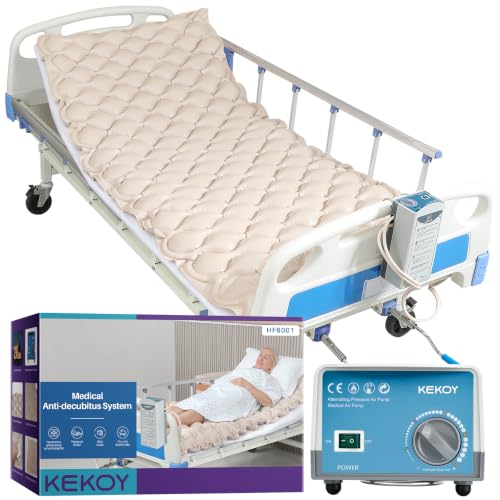
- 130 bubble air cells help redistribute pressure
- Quiet pump with 5 adjustable pressure levels
- Waterproof surface and FSA/HSA eligibility
Best For: Elderly users needing a quiet, waterproof topper for early pressure sore prevention
Hospital-Grade Air Mattress
Drive Medical Med-Aire Low Air Loss System

- Alternating pressure and pressure redistribution support
- 20 replaceable air bladders with built-in pillow feature
- Moisture-wicking cover plus pressure monitoring alarm
Best For: Seniors needing a full-bed pressure relief system for home or facility use
Recliner Relief Pad
Lunderg Coffee Alternating Air Pressure Pad

- 136 air cells for even weight distribution
- Whisper-quiet 23 dBA pump with static mode
- Medical-grade cover with anchors to help prevent slipping
Best For: Seniors who spend long hours in recliners, sofas, or dialysis chairs
Quiet Recliner Pad
Lunderg Blue Alternating Air Pressure Pad
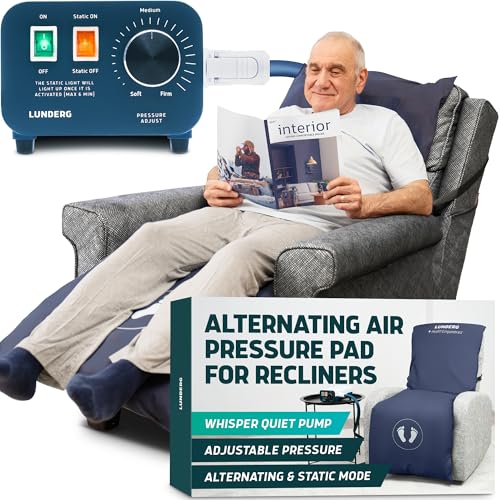
- Alternating pressure with 136 air cells
- Quiet 23 dBA pump with Soft-to-Firm control
- Static mode plus easy-clean medical-grade cover
Best For: Seniors who need a recliner-friendly pressure relief pad in blue
Alternating Air Relief – Vive Quiet Pump Pressure Pad
If you’re comparing pressure relief mattresses for seniors, this alternating air pad is aimed at bedridden users who need help reducing pressure spots and improving circulation. Its 130 air cells alternate inflation and deflation to distribute weight more evenly, while the quiet pump helps keep sleep disruptions to a minimum.
Best For: Seniors or bedridden patients who need an air-based topper for bed sore relief and pressure redistribution.
Pros:
- Alternating pressure design with 130 air cells helps relieve pressure points.
- Whisper-quiet pump runs at 22 dBA with adjustable pressure levels.
- Waterproof build and tuck-under flaps help keep the pad in place.
- Supports up to 300 lbs and is designed for hospital bed or home use.
Cons:
- Requires a pump and regular setup, so it’s less simple than a standard mattress.
- Weight capacity is lower than some foam alternatives.
Overall, this is a practical choice when the goal is active pressure management rather than basic cushioning. It fits well for caregivers looking for a durable, waterproof topper with configurable comfort.
Foam Pressure Support – Drive Gravity 9 Redistribution Mattress
For shoppers focused on pressure relief mattresses for seniors, this foam model is built for long-term care settings where pressure redistribution and heel protection matter. Its multi-layer foam construction includes a heel slope and channel-cut design to target ulcer prevention, while the fluid-proof cover is made for easier cleaning.
Best For: Seniors needing a full-size foam mattress with pressure redistribution and heel-focused support.
Pros:
- Multi-layer die-cut and memory foam construction supports pressure redistribution.
- 6" to 4" heel slope and channel-cut foot section target heel ulcer prevention.
- Fire-retardant, fluid-proof, tear-resistant cover is easy to clean.
- High 450 lb weight capacity suits many care settings.
Cons:
- Heavier and bulkier than an air topper at 23 lbs.
- Designed as a full mattress, so it is less flexible for use on a standard home bed setup.
This is a strong option if you want a mattress-style solution rather than a topper and prefer foam-based support. The heel-focused shaping makes it especially relevant for patients who spend extended time in bed.
Static Option Relief – Lunderg Alternating Air Pad
When comparing pressure relief mattresses for seniors, this alternating air pad stands out because it adds a Static Mode to the usual pressure-cycling approach. That makes it appealing for bedridden users who want bed sore prevention with the option of a firmer, stable surface when alternating pressure isn’t desired.
Best For: Seniors or caregivers who want an alternating air pad with a static comfort mode for home or facility use.
Pros:
- Alternating pressure helps relieve skin and bony-area pressure.
- Static Mode keeps all cells fully inflated for a stable surface.
- Whisper-quiet 23 dBA pump includes soft-to-firm pressure control.
- Waterproof construction and quick connector simplify setup and use.
Cons:
- Supports up to 300 lbs, which may be limiting for some users.
- Needs inflation time before use, taking about 20 minutes.
It is a practical pick if you want more control over comfort and pressure cycling than a basic pad provides. The static setting can be useful for rest breaks or for users who prefer a steadier feel.
Foam Zone Comfort – Drive Gravity 8 Redistribution Mattress
If you want pressure relief mattresses for seniors in a foam format, this Gravity 8 model focuses on zoned redistribution and heel support. Its multi-layer memory foam design includes a heel slope and a channel-cut foot section, making it a sensible choice for longer-term comfort and skin protection support.
Best For: Seniors who need a medium-firm foam mattress with zoned pressure distribution and heel support.
Pros:
- Multi-layer foam construction supports pressure redistribution.
- Heel slope and channel-cut design help with heel ulcer prevention.
- Fire-retardant, fluid-proof, tear-resistant cover is built for care settings.
- 10-year foam warranty and 3-year cover warranty add peace of mind.
Cons:
- Lower weight capacity than some alternatives at 350 lbs in the notes.
- Not an air mattress, so it does not provide alternating pressure cycles.
This mattress makes sense if you prefer a stable foam surface and want targeted support without a pump. It is especially relevant for users who need a dependable, low-maintenance care mattress with heel-focused design.
Ultra-Quiet Alternating Support – MedVance Medical 8" Air Mattress
For shoppers comparing pressure relief mattresses for seniors, this MedVance Medical alternating air mattress focuses on quiet operation, adjustable support, and low-air-loss style comfort for hospital-bed use. The 8-inch cell-on-cell design is built to help reduce bottoming out, while the digital pump and pressure display make day-to-day setup more straightforward for caregivers.
Best For: Seniors using a standard hospital bed who need a quiet, adjustable alternating air system with a quilted cover.
Pros:
- Ultra-quiet pump runs at less than 20 dB for lower nighttime disturbance.
- Digital LED pump display with weight and pressure readout plus diagnostic alarms.
- 8-inch cell-on-cell design helps prevent bottoming out and supports up to 24 hours of outage protection.
- Removable quilted, water-resistant cover is designed for easier cleaning and maintenance.
Cons:
- Designed for standard hospital beds, so fit may not suit every bed type.
- Requires pump setup and ongoing use to keep the system functioning as intended.
Overall, this is a practical pick if quiet operation and simple digital control matter most. Its hospital-grade construction and CPR quick-deflate feature add useful caregiving flexibility, especially in home or facility settings.
Medical-Grade Pressure Redistribution – McKesson 8" Air Mattress
When evaluating pressure relief mattresses for seniors, this McKesson alternating pressure and low air loss system is built around pressure redistribution, shear reduction, and microclimate control. The 20-cell design, adjustable weight settings, and static or alternating modes give caregivers flexible ways to support comfort during home or long-term care use.
Best For: Seniors needing a full mattress replacement with alternating pressure and low air loss support for home or long-term care.
Pros:
- Alternating pressure and low air loss technology support pressure redistribution and microclimate control.
- Control unit offers static mode or 10-minute alternating cycles for flexible use.
- 20 air cells with a pillow feature help with immersion, envelopment, and head stability.
- Water-resistant nylon stretch cover is designed to help reduce friction and moisture contact.
Cons:
- 350 lb weight capacity is lower than some competing heavy-duty systems.
- Active mattress replacement system may be more involved than a simple topper-style solution.
This model makes sense if you want a more complete support surface rather than just a pad. Its adjustable cycle settings and pressure-relief focus are especially useful when ongoing skin protection and comfort both matter.
Affordable Bed Sore Prevention Pad – KEKOY 130-Cell Air Topper
For buyers comparing pressure relief mattresses for seniors, this KEKOY alternating air pressure mattress pad is a topper-style option aimed at early pressure sore prevention support. Its 130 bubble air cells, quiet pump, and waterproof surface are designed for users who need ongoing pressure redistribution during prolonged bed rest at home or in care settings.
Best For: Elderly or bedridden users who need a quiet, waterproof pressure-relief topper for Stage 0-1 prevention support.
Pros:
- 130 bubble air cells alternate to help redistribute pressure across common pressure points.
- Quiet pump operates below 28 dBA and offers 5 adjustable pressure levels.
- Waterproof surface helps protect against spills, sweat, moisture, and incontinence.
- FSA/HSA eligible and includes pump, hoses, repair patch kit, and manual.
Cons:
- Supports up to 300 lbs, which is lower than some full mattress systems.
- Must stay plugged in during use for continuous inflation and alternating support.
This is a practical topper for caregivers who want pressure redistribution without moving to a full mattress replacement. It stands out for quiet operation, simple care, and early-stage support in daily use.
Hospital-Grade Air Mattress – Drive Medical Med-Aire Low Air Loss System
For shoppers comparing pressure relief mattresses for seniors, this Drive Medical system is built for full-bed care with alternating pressure and pressure redistribution support. The low-air-loss design, 20 replaceable air bladders, and moisture-wicking cover make it a practical option when comfort, airflow, and caregiver monitoring all matter.
Best For: Seniors who need a full-size alternating pressure mattress for home care or facility use.
Pros:
- Alternating pressure and pressure redistribution support comfort and help reduce bedsores.
- 20 replaceable 8-inch bladders and a built-in pillow feature improve stability and head support.
- Vapor-permeable, moisture-wicking cover helps reduce heat, friction, and moisture buildup.
- Audio-visual alarm and automatic pressure monitoring add reassurance for caregivers.
Cons:
- Requires a pump system and ongoing setup for proper operation.
- Designed for bed use, so it is not a portable pressure-relief option.
This is a strong choice if you want a more clinical mattress replacement system rather than a simple overlay. Its main strengths are support management, surface breathability, and built-in pressure monitoring.
Recliner Relief Pad – Lunderg Coffee Alternating Air Pressure Pad
If you are shopping for pressure relief mattresses for seniors who spend long hours in a recliner, this Lunderg pad is a focused solution for chair-based comfort. It uses slow inflation and deflation, 136 air cells, and a quiet pump to help reduce pressure, heat, and moisture during extended sitting or resting.
Best For: Seniors who rest or sleep in recliners, sofas, or dialysis chairs.
Pros:
- 136 air cells distribute weight evenly for comfort and pressure relief.
- Quiet 23 dBA pump with Soft-to-Firm control keeps operation discreet.
- Static Mode provides a stable surface when alternating pressure is not desired.
- Medical-grade 4-way stretch cover is durable, easy to clean, and includes anchors to help reduce slippage.
Cons:
- Limited to recliners, sofas, and similar seating rather than a standard bed mattress.
- Supports up to 300 lbs, so it is not for heavier users.
This is a practical pick when the main need is chair comfort instead of a full mattress replacement. The added static mode and quiet pump make it especially useful for overnight recliner use or long sitting sessions.
Quiet Recliner Pad – Lunderg Blue Alternating Air Pressure Pad
This Lunderg version is another chair-focused option for people comparing pressure relief mattresses for seniors, especially when a recliner is the main resting spot. It uses the same alternating airflow approach, 136 air cells, and quiet pump, but with a blue cover and the same static mode for steadier support.
Best For: Seniors who need an alternating pressure pad for a recliner or sofa with a blue cover.
Pros:
- Slow inflation and deflation help reduce pressure, heat, and moisture.
- 136 air cells support even weight distribution for comfort.
- 23 dBA quiet pump and static mode offer flexible use for rest.
- Medical-grade 4-way stretch cover is durable and easy to clean.
Cons:
- It is made for recliners and similar seating, not a full bed mattress.
- Requires assembly and pump connection before first use.
If you want a recliner pad with the same core pressure-relief features as the coffee version, this one is mainly a color variant. Its value comes from the quiet operation, static option, and even weight distribution in seated settings.
How We Picked These Pressure Relief Mattresses for Seniors
We focused on products designed to reduce prolonged pressure on sensitive areas, support longer rest periods, and work in real home or care settings. Selection criteria included pressure redistribution method, adjustability, noise level, moisture management, ease of setup, and compatibility with hospital or standard beds.
Quick Comparison
In general, foam pressure-redistribution mattresses offer simpler day-to-day use and less maintenance, while alternating air systems provide more active pressure cycling for higher-risk users. Low-air-loss models add airflow to help manage heat and moisture, which can be helpful for seniors who are prone to sweating or skin breakdown.
Key Buying Factors for Pressure Relief Mattresses for Seniors
Support Type
Look at whether the mattress uses foam, alternating air, or low-air-loss technology. Foam is usually easier to live with, while air-based systems can offer more adjustable relief and may be better for users who stay in bed for extended periods.
Risk Level and Care Needs
For mild pressure concerns, a well-made redistribution foam mattress may be enough. For seniors with limited mobility, fragile skin, or a history of pressure injuries, an alternating air or low-air-loss option may be more appropriate.
Noise, Comfort, and Stability
Pump noise and movement matter more than many buyers expect. A quiet system can improve sleep, and a stable surface helps reduce the feeling of being shifted during the night.
Moisture and Heat Control
Moisture management is important for skin health. Covers that resist water while allowing some airflow, or systems with low-air-loss features, can help keep the sleeping surface drier and more comfortable.
Size, Weight Capacity, and Bed Compatibility
Make sure the mattress fits the bed frame or topper setup and supports the user’s weight. This is especially important for hospital beds, recliners, and replacement systems with specific sizing requirements.
Who Should Buy Which Pressure Relief Mattresses for Seniors?
If you want the simplest setup, choose a pressure-redistribution foam mattress. If the user needs more active relief or has a higher risk of skin breakdown, an alternating air mattress is often the better fit. If heat and moisture are major concerns, consider a low-air-loss system. For seated comfort, recliner-focused pressure relief pads can be a smart addition.
For many buyers, the best choice among Pressure Relief Mattresses for Seniors comes down to matching the level of support to the person’s mobility, skin sensitivity, and care environment.