Nighttime oxygen dips and breathing changes can be useful clues, but a sleep monitor cannot tell the whole story. The right device depends on whether you want an oxygen record to discuss with a clinician, breathing trends, or hands-off tracking that is easy to use every night.
These 10 picks span finger and wrist oximeters, airflow tracking, mattress-based sensors, and contact-free monitors. Here is how to match their measurements and practical trade-offs to your needs.
Best 10 Sleep Monitoring Devices for Sleep Apnea Picks for 2026
Longest Battery Life
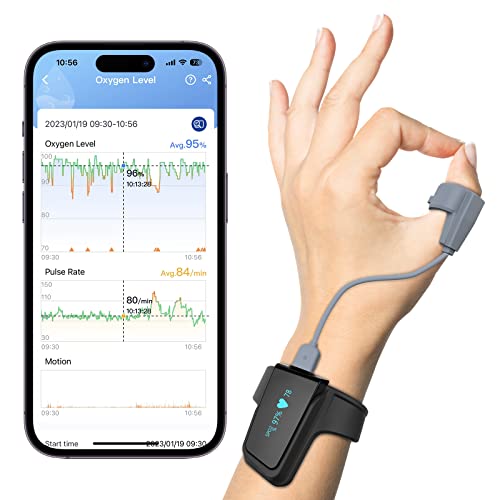
- Up to 72 hours per charge
- Adjustable oxygen-drop reminders
- App and PC trend viewing
Best For: Multi-night oxygen and pulse tracking
Report-Friendly Ring

- 12–16 hours per charge
- Oxygen and pulse alerts
- Shareable PDF and CSV reports
Best For: Exportable overnight oxygen and pulse trends
Airflow-Focused Pick

- Records nasal airflow
- App analyzes respiratory events
- No oxygen or pulse tracking
Best For: Nasal breathers reviewing airflow patterns
Remote Care Pick
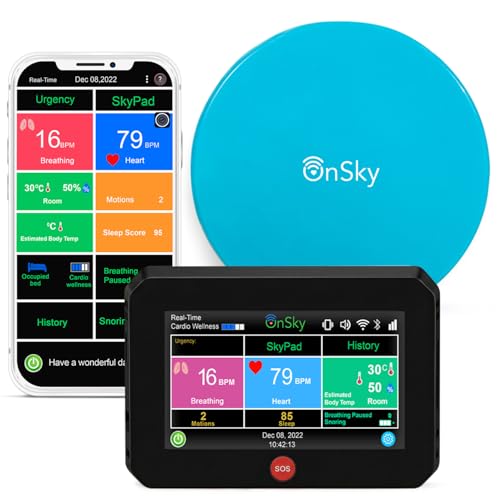
- Contact-free pillow-area sensor
- Remote data through OnSky Health
- SOS phone alerts; no subscription
Best For: Families monitoring someone overnight from another location
Sleep Trends Pick

- Fits under the mattress
- Tracks sleep stages and interruptions
- Detects snoring and tracks heart rate
Best For: Unobtrusive sleep-quality and snoring tracking
Caregiver Hub Pick

- Non-contact breathing and sleep tracking
- Remote access through OnSky Health
- Touchscreen hub with SOS button
Best For: Caregivers seeking remote overnight monitoring and SOS alerts
Best Upper-Arm Band

- Breathable upper-arm design
- Sleep stages, HRV and Pulse Ox-based breathing variations
- Up to seven nights of battery life
Best For: Garmin users tracking overnight wellness trends
Best Contactless Bedside Tracker
Non-Wearable Smart Sleep Tracker

- No wearable or camera required
- Tracks breathing and sleep trends
- Remote family check-ins
Best For: Contactless tracking with caregiver visibility
Best for Remote Vital-Sign Alerts
60GHz mmWave Radar Sleep Monitor

- Contactless breathing and heart-rate tracking
- Remote app access and abnormal-reading alerts
- USB-C powered; stated 2-meter range
Best For: Families seeking remote, contactless monitoring
Longest Battery Life – Wellue Checkme O2 Max Ring
Among sleep monitoring devices for sleep apnea, the Wellue Checkme O2 Max is an option for tracking overnight oxygen saturation, pulse rate, and motion without recharging after every use. It records continuously for up to 72 hours per charge.
Best For: People who want multi-night oxygen and pulse trends with adjustable low-oxygen reminders.
Pros:
- Up to 72 hours of use on one charge.
- Adjustable vibration and audible reminders when oxygen falls below a chosen level.
- Bluetooth app and PC software provide readings and trends; built-in memory stores four 10-hour recordings.
Cons:
- Not a medical device and not intended for diagnosis.
- Built-in storage is limited to four 10-hour groups before data is uploaded.
The longer battery life is its practical advantage over shorter-running wearables, but its oxygen trends should not be treated as an apnea diagnosis.
If you are comparing sleep monitoring devices for sleep apnea, the Wellue O2Ring offers overnight oxygen saturation and pulse tracking in a soft silicone ring. Its app and PC software make the recorded trends easy to review and share.
Best For: People who want wearable overnight oxygen and pulse records with exportable reports.
Pros:
- Tracks oxygen saturation, pulse rate, and body motion for up to 12–16 hours per charge.
- Vibration reminders respond to preset oxygen and pulse thresholds.
- App and PC software support graphical reports plus PDF and CSV sharing.
Cons:
- Needs recharging after roughly 12–16 hours of use.
- Not a medical device and not intended for diagnosis.
This is a convenient pick when shareable overnight trends matter more than multi-day battery life; the readings are not a substitute for a clinical sleep evaluation.
Unlike oxygen-focused sleep monitoring devices for sleep apnea, the EMAY Sleep Breathing Monitor records nasal airflow. Its app analyzes breathing patterns and provides a respiratory report covering metrics such as airflow, AHI, and snoring.
Best For: Nasal breathers who want to review nighttime airflow and respiratory-event patterns at home.
Pros:
- Three sensors record and analyze breathing airflow.
- App displays breathing waveforms and a post-sleep respiratory report.
- Lightweight 10 g design with silicone mask and three strap sizes.
Cons:
- Not recommended for mouth breathers or simultaneous use with a CPAP mask.
- Does not record oxygen saturation or pulse rate and cannot replace a doctor’s diagnosis.
Choose this model for direct breathing-pattern data rather than oxygen trends, provided a nasal mask suits the way you sleep.
For shoppers considering sleep monitoring devices for sleep apnea, the EMAY SleepO2 offers a straightforward way to record overnight oxygen saturation and pulse rate. Built-in storage lets it capture a session without keeping a smartphone nearby.
Best For: People who want phone-free overnight oxygen and pulse recording with optional live app readings.
Pros:
- Records oxygen saturation and pulse rate to built-in storage without a phone.
- Rechargeable battery supports 10 hours of continuous recording, according to the product notes.
- 20 g wrist device includes an ultra-soft finger probe; the app can show live readings.
Cons:
- Not for medical use or an apnea diagnosis.
- Its stated 10-hour continuous-recording time may require daily charging.
The main appeal is uncomplicated overnight recording without a phone at bedside; it measures oxygen and pulse, not breathing airflow.
Remote Care Pick – SkyPad Contact-Free Monitor
Among sleep monitoring devices for sleep apnea, SkyPad is geared toward families who want to check on someone remotely without asking them to wear a sensor. Place its pad beneath or beside a pillow to monitor breathing, heart activity, movement, and sleep patterns.
Best For: Remote overnight monitoring of an adult or child age 1 or older.
Pros:
- Contact-free pad and touchscreen hub are included.
- OnSky Health app provides access to stored data and remote updates.
- SOS button can trigger phone notifications and a call; no subscription is required.
Cons:
- Requires a separate pad and hub rather than a single compact device.
- SOS assistance depends on the user pressing the button.
Its strongest appeal is caregiver visibility: it combines overnight tracking with a way for the person in bed to request help. The supplied notes describe it as FDA-cleared, but do not specify a diagnostic apnea test.
Sleep Trends Pick – Withings Sleep Tracking Pad
If you are comparing sleep monitoring devices for sleep apnea, the Withings Sleep pad offers a less hands-on way to examine nightly patterns. It sits under the mattress and tracks sleep phases, interruptions, heart rate, and snoring.
Best For: People who want under-mattress sleep and snoring trends without wearing a device.
Pros:
- Under-mattress placement keeps the sensor out of the way.
- Reports sleep phases, depth, and interruptions.
- Automatically detects snoring episodes and tracks heart rate.
Cons:
- Supplied notes do not describe apnea-event detection.
- No caregiver SOS button or emergency calling is listed.
Choose this for a broader picture of sleep quality and snoring, not as a stated way to diagnose sleep apnea. Its under-mattress format is especially appealing if you dislike wearing a tracker.
Caregiver Hub Pick – SkyPad-4 Contact-Free Monitor
SkyPad-4 is one of the sleep monitoring devices for sleep apnea aimed at home-care monitoring rather than simple sleep scoring. Its non-contact pad goes beneath or beside a pillow and works with a touchscreen hub to track breathing, heart activity, movement, and sleep patterns.
Best For: Caregivers who want remote access to overnight readings plus an SOS option for an adult or child age 1 or older.
Pros:
- Monitors breathing and sleep-apnea-related activity without skin contact.
- Stored readings are accessible remotely in the free OnSky Health app.
- Hub includes an SOS button that can prompt phone notifications and a call; no subscription is required.
Cons:
- Uses a pad, hub, and power adapter rather than one self-contained unit.
- Its SOS feature requires the person being monitored to press the button.
This is a practical fit when someone else needs to keep an eye on nighttime well-being. Although the supplied notes describe SkyPad-4 as FDA-cleared, they do not establish that it replaces a clinical sleep-apnea evaluation.
Best Upper-Arm Band – Garmin Index Sleep Monitor
Among sleep monitoring devices for sleep apnea, the Garmin Index Sleep Monitor is a comfortable option for tracking overnight wellness trends—not for diagnosing or monitoring a medical condition. Its breathable upper-arm band estimates sleep stages, sleep score, HRV and rest duration.
Best For: Garmin users who want detailed sleep trends without wearing a watch to bed.
Pros:
- Lightweight upper-arm band comes in two sizes.
- Breathing variations feature uses Pulse Ox, where available.
- Up to seven nights of battery life; sleep data syncs with Garmin Connect.
Cons:
- Not intended to diagnose or monitor sleep apnea or other medical conditions.
- Pulse Ox is required for breathing variations and is unavailable in some countries.
Choose this for an established sleep-tracking app and a wearable designed specifically for overnight comfort. Treat its metrics as estimates, not a substitute for medical evaluation.
Best Contactless Bedside Tracker – Non-Wearable Smart Sleep Tracker
If you are comparing sleep monitoring devices for sleep apnea but dislike wearing a sensor, this bedside tracker offers contactless sleep and breathing-pattern data for general wellness. It uses millimeter-wave radar rather than a camera or wearable.
Best For: People who want contactless sleep trends and family check-ins.
Pros:
- Tracks breathing patterns, heart rate, movement and sleep-stage percentages.
- Daily reports and in-app notes help compare routines with sleep trends.
- Remote family access includes bed-in, bed-out and unusual-activity alerts.
Cons:
- Not for medical use or sleep apnea diagnosis.
- Requires 2.4GHz Wi-Fi; nearby motion or vibration can interfere with consistent data.
This is a practical pick when comfort and caregiver visibility matter most. Keep its surroundings relatively still, and use its reports as wellness context rather than clinical evidence.
Best for Remote Vital-Sign Alerts – 60GHz mmWave Radar Sleep Monitor
For shoppers considering sleep monitoring devices for sleep apnea, this 60GHz radar sensor focuses on contactless breathing and heart-rate tracking, with manufacturer-described alerts for abnormal readings. Its remote app access may also appeal to families checking on someone from another location.
Best For: Households seeking contactless vital-sign alerts and remote sleep reports.
Pros:
- Tracks breathing and heart rate without a wearable, camera or microphone.
- Provides daily reports on sleep duration, stages and restlessness.
- Supports remote app access and 2.4GHz Wi-Fi smart-home integration.
Cons:
- Needs continuous USB-C power and has a stated maximum range of 2 meters.
- The supplied information does not establish it as a diagnostic sleep apnea test; alert and accuracy claims should not replace clinical assessment.
Consider it if alerts and remote access are higher priorities than a wearable sleep score. For suspected sleep apnea, rely on a clinician-recommended evaluation rather than this sensor alone.
How We Picked the Best Sleep Monitoring Devices for Sleep Apnea
We grouped the 10 devices by what they measure and how you use them overnight: wearable oxygen monitors, an airflow tracker, a mattress pad, and contact-free sensors. We prioritized features a buyer can verify—continuous recording, access to overnight trends, comfort, setup requirements, and stated regulatory status—rather than treating a sleep score or apnea-related marketing claim as a diagnosis. Features and intended uses can differ even between similarly named models, so check the current listing and instructions before buying.
Quick Comparison: What Each Type Can Tell You
- Wearable pulse oximeters: The Wellue O2 and O2Ring and EMAY SleepO2 focus on overnight oxygen saturation and pulse trends. They are the most direct choices here if you want to review possible oxygen drops, but they do not establish why a drop occurred.
- Airflow tracking: The EMAY Sleep Breathing Monitor records breathing airflow. Consider it if respiratory-event trends are your priority; check how its data is displayed and whether you can share it with a clinician.
- Mattress-based tracking: Withings Sleep offers hands-off sleep tracking under the mattress. Confirm mattress compatibility and which breathing-related insights are available in your region and app.
- Contact-free sensing: SkyPad, SkyPad-4, the non-wearable smart tracker, and the 60GHz mmWave monitor avoid wearing a sensor. Compare their stated measurements, placement rules, alerts, and intended use rather than assuming all four provide equivalent apnea information.
- General sleep wearable: Garmin Index Sleep Monitor may suit someone already using Garmin for broader sleep trends; verify its specific respiratory and oxygen features before relying on it for a particular concern.
Key Buying Factors for Sleep Monitoring Devices for Sleep Apnea
Choose the Measurement, Not Just the Sleep Score
Oxygen saturation, pulse, airflow, and motion or contact-free breathing estimates answer different questions. An oxygen dip can have multiple causes, and breathing disturbances may occur without a clear dip. If you need evidence to bring to an appointment, look for a readable overnight timeline and an export or sharing option.
Check Fit, Reliability, and Alerts
A monitor helps only if you can use it consistently. Compare finger versus wrist comfort, battery life, charging, app requirements, and whether a mattress or radar sensor works in your room. Movement, poor sensor contact, and placement can affect readings. If you want a reminder or caregiver alert, verify what triggers it, how it is delivered, and whether it works without an internet connection.
Understand the Medical Boundary
Do not use consumer Sleep Monitoring Devices for Sleep Apnea to rule out the condition or decide on treatment. FDA-cleared claims apply to specific devices and intended uses, not every feature a listing mentions; “not for medical use” is a meaningful limitation. Persistent snoring, witnessed pauses in breathing, choking awakenings, or significant daytime sleepiness warrant a clinician’s assessment and, when appropriate, a home sleep apnea test or in-lab study.
Who Should Buy Which Sleep Monitoring Devices for Sleep Apnea?
Choose a continuous oximeter if overnight oxygen and pulse records are your main goal; choose the airflow monitor if you specifically want airflow trends. Pick an under-mattress or contact-free option if wearables disrupt your sleep, while checking exactly what it records. Consider Garmin if you value sleep tracking within its broader ecosystem. If you need an answer to whether you have sleep apnea—or need to assess treatment effectiveness—start with your healthcare professional, not a shopping cart.