Moving a larger adult safely takes the right support, not just strength. The best transfer aids for heavy patients can reduce strain, improve control, and make everyday moves more manageable for both caregivers and users.
From slide boards and transfer slings to powered patient lifts, the right choice depends on mobility level, transfer distance, and the setting. Below, we break down the most practical options for safer home, car, and bedside transfers.
Best 10 Transfer Aids for Heavy Patients Picks for 2026
Standing Pivot Transfer Aid
Etac Turner PRO Standing Pivot Transfer

- 440 lb capacity for assisted standing transfers
- Compact swivel base for controlled turning
- Best for users who can bear weight and stand
Best For: Assisted stand-pivot transfers between bed, chair, wheelchair, or toilet
Transfer Sling Belt
Portable Wheelchair to Car/Bed Aid

- 8 handles give caregivers multiple grip options
- Waterproof nylon surface is easy to clean
- 200 lb capacity with reinforced seams
Best For: Portable seated transfers between bed, chair, wheelchair, or car
4-in-1 Transfer Chair

- Combines lift, commode, bathroom chair, and wheelchair use
- Adjustable seat height for bed and toilet transfers
- 290 lb support with locking casters
Best For: Multifunction seated transfers and toileting support at home
Padded Lift Sling
Patient Transfer Sling for Beds & Chairs

- 300 lb capacity with padded back support
- Double handles and reinforced stitching
- Foldable design for easy storage
Best For: Versatile repositioning and assisted transfers between beds, chairs, and car seats
Heavy-Duty Wooden Board Transfer Aid
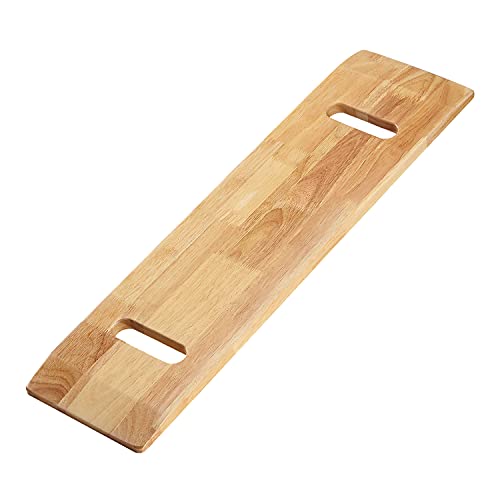
- 440-lb capacity hardwood board
- 30" x 8" surface for multiple transfers
- Tapered ends and hand cutouts
Best For: A simple high-capacity board for home transfers
Powered Floor-to-Bed Patient Lift

- 330-lb electric patient lift
- Manual emergency crank backup
- Adjustable base for home access
Best For: Caregivers needing powered indoor transfer support
Chair Transfer Sling Aid

- Sling for chairs, beds, commodes, and cars
- Safety straps, buckles, and hand grips
- Portable alternative to a transfer board
Best For: Portable chair-based transfers with caregiver assistance
Heavy-Duty Slide Pad
Heavy-Duty Wheelchair Transfer Pad

- 260 lb capacity for heavier adults
- 8 sponge handles for better grip
- Oxford fabric with reinforced stitching
Best For: Caregivers needing a sturdy transfer mat for bed, car, and wheelchair moves
Easy Slide Transfer Sheet

- Low-friction coated nylon surface
- Tubular design for easier transfers
- Lightweight, foldable, and washable
Best For: Low-friction repositioning and vehicle transfers for adults with limited mobility
Standing Pivot Transfer Aid – Etac Turner PRO Standing Pivot Transfer
For transfer aids for heavy patients, this standing pivot option is a good fit when the user can bear weight and follow directions. The Etac Turner PRO supports assisted sit-to-stand moves between a bed, chair, wheelchair, or toilet, while keeping the process upright and controlled for both the patient and caregiver.
Best For: Users who can stand with help and need a stable pivot aid for seated transfers.
Pros:
- Supports safe standing transfers between common seated positions
- 440 lb capacity with a compact swivel base for tighter spaces
- Adjustable leg supports help improve lateral stability
- Upright transfer position can reduce caregiver strain
Cons:
- Not a lifting device for non-weight-bearing patients
- Requires user strength, communication, and ability to follow instructions
This is a practical choice when the right transfer method is a guided stand-and-turn rather than a full lift. It works best for patients who can actively participate in the move.
Transfer Sling Belt – Portable Wheelchair to Car/Bed Aid
If you want transfer aids for heavy patients that focus on sliding support rather than standing, this portable transfer pad is worth a look. It is designed for bed-to-wheelchair, car, chair, and supervised stair-assist scenarios, with a nylon build and multiple handles to make guided moves easier.
Best For: Caregivers who need a portable sliding transfer aid for seated patient moves.
Pros:
- Versatile for bed, wheelchair, car, chair, and supervised stair-assist use
- 8 sponge handles provide multiple grip points for caregivers
- Waterproof nylon surface wipes clean and helps reduce friction
- 200 lb capacity with reinforced stress points and double-stitched seams
Cons:
- Lower weight capacity than some other transfer solutions
- Requires supervised handling and secure positioning during use
Its strength is portability and flexible use, especially when you need a compact aid for routine transfers. It is better suited to controlled seated transfers than higher-support lifting needs.
4-in-1 Transfer Chair – Bed, Toilet & Commode Lift
Among transfer aids for heavy patients, this 4-in-1 chair is built for people who need a versatile seated transfer solution at home or in care settings. It combines a transfer lift, commode chair, bathroom chair, and wheelchair-style function, making it useful for moving between bed and toilet with one device.
Best For: Home caregivers needing a multifunction transfer chair for toileting and seated moves.
Pros:
- 4-in-1 design combines commode, bathroom chair, lift, and wheelchair functions
- Adjustable seat height helps match beds, sofas, and toilets
- Supports up to 290 lb and uses a split seat base for access
- Locking casters and steel frame add stability during transfers
Cons:
- Not intended for people who are very weak or bedridden
- Bulkier than simpler transfer belts or boards
This is the most all-in-one option in the group, but it makes the most sense when the user can tolerate a seated lift and needs toileting support too. For mild to moderate mobility limits, it offers a lot of function in one frame.
Padded Lift Sling – Patient Transfer Sling for Beds & Chairs
For transfer aids for heavy patients, this padded lift sling is aimed at caregivers who need a simple, portable support tool for turning, sitting up, or moving between beds, wheelchairs, and car seats. The design emphasizes comfort, grip, and stability, with a large back panel and multiple handles to help distribute weight during assisted transfers.
Best For: Caregivers who want a foldable padded sling for versatile transfer and repositioning tasks.
Pros:
- Up to 300 lb load capacity with a large back design
- Double grip handles and reinforced stitching improve handling
- Non-slip construction helps support more stable transfers
- Foldable and portable for storage or travel
Cons:
- Not as specialized as a dedicated lift chair or full transfer system
- May be better for assisted repositioning than standalone lifting
This sling is a practical middle-ground choice when you need one tool for several common care tasks. Its versatility is the main appeal, especially in home care and rehabilitation settings.
Heavy-Duty Wooden Board Transfer Aid – 30" Hardwood Slide Board
If you need transfer aids for heavy patients that keep things simple, this hardwood slide board is a practical option for wheelchair-to-bed, chair, commode, or car transfers. Its tapered ends help it slide more easily, and the 30-inch length gives caregivers a broad surface to work with during transfers.
Best For: Caregivers who want a straightforward, durable transfer board for higher-capacity patient handling at home.
Pros:
- Heavy-duty hardwood construction with a 440-pound weight capacity.
- Large 30″ x 8″ surface helps with wheelchair, bed, toilet, commode, or car transfers.
- Tapered ends and smoothly finished edges support easier sliding.
- Two hand cutouts make it easier to carry and position.
Cons:
- It is a manual transfer board, so it still requires caregiver effort.
- Not a powered lift for floor-to-bed transfers.
- Wooden design may be less compact than soft sling-style options.
This is a solid choice when you want a sturdy, non-latex transfer board with a high capacity and a simple design. It is best suited to controlled transfers where a smooth sliding surface is more useful than extra lifting support.
Powered Floor-to-Bed Patient Lift – Foldable 330 lb Transfer Lift
For transfer aids for heavy patients that reduce lifting strain, this electric patient lift is designed for floor-to-bed recovery and other indoor transfers. It combines a powered actuator with a manual emergency crank, plus an adjustable base that helps it fit around wheelchairs, recliners, and narrow spaces.
Best For: Home caregivers who need a powered lift for floor-to-bed transfers and indoor mobility support.
Pros:
- 330-pound capacity with a heavy-duty carbon steel frame.
- Electric lifting with a manual emergency crank for backup.
- Wide vertical range supports floor-to-bed recovery and transfers to a bed, wheelchair, or recliner.
- Adjustable base and low-profile casters help with access around beds and furniture.
Cons:
- At 85 pounds, it is a substantial piece of equipment.
- Indoor-focused design may not suit all environments.
- Users need to verify bed height and working range before buying.
This lift stands out when manual boards or slings are not enough and a powered option is safer for the caregiver. The included sling, backup crank, and adjustable base make it a more complete transfer solution for home use.
Chair Transfer Sling Aid – Portable Lift Assist Sling
If you are comparing transfer aids for heavy patients and want a portable alternative to a board, this chair transfer sling is built for moving adults between chairs, beds, commodes, and car seats. Its straps, buckles, and rubber hand grips are meant to help caregivers manage transfers more securely.
Best For: Caregivers who want a versatile sling for chair-to-chair and chair-to-bed transfers.
Pros:
- Works for a range of transfers, including wheelchair, bed, commode, and car seat use.
- Straps and buckles are designed to improve safety and security during transfers.
- Rubber hand grips help caregivers hold and guide the sling more confidently.
- Portable design makes it easier to bring into different caregiving situations.
Cons:
- It is not a powered lift.
- Less specialized than a floor-to-bed patient hoist.
- Only basic material details are provided, so sizing and fit should be checked carefully.
This sling is a practical middle-ground option when you need more support than a transfer board but do not need a full electric lift. It is especially useful for everyday chair-based transfers where portability matters.
Heavy-Duty Slide Pad – Heavy-Duty Wheelchair Transfer Pad
If you need transfer aids for heavy patients that prioritize stable handling, this wheelchair transfer pad is built for home care and assisted moves. Its 260 lb capacity, reinforced stitching, and 8 sponge handles are aimed at making transfers between a wheelchair, bed, car, or seat feel more controlled.
Best For: Caregivers and families moving heavier adults who need a sturdy, multi-handle transfer mat for short-distance transfers.
Pros:
- 260 lb load capacity supports heavier patients.
- 8 thickened sponge handles offer multiple grip points.
- Breathable Oxford fabric with cross-reinforced stitching adds durability.
- Works for wheelchair-to-bed, car, seat, and stair-assisted transfers.
Cons:
- Best suited to transfer assistance, not a full lift solution.
- Capacity may not fit users above the listed 260 lb limit.
Overall, this is a practical heavy-duty transfer mat for everyday mobility support when a durable, handle-rich design matters more than extra complexity. The included one-year warranty is also a useful backup for buyers who want added confidence.
Comfort Lift Sling – Nursing Transfer Sling
When comparing transfer aids for heavy patients, this nursing sling stands out for comfort-focused support during repositioning and assisted movement. Its widened 31-inch design, nylon and mesh construction, and double PU handles are meant to help caregivers lift, turn, or assist with legs and knees more comfortably.
Best For: Bedridden or mobility-limited adults who need a compact transfer sling for assisted lifting and repositioning.
Pros:
- Widened 79 x 23.8 cm design helps distribute contact more evenly.
- High-quality nylon and knitted mesh aim for a softer feel.
- Double PU handles are designed for easier gripping.
- Small, lightweight, foldable, and easy to clean.
Cons:
- Not a full-body lift system.
- Length and format may be more suited to assisted repositioning than longer transfers.
This is a sensible pick if you want a simple, portable aid for common home-care tasks like turning, lifting legs, or helping someone get up. It keeps the design focused on ease of use rather than bulky equipment.
Easy Slide Transfer Sheet – Car Transfer Aid Slide Sheet
For transfer aids for heavy patients that are meant to reduce friction, this slide sheet is built for easier movement between cars, wheelchairs, beds, and recliners. The tubular design and coated nylon surface are intended to make transfers smoother while also helping caregivers reduce effort during positioning.
Best For: Caregivers moving elderly, obese, or disabled adults who need a low-friction slide sheet for repositioning and vehicle transfers.
Pros:
- Tubular design can be used without folding.
- Slick coated surface reduces friction and caregiver effort.
- Lightweight nylon is waterproof, breathable, and washable.
- Compact 26 x 18 inch size folds down for portable storage.
Cons:
- More of a sliding aid than a lifting aid.
- Small size may not suit every transfer scenario.
Overall, this is a straightforward repositioning tool for people who need help entering, exiting, or shifting in tight spaces. It’s especially practical if lowering strain on the caregiver’s back is a top priority.
How We Picked These Transfer Aids for Heavy Patients
We focused on safety, weight support, ease of use, and real-world versatility. For Transfer Aids for Heavy Patients, the most important features are stable construction, comfortable contact points, secure handling, and a design that matches the user’s mobility level. We also looked for options that can handle common transfer scenarios such as bed-to-chair, wheelchair-to-car, toileting, and repositioning.
Quick Comparison
Manual transfer boards and slide sheets are best for users who can assist with some upper-body movement. Gait belts, transfer slings, and assist belts add control for short assisted moves. For non-weight-bearing users or repeated lifts, powered patient lifts are usually the safest and least physically demanding choice. Transfer chairs sit in the middle, offering a practical option for short indoor moves when full lift equipment is not needed.
Key Buying Factors for Transfer Aids for Heavy Patients
Weight Capacity and User Mobility
Always check the rated capacity and match it to the user’s body weight and transfer needs. A higher weight limit is useful, but mobility matters just as much. If the person can stand briefly, a pivot aid may work. If they cannot reliably bear weight, look for a lift, sling, or transfer chair designed for more secure support.
Transfer Type and Environment
Think about where the aid will be used most often. Bedside and bathroom transfers call for different features than car transfers or stair support. Portability matters for travel, while foldability and storage matter more in smaller homes. For facilities or frequent daily use, durability and ease of cleaning become especially important.
Comfort, Grip, and Caregiver Load
Handles, padding, anti-slip surfaces, and secure attachment points can make a major difference. The best Transfer Aids for Heavy Patients help the caregiver maintain control without awkward lifting or twisting. If one person will be assisting, choose a system that minimizes manual strain and supports smoother movement.
Who Should Buy Which Transfer Aids for Heavy Patients?
Choose a slide board or transfer mat if the user has some upper-body strength and only needs help bridging a short gap. Choose a transfer belt or gait belt for guided standing, pivoting, and balance support. Choose a transfer chair or sling when the user needs more structured assistance for bathroom, bed, or vehicle transfers. Choose a powered lift if safety, repeat use, or limited weight-bearing ability makes manual handling risky.
In short, the best option depends on how much assistance is needed and who will be doing the lifting. Matching the aid to the user’s mobility level is the safest way to narrow down the right product fast.