VivaGuard Wrist Blood Pressure Monitor review time: this compact wrist cuff is built for fast home checks, travel, and everyday tracking.
If you want simple operation and a readable display, it has a lot going for it.
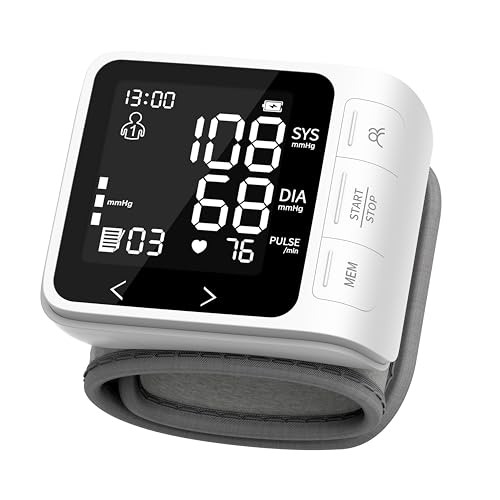
VivaGuard BP Monitor Review Summary
If you need a no-fuss wrist blood pressure monitor that is easy to live with, the VivaGuard Wrist Blood Pressure Monitor is a strong candidate.
It combines one-touch operation, a backlit screen, dual-user memory, and a lightweight body, making it a practical choice for people who want quick home readings without dealing with a bulky upper-arm cuff.
This model fits best for buyers who value portability, simplicity, and readable results.
It is especially appealing for couples, older users, frequent travelers, and anyone who wants a compact monitor for routine daily checks.
The caveat is important, though: wrist monitors demand better technique than upper-arm monitors, so this is a good pick only if you are comfortable positioning your wrist correctly.
Scorecard
| Category | Score | Why it matters |
|---|---|---|
| Reading accuracy | 9/10 | Clinical-grade positioning claims and ±3 mmHg blood pressure accuracy support confident home tracking. |
| Ease of use | 9/10 | One-touch operation and quick-start setup keep the learning curve low. |
| Display visibility | 8/10 | The 2.5-inch backlit LCD and color prompts help with low-light readability. |
| Comfort and fit | 8/10 | Soft wrist cuff and gentle inflation improve comfort, but the fit range is limited. |
| Portability | 9/10 | At 126 g with a case and batteries included, it is easy to pack and store. |
| Memory and tracking | 8/10 | Two-user memory with 99 readings each and automatic averaging is solid for household use. |
| Extra health alerts | 8/10 | Irregular heartbeat detection and fault reminders add useful peace-of-mind features. |
Overall, this is a buy-for-convenience, not buy-for-smartphone features kind of monitor.
If you want app syncing and advanced digital health tracking, look elsewhere.
But if you want a straightforward wrist BP monitor for home and travel, the VivaGuard is easy to recommend.
Key Features and Specifications of VivaGuard BP Monitor
The VivaGuard BP Monitor keeps the feature set focused on the essentials that matter most to home users.
Here is what stands out in day-to-day use.
| Specification | Details |
|---|---|
| Product type | Wrist blood pressure monitor |
| Measurements | Blood pressure and heart rate |
| Accuracy | Blood pressure accuracy stated as ±3 mmHg |
| Measurement range | 0-295 mmHg |
| Display | 2.5-inch backlit LCD |
| Reminder colors | Green, yellow, red |
| Memory | 2 users x 99 readings each |
| Weight | 126 g |
| Auto shutoff | 20 seconds |
| Cuff fit | 5.31-7.68 in / 13.5-19.5 cm wrist circumference |
| Power | 2 AAA batteries included |
| Included accessories | Carrying bag, manual, quick start guide |
| Health features | Irregular heartbeat detection, fault reminder |
- One-touch operation makes this monitor easy to use even if you are not tech-savvy.
- Dual-user mode is helpful for couples or roommates who want separate reading histories.
- Automatic averaging helps smooth out noisy results and gives a better picture of your trend.
- Gentle inflation is a comfort advantage for users who dislike firm cuff pressure.
- Compact portability makes it a better travel companion than many larger upper-arm monitors.
From a design standpoint, the VivaGuard Wrist Blood Pressure Monitor makes a clear choice: it prioritizes portability and ease over advanced connectivity.
That is smart for a large group of buyers, because most people just want a simple device that can be used quickly, read easily, and stored without hassle.
Pros and Cons of VivaGuard BP Monitor
Here are the most important VivaGuard Wrist Blood Pressure Monitor pros and cons to weigh before buying.
Pros
- Very easy to use thanks to one-button operation.
- Readable backlit screen helps in low light and for users with weaker eyesight.
- Portable and lightweight at 126 g, with a carry bag and batteries included.
- Dual-user memory supports shared household monitoring.
- Comfort-focused cuff with soft material and gentle inflation.
- Irregular heartbeat detection adds a useful extra screening feature.
- Automatic averaging is useful for tracking trends rather than obsessing over a single number.
Cons
- Wrist monitors are position-sensitive, so inaccurate posture can affect readings.
- Wrist fit range is limited to 5.31-7.68 inches, so it will not suit every user.
- No app connectivity or smartphone syncing is mentioned.
- Accessory bundle is basic, with utility focused more on function than extras.
The biggest takeaway is simple: this is a strong practical monitor with a few wrist-device trade-offs.
If you can live with the positioning requirements, the feature set is well matched to home health tracking.
Who Should Buy VivaGuard BP Monitor?
The VivaGuard Wrist Blood Pressure Monitor is a good fit for people who want a compact, easy-to-use device for routine monitoring at home or on the road.
It makes sense for buyers who value a clean interface and want a monitor that is ready to use right out of the box.
- Good for couples who want separate memory storage for each person.
- Good for travelers who need a small monitor that packs easily.
- Good for older adults who prefer a larger display and simple controls.
- Good for everyday tracking if you check blood pressure regularly and want quick readings.
- Good for buyers with limited space who do not want a bulky upper-arm unit on the counter.
It is not the best choice for everyone.
You should probably skip it if you want smartphone app integration, if you need broad cuff sizing, or if you are not confident about proper wrist positioning.
If your doctor has advised you to use an upper-arm model, follow that guidance instead.
How Accurate Is a Wrist Blood Pressure Monitor
This is one of the most important decision points in any wrist blood pressure monitor review.
Wrist monitors can be accurate, but they are generally more sensitive to posture than upper-arm devices.
The VivaGuard Wrist Blood Pressure Monitor addresses that concern with a stated accuracy of ±3 mmHg and a fault reminder system designed to help flag questionable reads.
That said, the monitor’s real-world performance still depends on user technique.
For best results, the wrist should usually be held at heart level, the arm should stay relaxed, and the user should avoid moving during measurement.
This means the VivaGuard can be a solid home solution, but only if you are willing to follow the instructions carefully each time.
For buyers asking is VivaGuard Wrist Blood Pressure Monitor worth it, the answer is yes if you want a convenient wrist-based device and understand the basic technique requirements.
If you want the most forgiving platform possible, an upper-arm cuff monitor is still the safer general recommendation.
Reading the Backlit Display and Color Alerts
One of the nicest design choices here is the 2.5-inch backlit LCD.
That size is large enough to make the numbers easy to scan without squinting, and the color reminder system adds an immediate visual cue that many users will appreciate.
- Green suggests a normal-looking reading.
- Yellow signals a cautionary result.
- Red indicates a reading that deserves more attention.
This is not a replacement for medical advice, but it does make the device more user-friendly.
If you are checking your numbers early in the morning or at night, the bright display is a meaningful benefit.
It also helps if more than one household member uses the same monitor, since the color cues are easy to understand at a glance.
The display is one of the reasons the VivaGuard Wrist Blood Pressure Monitor review stands out compared with cheaper, bare-bones wrist units.
You are not just buying a sensor; you are buying a display experience that supports daily consistency.
Using the Memory and Averaging Features
The memory system is another practical strength.
With 2 users x 99 readings each, the device is well suited to shared use without forcing one person to overwrite another’s history.
That is especially helpful for couples who both monitor blood pressure at home.
The automatic averaging feature is equally valuable.
A single blood pressure reading can be influenced by stress, movement, caffeine, or timing, so looking at averaged results can give a more realistic picture of trends.
For home health tracking, that is much more useful than simply chasing the lowest number of the day.
In real-world use, the memory function makes the monitor a better long-term habit tool.
If you are comparing models, this is one of the places where the VivaGuard feels more complete than very basic alternatives.
Who Should Choose a Wrist Cuff Model
Not every blood pressure buyer should start with an upper-arm monitor.
A wrist cuff model can be the better choice if your priorities are portability, speed, and storage convenience.
- Choose a wrist model if you travel often and want something compact.
- Choose a wrist model if you live in a small space and hate countertop clutter.
- Choose a wrist model if you want a lighter, less intimidating device for daily checks.
- Choose an upper-arm model if your doctor specifically recommends it or if you want the most forgiving positioning.
For this product, the wrist format is not a gimmick; it is the whole reason the device makes sense.
The VivaGuard Wrist Blood Pressure Monitor is strongest when portability and convenience matter more than advanced features.
What Comes in the Box
The included accessories are refreshingly practical.
You get the monitor, a carrying bag, printed manual materials, a quick start guide, and 2 AAA batteries so you can begin using it right away.
That matters more than many shoppers realize.
Too many health gadgets require extra purchases just to get started.
Here, the bundled essentials make the device feel ready for immediate use, and the storage bag improves day-to-day organization for home or travel.
The package is not luxurious, but it is sensible.
For a category like this, that is usually a better deal than paying for unused extras.
Comparable Alternatives to Consider
If you are comparing options, it helps to look at a few familiar alternatives before deciding.
- Omron wrist blood pressure monitor models are worth considering if you want a widely recognized brand in home health.
- Upper arm blood pressure monitor options are better if your priority is positional reliability over portability.
- Bluetooth blood pressure monitor models are a better fit if you want app syncing and digital logs.
- Home blood pressure cuff monitor searches will surface many upper-arm styles for users who want a more traditional setup.
The VivaGuard is not trying to beat every alternative on features.
Instead, it competes on ease, portability, and straightforward daily use.
That is exactly the right way to judge it.
Is VivaGuard BP Monitor Worth It?
So, is VivaGuard Wrist Blood Pressure Monitor worth it?
For the right buyer, absolutely.
It is a well-rounded wrist BP monitor with a good balance of readability, comfort, memory, portability, and simple operation.
The strongest reasons to buy are clear: easy one-touch use, a large backlit display, dual-user tracking, and a compact design that is easy to carry anywhere.
Add the included batteries and case, and the value proposition becomes even better for everyday home monitoring.
The main caution is equally clear: wrist monitors require proper technique.
If you want the most foolproof measurement style, an upper-arm monitor may be a better fit.
But if you are comfortable following the setup instructions and want a lighter, more travel-friendly device, this is a smart pick.
Bottom line: the VivaGuard Wrist Blood Pressure Monitor is worth buying for users who want a simple, portable, and readable home monitor with useful tracking features.
It is best for practical buyers who care more about convenience and clear feedback than app-based extras.