Finding the right chair alarm can make daily care safer and less stressful for both caregivers and users. The best options help alert you quickly when someone tries to stand or shift unexpectedly.
Below, we’ve rounded up 10 of the best chair alarms for wheelchair users in 2026, focusing on practical features, comfort, ease of setup, and reliable fall-prevention alerts.
Best 10 Chair Alarms for Wheelchair Users Picks for 2026
Best for Dementia Care
Secure Safety Solutions Wheelchair Seat Belt Alarm

- Triggers instantly when the seat belt is unlatched
- Adjustable 31"-54" strap fits many wheelchairs
- 80 dB alert with flashing light for caregivers
Best For: Elderly wheelchair users with dementia or fall risk who need caregiver alerting without a restraint.
Best for Drop Resistance

- Magnet-triggered alarm for chair or wheelchair use
- 105dB and 90dB volume settings
- Drop-tested with a secure battery door
Best For: Assisted living and caregiver monitoring in wheelchair or bedside settings.
Best for Weight-Sensing Alerts
Smart Caregiver Chair Exit Alarm
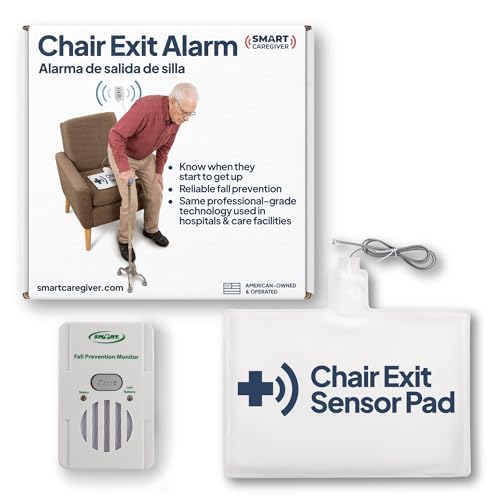
- Alerts caregivers when the user stands up
- Wipe-clean vinyl pad resists moisture and spills
- Low-battery and pad-disconnect warnings add peace of mind
Best For: Caregivers who need a simple chair-exit alert with dependable pressure-pad sensing.
Best for Easy Installation
Patient Aid Chair Alarm with Motion Sensor Pad

- Large 10" x 15" motion sensor pad
- Mounts by clip, wall bracket, or Velcro
- 80 dB/90 dB alerts with alarm or music tones
Best For: Caregivers seeking a simple, loud chair alarm with flexible mounting and a roomy sensor pad.
Best for No-Startle Alerts
Lunderg Wireless Chair Alarm System

- Wireless pager alerts caregivers instead of sounding at the chair
- Works with wheelchairs, recliners, lift chairs, and standard chairs
- No Wi-Fi or app needed; setup is quick and simple
Best For: Caregivers who want a calm, wireless chair alarm for wheelchair users and other seated fall-risk patients.
Best for Dementia Elopement Alerts
Secure Wheelchair Seat Belt Alarm
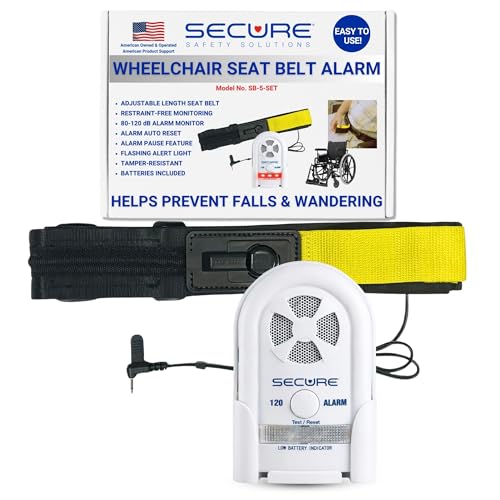
- 120 dB alert with flashing light
- Tamper-resistant monitor helps prevent disablement
- Adjustable strap fits many wheelchairs
Best For: Caregivers who need a loud, tamper-resistant seat-belt release alarm for high-risk wheelchair users.
Best for Bed-to-Chair Monitoring
Smart Caregiver Bed & Chair Exit Alarm

- Dual bed and chair sensor pads included
- Fast pressure-based alerts for exits and transfers
- Simple monitor with clip-on portability
Best For: Caregivers monitoring both wheelchair seating and bed exits with one alarm system.
Best for Audible + Visual Alerts

- 80 dB sound plus flashing LED alert
- Waterproof PVC pad is easy to clean
- Simple wired setup with flexible mounting
Best For: Caregivers who want a straightforward wheelchair alarm with both sound and light alerts.
Best for Dignity-Conscious Alerts
Lunderg Wireless Bed & Chair Alarm Set

- Wireless pager alerts instead of an in-room alarm
- Bed and chair pads use the same handheld receiver
- Adjustable volume, vibration mode, and included batteries
Best For: Caregivers who want a quiet, discreet alert system for bed and chair monitoring.
Best for Caregiver Alerts
MAG-3 Magnet Pull Cord Chair & Bed Alarm

- Immediate pull-cord alert for stand-up attempts
- 3 volume levels and 2 tone options
- Mounts to chairs, wheelchairs, or beds
Best For: Caregivers needing a simple pull-cord alarm for fall prevention and wheelchair monitoring.
Best for Dementia Care – Secure Safety Solutions Wheelchair Seat Belt Alarm
If you need chair alarms for wheelchair users who are at risk of wandering or trying to stand, this Secure Safety Solutions setup is a straightforward, caregiver-focused option. It uses a seat-belt sensor that triggers immediately when unlatched, helping staff or family respond quickly to unsafe movement.
Best For: Elderly patients with dementia or fall risk who need a non-restraint wheelchair alarm for caregiver monitoring.
Pros:
- Immediate alert when the seat belt is unlatched
- Adjustable 31″-54″ strap fits many wheelchairs
- 80 dB alarm with flashing light for clear caregiver notification
- Non-restraint design with metal connecting pin for durability
Cons:
- Requires compatible wired monitor setup
- Alarm volume may be too loud for quiet environments
- More useful for supervision than independent user control
For chair alarms for wheelchair users, this is a practical pick when the main goal is fast caregiver notification rather than complex features. It’s especially sensible for dementia care, where a simple, reliable seat-belt alarm can help reduce fall and elopement risk.
Best for Drop Resistance – Sammons Preston Magnet Alarm
If you need chair alarms for wheelchair users that are simple to set up and built for everyday care settings, this Sammons Preston magnet alarm is a practical option. The spring clip attaches to the chair, while the magnet clip stays on clothing; if the person stands, the connection breaks and the alarm sounds.
Best For: Assisted living, caregiver monitoring, and wheelchair users who need a reliable exit alarm with straightforward operation.
Pros:
- Easy clip-on design with magnet-triggered alert
- High/low volume settings make it easier to match the environment
- Drop-tested construction and secure battery door add durability
- Red light indicator helps show alarms and low battery status
Cons:
- Requires consistent clip placement to work properly
- Not a silent alert system, so it may be too loud for some settings
- Designed more for monitoring than for advanced features
This is a solid pick if you want chair alarms for wheelchair users with a focus on durability and dependable triggering rather than extra tech. It’s especially useful in care environments where caregivers need a no-fuss alert that can withstand frequent handling.
Best for Weight-Sensing Alerts – Smart Caregiver Chair Exit Alarm
If you need chair alarms for wheelchair users that trigger as soon as someone stands up, this Smart Caregiver pad is a straightforward, practical option. The weight-sensing design is easy to set up, easy to clean, and built for everyday monitoring in home care or facility settings.
Best For: Caregivers who want a simple chair-exit alert with a pressure pad, adjustable volume, and useful safety reminders like low-battery and pad-disconnect warnings.
Pros:
- Weight-sensing chair pad alerts when the user gets up
- Wipe-clean vinyl pad is incontinence resistant and simple to place
- Includes reset button, low-battery indicator, and pad-lost alert
- 1-year warranty on both the monitor and pad
Cons:
- Requires a 9-volt battery, which is not included
- AC power adapter is sold separately
- Only works as a chair-exit monitor, not a full wheelchair restraint system
For basic chair alarms for wheelchair users, this model focuses on reliable exit detection rather than extra features, which makes it a solid fit when you want simple, audible notification and minimal setup.
Best for Easy Installation – Patient Aid Chair Alarm with Motion Sensor Pad
If you want a straightforward alert system for chair alarms for wheelchair users, this Patient Aid model is built around simple placement, audible alerts, and flexible mounting. The wired design pairs a 10″ x 15″ motion sensor pad with a device you can keep out of reach, making it a practical option for fall and wandering prevention in home care or assisted living settings.
Best For: Caregivers who want an easy-to-mount, audible chair alarm with a large sensor pad and basic setup options.
Pros:
- Flexible mounting options: clip, wall-mount, or secure with Velcro
- Choice of alarm or music tones at 80 dB or 90 dB
- Tear- and water-resistant, latex-free sensor pad is easy to wipe clean
- Includes 9V battery and AC adapter for added convenience
Cons:
- Wired setup is less portable than wireless alternatives
- Not suitable for users with pacemakers or defibrillators
For chair alarms for wheelchair users, this is a sensible pick if you value loud alerts, a larger pad, and multiple mounting choices over advanced features. It covers the essentials well for routine monitoring, though buyers who need a truly cordless system may want to keep shopping.
Best for No-Startle Alerts – Lunderg Wireless Chair Alarm System
If you need chair alarms for wheelchair users without triggering a loud alarm right beside the person sitting, this wireless system is a practical pick. The sensor pad detects when someone stands, then sends the alert to a pager you carry, helping caregivers respond quickly while keeping the user calm.
Best For: Caregivers who want a wireless, no-startle chair alarm for wheelchair users, recliners, or recovery seating.
Pros:
- No in-chair alarm, so it avoids startling the user at the moment they stand up.
- Works with wheelchairs, recliners, lift chairs, and standard chairs.
- Wireless pager design with adjustable volume, vibration mode, and up to 400 ft. range.
- No Wi-Fi, app, or tools required for setup.
Cons:
- Needs the caregiver to carry the pager, so it is not fully hands-free.
- May be more than needed if you only want a very basic bedside-style alarm.
For buyers comparing chair alarms for wheelchair users, Lunderg stands out because it focuses on reducing panic, not just making noise. That makes it especially useful in fall-prevention setups where the caregiver needs a fast alert and the seated person needs a calmer experience.
Best for Dementia Elopement Alerts – Secure Wheelchair Seat Belt Alarm
If you need chair alarms for wheelchair users who are at risk of standing, wandering, or unlatching a seat belt, this Secure Safety Solutions alarm is built for fast caregiver notification. It combines a tamper-resistant monitor, adjustable volume, and a wheelchair-compatible strap to help reduce fall risk in care settings or at home.
Best For: Caregivers and facilities monitoring dementia patients or other high-risk wheelchair users who need an audible alert when the seat belt is released.
Pros:
- 120 dB alarm with adjustable volume and flashing light for strong caregiver alerting
- Tamper-resistant monitor helps prevent the patient from disabling the alarm
- Adjustable 31″ to 54″ strap fits many wheelchairs and installs using existing screws
- Non-restraint design and metal connecting pin add durability and compliance-friendly use
Cons:
- Designed around seat-belt release alerts, so it is not a general motion alarm
- May be louder than some home users need, even at lower settings
- Requires proper installation on a compatible wheelchair for best results
For buyers comparing chair alarms for wheelchair users, this model stands out for its strong alert output and anti-tamper design rather than extra features. It is a practical pick when the main goal is reliable notification the moment a user tries to unfasten the belt.
Best for Bed-to-Chair Monitoring – Smart Caregiver Bed & Chair Exit Alarm
If you need one simple alert system that works across both beds and seating, this Smart Caregiver setup is a practical pick for chair alarms for wheelchair users and other at-risk patients. The included bed and chair pads trigger as soon as pressure is lifted, giving caregivers fast notice before a fall or wandering attempt becomes an emergency.
Best For: Caregivers who want a dual-use alarm for monitoring both bed exits and chair transfers with minimal setup.
Pros:
- Includes both a 10″ x 30″ bed pad and a 10″ x 15″ chair pad for flexible use.
- Immediate pressure-sensitive alerts help caregivers respond quickly.
- Simple monitor controls with adjustable volume and status lights.
- Chair clip and easy pad switching make it convenient for daily caregiving.
Cons:
- One monitor means switching between bed and chair use unless you buy another unit.
- Volume controls are inside the battery compartment, which is less convenient.
- Requires correct pad placement to get the sensitivity you want.
For families comparing chair alarms for wheelchair users, this model stands out because it covers both seating and bedside monitoring in one package. It is a straightforward, caregiver-friendly option when you want reliable exit alerts without a complicated system.
Best for Audible + Visual Alerts – Briidea Wheelchair Alarm
If you’re comparing chair alarms for wheelchair users, this Briidea option stands out for its simple wired setup and dual-alert design. It uses both a loud alarm and flashing light to help caregivers react quickly when someone rises from the seat, making it a practical pick for fall prevention in home care or facility settings.
Best For: Caregivers who want a straightforward wheelchair alarm with both sound and light alerts for added safety.
Pros:
- Triggers a loud 80 dB alarm plus a flashing LED for fast awareness
- Waterproof PVC seat pad is easy to clean and built for regular use
- Simple wired installation with screw, adhesive, or lanyard mounting options
- Works well for homes, nursing facilities, and other care environments
Cons:
- Wired design may be less convenient than fully wireless alarms
- Best suited to preventing unassisted standing, not general fall detection
- May require careful placement for the most reliable sensor contact
Overall, this is a solid safety-focused choice if you need chair alarms for wheelchair users that are easy to install and give immediate, unmistakable alerts. It’s especially appealing when caregivers want both audible and visual warning cues in one compact system.
Best for Dignity-Conscious Alerts – Lunderg Wireless Bed & Chair Alarm Set
If you’re comparing chair alarms for wheelchair users, this Lunderg set stands out for sending the alert to a handheld pager instead of sounding an in-room alarm. That makes it a practical fit for caregivers who want a fast notification without startling the person being monitored. The included bed and chair pads, wireless setup, and simple controls make it easy to use in home care routines.
Best For: Caregivers who want a wireless bed-and-chair alarm system that preserves dignity and reduces noise in the room.
Pros:
- Wireless pager alerts help avoid loud bedside alarms.
- Bed and chair pads pair with the same receiver for simple setup.
- Adjustable volume and vibration mode suit different caregiving situations.
- Includes batteries, mounting options, and anti-slip helpers to reduce false alerts.
Cons:
- Only alerts after the person begins to get up, not before they move.
- Best suited to caregiver monitoring rather than fully independent use.
For families seeking chair alarms for wheelchair users, this is a thoughtful option if the priority is discreet notification and fewer false alarms. It is especially appealing in dementia care or overnight monitoring, where a quiet alert can be more workable than a bedside blast.
Best for Caregiver Alerts – MAG-3 Magnet Pull Cord Chair & Bed Alarm
If you need a simple fall-alert device, this MAG-3 is a practical option to consider among chair alarms for wheelchair users. It uses a pull-cord magnet design to notify caregivers when the user attempts to stand, with adjustable volume and multiple mounting options for chairs, wheelchairs, and beds.
Best For: Caregivers who want a straightforward pull-cord alarm for dementia care, fall prevention, or wheelchair monitoring.
Pros:
- Pull-cord magnet triggers an immediate caregiver alert when the user gets up
- Three volume levels and two alert tones for different care environments
- Multiple mounting options make it easy to place on a wheelchair, chair, or bed
- Durable ABS housing and low-battery indicators help with long-term use
Cons:
- Requires the user to be clipped to the cord, so setup matters
- No on/off switch may be less convenient if you want manual control
Overall, the MAG-3 is a dependable, no-frills safety alert for care settings where fast notification matters most. For chair alarms for wheelchair users, it stands out for its easy mounting, loud alert options, and caregiver-focused design.
How We Picked These Chair Alarms for Wheelchair Users
We prioritized reliable alerting, ease of installation, caregiver convenience, and user comfort. For Chair Alarms for Wheelchair Users, the most important factor is whether the system can detect movement quickly without creating unnecessary discomfort or confusion for the person using it.
We also looked for options with practical mounting choices, clear sound or wireless alerts, durable construction, and designs suited to home care, assisted living, or dementia support.
Quick Comparison: What Matters Most
Some chair alarms use seat pads, while others rely on belts, pull cords, magnet sensors, or wireless systems. Seat pads are generally best for detecting when someone rises from the chair. Belt-based systems can be a better fit for wheelchair users who need a more secure alert trigger. Wireless models are often easier for caregivers to manage across larger spaces.
If you want the simplest setup, look for a straightforward pad-and-monitor system. If you need more mobility and less in-room noise, a wireless chair alarm may be the better choice.
Key Buying Factors for Chair Alarms for Wheelchair Users
Alert Type
Choose between sound alerts, light alerts, remote caregiver signals, or wireless notifications based on the care environment. In quieter settings, a remote alert can be preferable to a loud bedside alarm.
Sensing Method
Weight-sensing pads are common and effective for seat departure detection. Magnet and pull-cord systems can work well when a more direct trigger is needed, while belt alarms may be better for users who stay secured in the chair for long periods.
Comfort and Safety
Since these products are used on or near the body, look for soft materials, adjustable straps, and non-restrictive designs whenever possible. The goal is fall prevention, not discomfort.
Power and Maintenance
Battery life, AC adapters, cleaning ease, and replacement part availability all affect long-term use. A system that is easy to maintain is usually the best value over time.
Who Should Buy Which Chair Alarms for Wheelchair Users?
Buy a seat pad alarm if the primary concern is detecting when someone begins to rise. Choose a belt or magnet-style alarm if you need a more targeted trigger point or a secure chair-based setup. Go with a wireless model if caregivers need flexibility, quieter operation, or multi-room monitoring.
For most households, the best choice is the one that matches the user’s mobility level, the caregiver’s response time, and the level of supervision needed throughout the day.