Choosing Alzheimer’s safety devices for elderly parents is often about reducing risk before an emergency happens. The right setup can help with wandering, bed exits, chair rises, and quick caregiver response.
Below, we focus on practical, caregiver-friendly options that support safer daily routines at home without adding unnecessary complexity.
Best 10 Alzheimer’s Safety Devices for Elderly Parents Picks for 2026
Best for Early Fall Alerts
Lunderg Wireless Bed & Chair Alarm Set

- Wireless pager alerts caregiver before the person gets up
- Includes both bed and chair sensor pads for broader coverage
- No app or Wi-Fi needed; adjustable sound or vibration
Best For: Caregivers who want quiet, early warnings for bed and chair exits without an in-room alarm.
Best for Shared Alerts
Daytech Wi‑Fi Caregiver Call Button System

- Wi‑Fi app notifications for remote caregivers
- Shared alerts can go to multiple family phones
- Includes SOS watch, 2 buttons, and receiver
Best For: Families wanting simple one-touch help calls with shared smartphone alerts.
Best for Quiet Bed-Exit Alerts
Smart Caregiver Bed Alarm for Elderly Adults
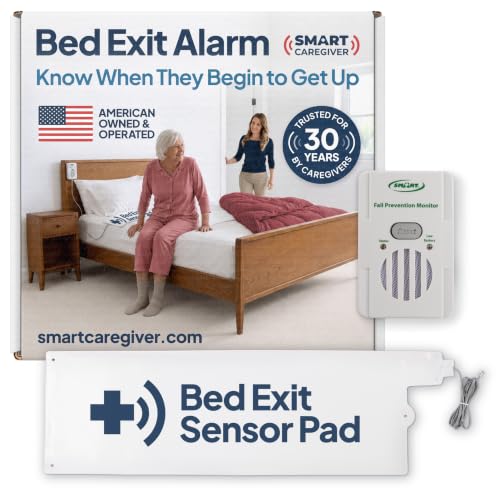
- Weight-sensing pad alerts when the user gets out of bed
- Optional wireless caregiver alert kit available separately
- Easy-to-clean vinyl pad with simple bedside setup
Best For: Families needing a straightforward bed-exit alarm for dementia care and overnight fall prevention.
Best for Door-Open Alerts
Caregiver Pager Door Alarm System

- Three sensors and one receiver cover multiple entry points.
- Loud chime and LED alerts help with quicker caregiver response.
- Simple plug-and-play setup works well for fast installation.
Best For: Families needing an easy door-open alert for dementia care at home.
Best Chair-Exit Alert
Smart Caregiver Chair Pad Monitor

- Alerts caregivers when the user stands up
- Wipe-clean vinyl pad resists incontinence
- Includes low-battery and pad-disconnect alerts
Best For: Caregivers monitoring an older adult who may stand up or wander from a chair.
Best for Easy Setup
Patient Aid Bed Alarm with Motion Sensor Pad

- Flexible mounting options make placement simple
- Loud alarm and music settings help grab attention
- Slim, easy-clean pad suits everyday use
Best For: Caregivers wanting a simple bed-exit alarm for wandering and fall prevention.
Best for Wandering Alerts
Smart Caregiver Wireless Bed Alarm

- Wireless alert range up to 300 feet
- Cordless weight-sensing pad detects bed exits
- Quiet monitoring helps reduce bedroom disturbance
Best For: Caregivers watching for nighttime bed exits and wandering in older adults.
Best with Extra Features

- Simple battery-powered setup with included parts
- Works on beds, chairs, and wheelchairs
- Adjustable alert modes and mounting options
Best For: Caregivers who want a basic, flexible bed-and-chair alarm for fall and wandering alerts.
Best for Early Bed-Exit Alerts
Smart Caregiver Bed Exit Alarm

- Wireless pager with sound or vibration alerts
- Large sensor pad detects bed exits early
- Expandable to six Smart Caregiver sensors
Best For: Caregivers monitoring seniors at night for bed exits, falls, or wandering.
Best for Doorway Alerts
Upgraded Bed Sensor Alarm for Dementia Care
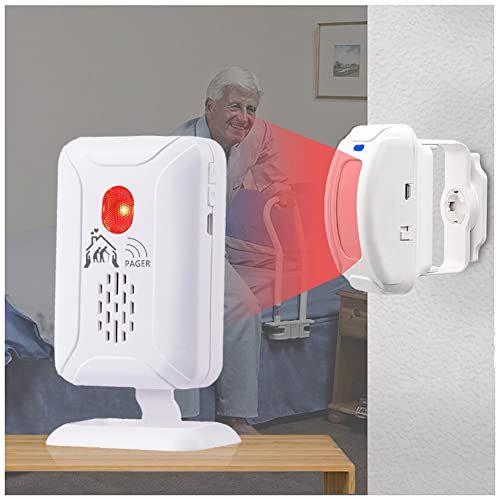
- Flexible motion sensor placement for bed exits or door monitoring.
- Caregiver receiver alerts away from the patient’s room.
- Long open-area range and dual power options add convenience.
Best For: Caregivers who need a wireless alert system for bed exits or room departures.
Best for Early Fall Alerts – Lunderg Wireless Bed & Chair Alarm Set
If you’re comparing Alzheimer’s safety devices for elderly parents, this Lunderg set stands out for giving caregivers an early wireless alert before a loved one fully gets up. The bed pad and chair pad send notifications to a handheld pager, so there’s no loud in-room alarm to startle or agitate someone with dementia.
Best For: Caregivers who want a simple, no-app bedside and chair monitoring system that helps reduce fall risk without disturbing the person being watched.
Pros:
- Early-alert bed pad is designed to notify you before the person leaves the bed
- Chair sensor adds coverage for standing up from a seated position
- No Wi-Fi, app, or tools required; pager can be set to sound, low volume, or vibration
- Includes batteries and is positioned as a long-lasting, easy-to-clean setup
Cons:
- Only useful if a caregiver is within pager range and able to respond quickly
- Best suited to bed and chair monitoring, not full-room movement tracking
For families prioritizing Alzheimer’s safety devices for elderly parents, this is a practical pick because it focuses on early warning, dignity, and simplicity rather than complicated smart-home features. It’s a strong fit when you want quiet, reliable alerts and minimal setup.
Best for Shared Alerts – Daytech Wi‑Fi Caregiver Call Button System
If you’re comparing Alzheimer’s safety devices for elderly parents, this Daytech Wi‑Fi caregiver call button system is a practical way to add quick emergency signaling at home. It combines a wearable SOS watch, two wireless call buttons, and a plugged-in receiver, while also sending alerts to a mobile app so family members can stay informed remotely.
Best For: Families who want app-based shared alerts and simple one-touch calling for an older parent living at home.
Pros:
- Wi‑Fi app alerts let caregivers receive notifications remotely.
- Shared notifications can be sent to multiple family phones.
- Custom ringtones and volume levels help identify where the alert came from.
- Includes a wearable SOS watch plus two extra call buttons for flexible placement.
Cons:
- The receiver must stay plugged into an outlet.
- Wi‑Fi and app setup may take a little configuration.
- Some notification features may depend on phone/text alert upgrades.
For caregivers shopping for Alzheimer’s safety devices for elderly parents, this system stands out for remote visibility and shared alerts rather than advanced medical monitoring. It’s a strong fit when you mainly need fast, reliable “call for help” coverage across different rooms and family devices.
Best for Quiet Bed-Exit Alerts – Smart Caregiver Bed Alarm for Elderly Adults
If you’re comparing Alzheimer’s safety devices for elderly parents, this bed alarm is a practical way to catch nighttime wandering or unassisted bed exits early. It uses a weight-sensing pad to trigger an alert as soon as pressure is removed, helping caregivers respond quickly without needing a more complex monitoring setup.
Best For: Families who want a simple bed-exit alarm for dementia care, with flexible alert options and easy placement.
Pros:
- Triggers immediately when the person gets out of bed, which is useful for fall prevention.
- Optional wireless add-on can alert the caregiver instead of sounding loudly in the room.
- Soft vinyl sensor pad is easy to clean and designed for regular caregiving use.
- Simple setup with mounting options for the monitor and discreet pad placement.
Cons:
- Wireless caregiver alerts require a separate add-on kit.
- The in-room alarm may still be too startling for some sensitive sleepers.
- Battery-powered operation adds another thing to monitor.
For Alzheimer’s safety devices for elderly parents, this is a focused, no-frills option that prioritizes fast bed-exit detection over advanced monitoring features. It’s a strong fit if your main concern is preventing unsupervised standing or wandering overnight.
Best for Door-Open Alerts – Caregiver Pager Door Alarm System
If you want a simple, low-cost alert for wandering risks, this wireless door alarm is a practical option for Alzheimer’s safety devices for elderly parents. It’s designed to chime when a door or window opens, helping caregivers react faster without installing a full monitoring system.
Best For: Families who need an easy-to-install door-open alert for dementia care, especially when one receiver needs to cover multiple entry points.
Pros:
- Three sensors plus one receiver make it useful for monitoring several doors or windows.
- Up to 260 feet of detection range and loud volume settings help in larger homes.
- 58 ringtones and LED indicators add flexibility for different households and hearing needs.
- Plug-and-play setup is straightforward with adhesive sensor mounting.
Cons:
- It alerts after a door opens, so it won’t physically prevent exit wandering.
- Performance depends on placement and may need testing around thicker walls or distances.
- Sound-based alerts may be less useful if the receiver is too far from the caregiver.
For caregivers comparing Alzheimer’s safety devices for elderly parents, this model stands out for its easy setup and multi-door coverage rather than advanced smart features. It’s a good fit if your main goal is to hear an entry/exit immediately and keep tabs on movement around the home.
Best Chair-Exit Alert – Smart Caregiver Chair Pad Monitor
If you’re comparing Alzheimer’s safety devices for elderly parents, this chair-exit alarm is a simple way to know when someone stands up unexpectedly. The weight-sensing pad alerts the caregiver right away, helping reduce wandering or unassisted rises from a chair.
Best For: Caregivers who want an easy-to-use chair alarm for monitoring an older adult who may get up unsafely or wander after standing.
Pros:
- Alerts as soon as the person gets up from the chair
- Soft, wipe-clean vinyl pad is easy to maintain and incontinence resistant
- Useful safety features like low-battery, pad-loss, and volume adjustment
- Backed by a 1-year warranty
Cons:
- Requires a 9V battery, which is not included
- Works only for chair monitoring, not full-room coverage
- May need the optional AC adapter for continuous power
As a focused alerting tool, this monitor fits well among Alzheimer’s safety devices for elderly parents when the main concern is unsupervised chair exits. It’s straightforward, practical, and best for caregivers who want quick notification without a complicated setup.
Best for Easy Setup – Patient Aid Bed Alarm with Motion Sensor Pad
If you want a straightforward alert system for nighttime wandering and fall risk, this bed alarm is a practical option to consider among Alzheimer’s safety devices for elderly parents. The sensor pad sits under the patient and the wired alarm unit can be mounted out of reach, helping notify caregivers when someone tries to get up.
Best For: Caregivers who need a simple, budget-friendly bed-exit alarm with flexible mounting and audible alerts for an older adult at risk of wandering or falls.
Pros:
- Quick to set up with multiple mounting options for bed rails, walls, or flat surfaces
- Choice of alarm or music tones at 80dB or 90dB for louder room coverage
- Slim, latex-free pad is tear-resistant, water-resistant, and easy to wipe clean
- Includes AC adapter and battery power options for more placement flexibility
Cons:
- Requires the alarm unit to be kept beyond the patient’s reach, so placement matters
- Not suitable for use with patients who have a pacemaker or defibrillator
For families comparing Alzheimer’s safety devices for elderly parents, this model stands out for simple installation and clear alerting rather than advanced smart features. It’s a solid pick when you want dependable bed-exit monitoring without a complicated setup.
Best for Wandering Alerts – Smart Caregiver Wireless Bed Alarm
If you’re comparing Alzheimer’s safety devices for elderly parents, this Smart Caregiver bed alarm is built to catch the moment someone gets out of bed and alert a caregiver right away. It’s a practical pick for reducing nighttime wandering risk while keeping the alarm itself out of the patient’s room.
Best For: Caregivers who need a wireless bed-exit alert for an elderly parent with dementia, fall risk, or nighttime wandering.
Pros:
- Wireless monitor can alert from up to 300 feet away.
- Cordless weight-sensing pad helps detect bed exits quickly.
- Quiet alert setup keeps noise away from the bedroom.
- Can monitor multiple compatible Smart Caregiver devices.
Cons:
- Only works as a bed-exit alarm, not full-room tracking.
- Setup and placement matter for reliable sensing.
- Not a substitute for hands-on supervision in higher-risk cases.
For families comparing Alzheimer’s safety devices for elderly parents, this is a focused solution: it prioritizes early warning, wireless range, and less disruptive monitoring. It’s a strong fit when the main concern is nighttime bed exits rather than broader home monitoring.
Best with Extra Features – Patient Aid Chair & Bed Alarm
If you’re comparing Alzheimer’s safety devices for elderly parents, this Patient Aid chair and bed alarm is a practical option for alerting caregivers when someone tries to stand or wander. It’s designed for simple placement on a bed, chair, or wheelchair, with an included battery and magnet system that makes setup quick.
Best For: Caregivers who want a straightforward motion-alert alarm for beds, chairs, or wheelchairs in home or facility settings.
Pros:
- Quick setup with included 9V battery, magnet, and pull cord
- Three mounting options for bed, chair, wall, or hook-and-loop use
- Adjustable alarm settings, including volume and music modes
- Durable ABS housing with a protective rubber cover
Cons:
- Requires caregiver monitoring and is not a substitute for supervision
- Not suitable for users with pacemakers
- More of an alert system than a full tracking or smart-home solution
For families building a fall-prevention plan, this alarm offers a simple and dependable layer of protection. Among Alzheimer’s safety devices for elderly parents, it stands out for ease of installation and flexible placement rather than advanced tech.
Best for Early Bed-Exit Alerts – Smart Caregiver Bed Exit Alarm
If you’re comparing Alzheimer’s safety devices for elderly parents, this bed-exit alarm is a practical option for catching movement early before a nighttime fall or wandering event. The wireless pager lets a caregiver stay alerted from another room, while the weight-sensing pad is designed to notify as soon as pressure is removed from the bed.
Best For: Caregivers who want an easy-to-monitor bed alarm with a pager for overnight fall prevention and early wandering alerts.
Pros:
- Wireless pager gives caregivers vibration or sound alerts.
- Large 10″ x 30″ sensor pad is built for early bed-exit detection.
- Expandable system can support up to six Smart Caregiver sensors.
- U.S.-based company with long-term customer support.
Cons:
- Works best as a bed-based alert, not a full-room monitoring system.
- Requires correct pad placement for the earliest possible alerts.
- Not a substitute for hands-on supervision in higher-risk situations.
For families focused on Alzheimer’s safety devices for elderly parents, this is a solid early-warning tool when nighttime bed exits are the main concern. It’s especially appealing if you want a simple, expandable alarm system rather than a more complex monitoring setup.
Best for Doorway Alerts – Upgraded Bed Sensor Alarm for Dementia Care
If you’re comparing Alzheimer’s safety devices for elderly parents, this bed and doorway motion alarm is designed to notify a caregiver the moment someone starts to get up or leave the room. It uses a separate receiver so the alert sounds away from the patient, which can help avoid startling them at night.
Best For: Caregivers who want a simple wireless alert system for bed exits or room departures without placing a pad under the sleeper.
Pros:
- Motion sensor can be placed under the bed or by the door for flexible monitoring.
- Receiver alerts the caregiver, not the person in bed, which may reduce nighttime disruption.
- Wireless range up to 918 ft in open areas helps with larger homes.
- Includes dual reminders and dual power options for added convenience.
Cons:
- Requires testing sensor position and direction to avoid missed alerts.
- Uses batteries and setup steps that may be less convenient than a plug-and-play alarm.
For families looking for practical Alzheimer’s safety devices for elderly parents, this is a useful alert system when the main goal is early warning rather than in-room alarm noise. Its flexible placement and caregiver-focused notifications make it a solid fit for home monitoring.
How We Picked the Best Alzheimer’s Safety Devices for Elderly Parents
We prioritized devices that address the most common safety concerns for seniors living with memory loss: bed exits, chair exits, wandering, and fast caregiver notification. We also looked for easy setup, adjustable alerts, reliable sensing, and options that work for different home layouts and caregiving styles.
Quick Comparison
In general, bed alarms are best for overnight fall prevention, chair alarms help during daytime sitting periods, door alarms add wandering protection, and call-button systems support direct communication when the person can still request help. If you need broader coverage, a combination of devices is often more effective than relying on a single alert.
Key Buying Factors for Alzheimer’s Safety Devices for Elderly Parents
Alert Type and Timing
Some systems notify caregivers only after movement begins, while early-alert models aim to warn before a full stand-up or fall risk develops. For higher-risk parents, early notification can be especially useful.
Sensing Method
Weight-sensing pads, motion sensors, door contacts, and pull-cord alarms each solve different problems. Weight-sensing pads are typically better for bed and chair exits, while door sensors are better for wandering prevention.
Receiver Range and Notification Method
Choose the alert path that fits your caregiving routine: local pager, smartphone app, audible alarm, or a combination. If caregivers move around the home, a portable pager may be more dependable than a fixed alarm alone.
Comfort, Noise, and Placement
For dementia care, quiet operation and discreet placement matter. A system that avoids startling the user can reduce confusion and resistance, especially at night.
Power and Reliability
Battery backup, low-battery alerts, and stable wireless connections are important. Safety devices should continue working during outages and be simple to test regularly.
Who Should Buy Which Alzheimer’s Safety Devices for Elderly Parents?
If your main concern is nighttime falls, choose a bed exit alarm. If your parent spends long periods in a recliner or wheelchair, a chair alarm is the better fit. If wandering is the biggest issue, door alarms should be high on your list. If your parent can still ask for help, a caregiver call button may be the simplest and least intrusive option. For many families, the best solution is a layered approach that combines two or more Alzheimer’s Safety Devices for Elderly Parents to cover both movement and communication needs.