When a student has epilepsy, the right safety device can help teachers, nurses, and staff respond faster and more confidently in an emergency.
This roundup of the best epilepsy safety devices for school focuses on simple identification, easy placement, and options that fit backpacks, desks, wrists, lanyards, and everyday school routines.
Best 10 Epilepsy Safety Devices for School Picks for 2026
Best GPS Monitoring Pick

- SOS button plus fall detection for emergency alerts
- GPS tracking and geofencing for school-day monitoring
- Two-way calling and caregiver app support
Best For: Students who need simple wearable tracking and quick emergency contact support at school.
Best for Medical Detail Sharing
MediPal Epilepsy Alert Seatbelt Tag

- Reflective, high-visibility medical ID for quick emergency access
- Detailed epilepsy fields plus customizable PDF updates
- Works on seatbelts, backpacks, and mobility aids
Best For: Students and caregivers who need a visible, easy-to-update medical ID for transport and daily use.
Best Loud Alert Backup
Personal Alarm Safe Sound 2 Pack

- 130dB siren for fast attention-grabbing alerts
- Compact 2-pack for bags, keys, and backpacks
- LED light adds extra visibility in low light
Best For: Students and caregivers wanting a portable emergency alert backup for school carry.
Best Visibility Pick
Autism Epilepsy Seizure Medical Alert Seat Belt Cover

- Highly visible medical alert accessory
- Waterproof and fade-resistant construction
- Made to stand out to police and EMTs
Best For: Caregivers who want a simple, highly visible alert aid for school transportation and emergencies.
Best for Emergency Contact ID

- Writable panel for emergency contact details
- Two-pack with lanyard for daily backup use
- Hook-and-loop closure for easy attachment
Best For: Students who need a simple, wearable ID tag for school and supervised outings.
Best for Simple Medical ID
Adjustable Medical Alert Bracelet
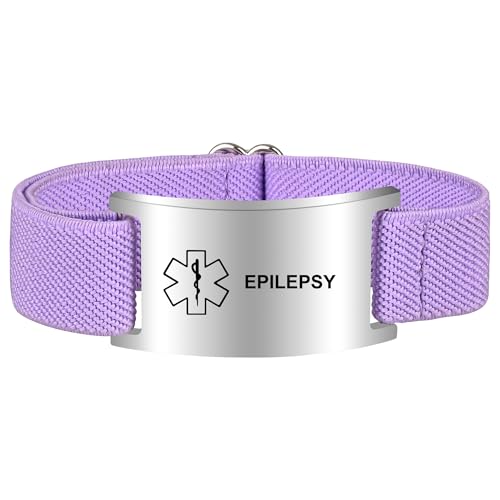
- Clear medical ID for quick emergency recognition
- Adjustable fit for everyday wear
- Suitable for epilepsy, diabetes, and other conditions
Best For: Students or adults who need a visible, no-fuss medical ID wristband.
Best for Fast Identification
Epilepsy Medical Alert Wallet Card, 2-Pack

- Credit-card size for easy everyday carry
- Waterproof PVC construction for durability
- Two-pack keeps a spare at school or home
Best For: Students and caregivers who need a compact medical ID for quick seizure recognition.
Best Clip-On School ID
Medical Alert Keychain Tag for Epilepsy

- Clip-on ID for backpacks, keys, and purses
- Clearly marks epilepsy for emergency situations
- Lightweight, durable, and easy to read
Best For: Students and caregivers who need a simple epilepsy ID for school bags or everyday carry.
Best for Daily Visibility
Epilepsy Medical Alert Silicone Bracelets (5 Pack)

- Clear epilepsy alert for quick identification
- Waterproof, latex-free silicone for everyday wear
- 5-pack offers useful backups for school and travel
Best For: Students and adults who want a simple, visible medical alert bracelet for everyday use.
Best for Clear ID
Medical Alert EPILEPSY Necklace

- Bold all-caps engraving improves emergency readability
- Stainless steel build is durable and skin-friendly
- Adjustable chain suits kids, teens, and adults
Best For: Students and families who want a simple, visible epilepsy ID necklace for everyday school use.
Best GPS Monitoring Pick – SecuLife SOS Wristband
For families looking at epilepsy safety devices for school, the SecuLife SOS Wristband is a practical option when location tracking and instant alerts matter most. It combines an SOS button, fall detection, geofencing, and two-way calling in a screen-free bracelet that can be worn throughout the day.
Best For: Students or children who need real-time caregiver tracking, quick emergency contact, and simple wearable safety support during school hours.
Pros:
- Fall detection and SOS calling add multiple ways to trigger an alert.
- GPS tracking with geofencing helps caregivers monitor school-day movements.
- Two-way calling supports direct contact without a full smartphone.
- Screen-free, lightweight design is easier for everyday wear.
Cons:
- Requires a $25 monthly subscription.
- Designed as a medical alert tracker, not a dedicated seizure-detection device.
- Some schools may restrict connected wearables during class.
As a monitoring-focused wearable, this bracelet works best when the goal is fast communication, location awareness, and caregiver oversight rather than automatic seizure detection. For families comparing epilepsy safety devices for school, it’s a strong fit if you want simple alerts and tracking in one device.
Best for Medical Detail Sharing – MediPal Epilepsy Alert Seatbelt Tag
If you need epilepsy safety devices for school that help teachers, drivers, and first responders quickly see critical seizure information, this MediPal seatbelt tag is a practical option. It keeps the most important medical details in one visible place and includes a fill-in form plus a customizable PDF version for easy updates.
Best For: Students and caregivers who want a highly visible, easy-to-update medical ID for school transportation, rides, and daily mobility support.
Pros:
- Quick-access design with reflective trim and a seatbelt-friendly placement for visibility.
- Includes detailed epilepsy fields for seizure type, triggers, meds, rescue therapy, allergies, and diet notes.
- Hand-fill form plus downloadable PDF makes updates simple as needs change.
- Slides on standard seatbelts and can transfer to backpacks, bags, and mobility aids.
Cons:
- Focused on medical ID sharing rather than active seizure detection or monitoring.
- Best suited to users who regularly travel by car or use straps/belts for carry and mobility.
For families comparing epilepsy safety devices for school, this tag stands out because it prioritizes fast access to detailed emergency information without adding much bulk. It is especially useful when a student moves between home, school transport, and activities where caregivers want clear medical details close at hand.
Best Loud Alert Backup – Personal Alarm Safe Sound 2 Pack
If you want a simple, low-cost backup alert, this 2-pack personal alarm can add a layer of visibility and noise for epilepsy safety devices for school. The 130dB siren and built-in LED light make it easy to keep on a backpack, keyring, or lanyard for quick access in an emergency.
Best For: Students, kids, and caregivers who want a portable emergency alert device that’s easy to carry in a school bag or on keys.
Pros:
- Very loud 130dB siren helps draw attention quickly
- Compact 2-pack design works well for school bags, keys, and backpacks
- Built-in LED light adds extra usefulness in dark hallways or after-school activities
- Simple pull-pin activation is easy to use in a hurry
Cons:
- Not a medical alert or seizure-detection device
- Requires manual activation, so it depends on the user or a bystander
- More of a general safety tool than a school-specific epilepsy solution
As part of epilepsy safety devices for school, this alarm is best viewed as an attention-getting backup rather than a specialized health monitor. It’s a practical choice if you want something affordable, portable, and easy to place with a student’s everyday carry items.
Best Visibility Pick – Autism Epilepsy Seizure Medical Alert Seat Belt Cover
If you want a simple way to make a student’s needs easier to notice, this seat belt cover works well as one of the more visible epilepsy safety devices for school. It is designed to stand out to police and EMTs, and the extra-long, waterproof, fade-resistant build makes it practical for everyday use in cars, buses, and other routine travel.
Best For: Families and caregivers who want a highly visible medical alert accessory that’s easy to spot during school transportation and emergency situations.
Pros:
- Extra-long design improves visibility
- Waterproof and fade-resistant for daily use
- Easy for police and EMTs to notice quickly
- Simple, low-maintenance safety accessory
Cons:
- Only useful if the seat belt cover stays visible
- Does not provide active seizure monitoring
- Focuses on identification, not hands-on support
For families comparing epilepsy safety devices for school, this is a straightforward visibility aid rather than a high-tech alert system. It’s a good fit when the main goal is clear medical identification during transportation and emergency response.
Best for Emergency Contact ID – 2 Pack Autism Safety Tags
For families and schools looking at epilepsy safety devices for school, this two-pack safety tag offers a simple way to keep emergency contact details visible on a necklace-style lanyard. The writable panel makes it easy to personalize, while the hook-and-loop closure helps secure the tag in daily use.
Best For: Students who need a low-cost, easy-to-label ID tag for school, outings, or other supervised settings.
Pros:
- Writable card lets you add emergency contacts or key instructions.
- Includes two tags plus a lanyard for everyday backup use.
- Hook-and-loop attachment makes it easier to fix or mount.
- Lightweight PVC and fabric build is practical for daily wear.
Cons:
- Not a medical alert device with built-in electronics or alarms.
- Best suited to contact information, not detailed care plans.
This is a straightforward ID solution rather than a high-tech safety tool, but that can be enough for classrooms, trips, and after-school activities. If you want simple, visible identification among epilepsy safety devices for school, this tag is a practical option.
Best for Simple Medical ID – Adjustable Medical Alert Bracelet
Medical Alert Bracelet for Women Men, Adjustable Medical Alert ID Wristband for Epilepsy Purple
Check Price On AmazonIf you want a straightforward ID option among epilepsy safety devices for school, this adjustable medical alert bracelet gives teachers, nurses, and coaches a quick way to see critical health information in an emergency.
Best For: Students or adults who need a clear, low-cost medical ID wristband for epilepsy, diabetes, blood thinners, or other conditions.
Pros:
- Simple, visible medical alert format for fast recognition
- Adjustable design helps it fit a range of wrist sizes
- Works for multiple conditions, not just epilepsy
- Lightweight option for everyday wear at school or work
Cons:
- Provides ID only, not active monitoring or alert features
- Less detailed than a full medical ID card or digital device
As a practical add-on to epilepsy safety devices for school, this bracelet is most useful when you need immediate, visible identification rather than a smart feature set. It’s a good backup layer for keeping emergency responders informed quickly.
Best for Fast Identification – Epilepsy Medical Alert Wallet Card, 2-Pack
If you’re comparing epilepsy safety devices for school, this wallet card is a simple, low-cost way to help teachers, staff, and responders recognize a seizure disorder quickly. The credit-card size format makes it easy to keep in a student ID holder, backpack, wallet, or emergency kit for fast access when communication isn’t possible.
Best For: Students, parents, and caregivers who want a compact medical ID that can be carried every day and shared with school staff in an emergency.
Pros:
- Bold medical alert design helps first responders and bystanders identify epilepsy fast
- Durable waterproof PVC construction holds up well in backpacks and daily carry
- Two-card pack lets you keep one on you and one in a school bag, car, or office
Cons:
- Only provides identification and basic emergency guidance, not active monitoring
- Depends on someone noticing the card during an incident
- Not a replacement for a full school seizure action plan
This is a practical backup tool rather than a high-tech device, but that’s exactly why it fits into epilepsy safety devices for school discussions: it’s affordable, easy to carry, and can speed up recognition when every second matters.
Best Clip-On School ID – Medical Alert Keychain Tag for Epilepsy
If you’re comparing epilepsy safety devices for school, this clip-on medical alert tag is a simple, low-profile way to keep critical information visible on a backpack, keyring, or purse. It’s designed to help first responders and school staff identify epilepsy and other urgent conditions quickly when a child or adult can’t speak for themselves.
Best For: Students, kids, and caregivers who want a lightweight epilepsy ID that stays attached to everyday carry items.
Pros:
- Clearly identifies epilepsy and other medical conditions in emergencies
- Clip-on design makes it easy to attach to backpacks, keys, or purses
- Lightweight, durable, and water-resistant for daily use
- Good fit for children, adults, and seniors alike
Cons:
- Provides ID only, not an active alert or tracking feature
- Depends on the tag staying visible and attached
- Medical details are limited to the tag format
For families shopping epilepsy safety devices for school, this is a practical backup layer rather than a full monitoring solution. It works best when you want something affordable, visible, and easy for a child to carry every day.
Best for Daily Visibility – Epilepsy Medical Alert Silicone Bracelets (5 Pack)
Epilepsy Silicone Bracelets Medical Alert (5 Pack) Wristbands Adult Size for Men Women 7.8"
Check Price On AmazonIf you’re comparing epilepsy safety devices for school, these medical alert silicone bracelets offer a simple, low-profile way to keep critical information visible during class, sports, and field trips. The 5-pack makes it easy to keep extras in backpacks, at home, or with a caregiver.
Best For: Students, caregivers, and adults who want an affordable, everyday medical alert option that’s easy to wear and hard to miss.
Pros:
- Clear epilepsy alert helps emergency staff and bystanders identify the condition quickly
- Waterproof, latex-free silicone is suited to daily wear and active routines
- 5-pack adds flexibility for school, travel, and backup use
- Adult 7.8-inch size provides a comfortable fit for many wrists
Cons:
- Not a substitute for a full emergency plan or other safety tools
- Adult sizing may be too large for smaller wrists
- Basic bracelet design offers alert visibility, but no extra features
As a simple alert accessory, this is a practical pick for families building epilepsy safety devices for school around visibility and convenience rather than advanced tracking or tech. It works best as an everyday backup that keeps medical information close at hand.
Best for Clear ID – Medical Alert EPILEPSY Necklace
If you’re comparing epilepsy safety devices for school, this medical alert necklace is a straightforward option that keeps the condition visible and easy to read in an emergency. The all-caps laser engraving, stainless steel build, and adjustable chain make it practical for students who need simple, reliable identification during class, sports, or field trips.
Best For: Students, kids, and adults who want a readable epilepsy ID necklace for everyday wear.
Pros:
- Clear all-caps “EPILEPSY” engraving for fast emergency recognition
- 316L stainless steel is waterproof, non-allergenic, and corrosion-resistant
- Adjustable 23.6-inch chain works for children, teens, and adults
- Permanent laser mark is designed to stay legible over time
Cons:
- Only identifies the condition; it does not include expanded medical details
- Necklace style may not be ideal for users who prefer a bracelet or silicone band
- Metal pendant may feel less discreet than some school-safe alternatives
This is a strong low-fuss ID piece if you want epilepsy safety devices for school that are easy for staff or responders to notice quickly. It works best as a visible backup to a care plan, especially for students who need their condition recognized at a glance.
How We Picked the Best Epilepsy Safety Devices for School
We focused on Epilepsy Safety Devices for School that support quick recognition, clear emergency details, and practical daily wear. Priority went to options that are easy for students to keep on them, easy for staff to notice, and simple to update with seizure instructions, contacts, and medical notes.
We also favored durable, low-maintenance formats that work in classrooms, hallways, buses, and after-school programs. In school settings, the best choice is usually the one that is most visible and most likely to be carried consistently.
Quick Comparison
Different students need different formats. Wristbands and necklaces are best for always-on identification. Wallet cards and seatbelt tags work well when a student uses a backpack, lunch bag, or school transport. Keychains, tags, and lanyard-style alerts can add visibility without being intrusive. Personal alarms and GPS-enabled options may be useful for older students or those who need an extra layer of safety beyond basic identification.
Key Buying Factors for Epilepsy Safety Devices for School
Visibility and Accessibility
Choose a device staff can spot quickly in an emergency. For younger children, a bracelet or necklace is often easier than a card that may stay in a backpack.
Clear Emergency Information
The most useful devices allow room for seizure type, triggers, best response steps, medication notes, allergies, and emergency contacts. The goal is fast action, not guessing.
Comfort and Compliance
If a student will not wear it, it will not help. Lightweight, adjustable, and non-irritating materials are usually best for daily school use.
Durability and School Routine
Look for devices that can handle sports, recess, bus rides, and frequent handling. Secure closures and legible engraving matter more than decorative extras.
Privacy and Age Appropriateness
Some families want obvious medical identification, while others prefer more discreet options. The right choice depends on the student’s age, independence, and comfort level.
Who Should Buy Which Epilepsy Safety Devices for School?
For younger students, simple wristbands, seatbelt tags, or backpack-ready alerts are usually the easiest to manage. For middle and high school students, a bracelet, necklace, or wallet card may fit better with growing independence. If a student has transportation needs, a seatbelt tag can help first responders and drivers. For families wanting extra reassurance, an alert keychain or GPS-enabled device can complement standard medical ID without replacing it.
In short, the best Epilepsy Safety Devices for School are the ones that combine visibility, comfort, and clear emergency instructions. Pick the format your student will actually use every day, then make sure the information stays current.