Choosing the right mobility safety products for dementia patients can make daily movement safer and less stressful for everyone involved. The best options help reduce fall risk, improve caregiver response time, and support sitting, standing, and transfers without unnecessary alarm or confusion.
This roundup focuses on practical, easy-to-use tools for home and care settings, with an emphasis on comfort, monitoring range, and caregiver usability.
Best 10 Mobility Safety Products for Dementia Patients Picks for 2026
Best for Early Bed Alerts
Lunderg Wireless Bed & Chair Alarm Set

- Early-alert bed pad helps warn before a full bed exit
- Wireless pager avoids loud in-room alarms
- Includes both bed and chair sensors for broad coverage
Best For: Caregivers who want quiet, wireless fall-alert coverage for dementia-related bed and chair movement.
Best for Easy Release
Secure Adjustable Wheelchair Seatbelt

- Quick-release push-button buckle
- Adjusts from 42" to 62"
- Multiple mounting positions for wheelchairs
Best For: Elderly adults, dementia care, and caregivers who need a simple lap belt with fast removal.
Best for Early Fall Warning

- Wireless pager alerts caregivers before bed exit
- No Wi-Fi, app, or tools needed for setup
- Adjustable volume plus vibration mode
Best For: Caregivers who need a discreet early-warning bed alarm for dementia-related fall prevention.
Best for Easy Standing Support
Vive Stand Assist Mobility Rail

- Dual-handle support for safer sit-to-stand transfers
- Adjustable aluminum frame holds up to 300 lb
- Soft foam grips and simple setup for home seating
Best For: People who need steady help rising from chairs, sofas, or recliners at home.
Best for Floor-Level Exit Alerts
Bed Sensor Alarm for Dementia Patients
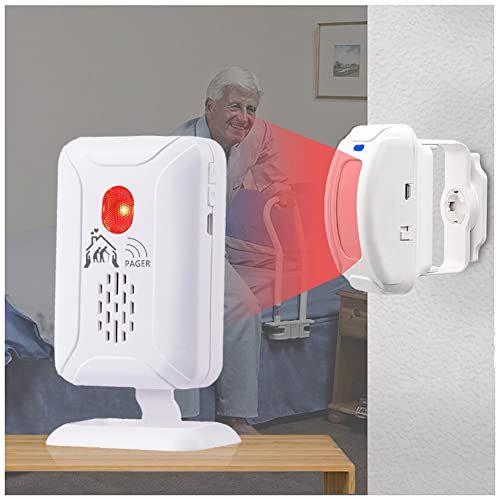
- Detects foot-to-floor movement before a bedside exit
- Caregiver pager alerts without sounding in the patient’s room
- Wireless, flexible placement with dual power options
Best For: Caregivers who need a wireless bedside or doorway alert for dementia-related wandering or fall risk.
Best for Car Transfers
Vive Car Handle Assist for Seniors

- Helps users exit vehicles with more stability
- Compact, portable, and scratch-resistant
- Comfort grip with nonslip cushioning
Best For: Seniors and caregivers who want safer, steadier car exits.
Best for Room-Exit Alerts
PILSAMAS Bed Alarm with ID Display

- Shows sensor ID so caregivers know where the alert came from.
- Motion-based sensing reduces false alarms from movement in bed.
- 1000 ft range with no monthly fee and multiple alert modes.
Best For: Caregivers who need a privacy-friendly bed and room-exit alert system with a visible sensor ID and long range.
Best for Easy Setup
NEPPT Wheelchair Seatbelt Restraints

- Tool-free installation with quick-release buckle
- Adjustable fit for different chair sizes
- Helps reduce sliding and accidental falls
Best For: Caregivers looking for a simple wheelchair safety belt to improve seated stability.
Best for Secure Seating
Padded Wheelchair Chest Harness

- Padded support for a more comfortable fit
- Adjustable straps suit many body types
- Quick-release buckle simplifies removal
Best For: Caregivers who need a secure wheelchair restraint for seniors or dementia patients.
Best for Restraint Support
Adjustable Bed Restraints for Dementia

- Works on beds, bed rails, and wheelchairs
- Adjustable straps fit many common bed sizes
- Padded, breathable design for added comfort
Best For: Caregivers who need a restraint-style harness to help reduce unsafe movement and fall risk.
Best for Early Bed Alerts – Lunderg Wireless Bed & Chair Alarm Set
If you want one of the more practical mobility safety products for dementia patients, this Lunderg set is built to alert caregivers before a loved one fully gets out of bed or stands from a chair. It keeps the alarm off in the room, which can reduce stress and confusion while still giving you a wireless heads-up on the included pager.
Best For: Dementia care situations where you need early warning, bedside dignity, and a simple no-app setup for home use.
Pros:
- Early-alert bed pad is placed at hip level to warn before a full exit from bed
- Wireless pager keeps alarms away from the patient and can use sound, low volume, or vibration
- Bed and chair sensors cover two common fall-risk spots with no Wi-Fi or app required
- Includes batteries and is easy to move, clean, and set up
Cons:
- Works best for caregivers within pager range, not remote monitoring
- Pressure-pad systems may still need occasional placement adjustments
Overall, this is a thoughtful pick if you need mobility safety products for dementia patients that focus on early notification instead of loud in-room alarms. The design is especially appealing for families who want a calmer, lower-friction way to reduce night wandering and transfer-related falls.
Best for Easy Release – Secure Adjustable Wheelchair Seatbelt
If you need a straightforward restraint for everyday fall prevention, this wheelchair seatbelt is a practical option to consider among mobility safety products for dementia patients. It focuses on keeping the user seated securely while still allowing caregivers to remove it quickly when needed.
Best For: Elderly adults, dementia care settings, and caregivers who want a simple, adjustable lap belt with a fast-release buckle.
Pros:
- Quick-release push-button buckle makes caregiver access fast and simple.
- Adjusts from 42″ to 62″ for a broad fit range, including larger users.
- Multiple grommet mounting points help it fit more wheelchair and transport chair setups.
- Designed to help reduce sliding and forward falls in daily use.
Cons:
- Provides restraint support, so it may not suit users who resist lap belts.
- Fit and comfort depend on correct positioning and wheelchair compatibility.
For caregivers comparing mobility safety products for dementia patients, this model stands out for its easy release buckle and flexible sizing. It is a solid, no-frills safety strap for home care or facility use, especially when quick access matters.
Best for Early Fall Warning – Lunderg Wireless Bed Alarm
If you’re comparing mobility safety products for dementia patients, this wireless bed alarm stands out for alerting a caregiver before a loved one fully gets up. It’s designed to reduce nighttime falls without using an in-room alarm that may startle or confuse someone with dementia.
Best For: Caregivers who want an early-warning bed alarm with a discreet pager instead of a bedside blast.
Pros:
- Wireless pager alerts you away from the room, helping preserve dignity and reduce fear.
- Pre-rise sensor placement is designed to notify caregivers before the person is fully out of bed.
- No Wi-Fi, app, or tools required, so setup is straightforward.
- Adjustable pager volume and vibration mode make it easier to tailor alerts to your routine.
Cons:
- Only covers bed-exit monitoring, not broader room-to-room wandering prevention.
- Requires carrying the pager, which may be easy to misplace during busy shifts.
- May be more expensive than basic in-room alarm pads.
For families comparing mobility safety products for dementia patients, the Lunderg system is a practical pick when the priority is early notification rather than loud bedside alarms. It’s especially useful if you want a simple, low-friction setup that supports safer nighttime care.
Best for Easy Standing Support – Vive Stand Assist Mobility Rail
If you’re comparing mobility safety products for dementia patients, a stand assist rail can be a practical way to reduce strain and improve stability when getting up from a couch, chair, or recliner. The Vive Stand Assist is designed to provide a firm handhold and a more controlled push to standing, which may help caregivers support daily transfers at home.
Best For: Seniors, disabled users, and dementia patients who need extra help rising from cushioned seating with less twisting and lifting.
Pros:
- Dual handles offer stable support from either side of the seat.
- Adjustable aluminum frame supports up to 300 pounds.
- Soft foam grips add comfort and help maintain a secure hold.
- Simple setup fits many sofas, recliners, and upholstered chairs.
Cons:
- Works best on sturdy seating with enough clearance for the frame.
- Not a full mobility aid for walking or balance support.
- May be less helpful if the user cannot push with their arms.
For home transfers, this is a straightforward support tool that can make standing less stressful and more predictable. Among mobility safety products for dementia patients, it stands out for its simple design, portable setup, and focus on safer sit-to-stand assistance.
Best for Floor-Level Exit Alerts – Bed Sensor Alarm for Dementia Patients
If you need practical mobility safety products for dementia patients, this bed sensor alarm is a strong option for spotting when someone starts to get out of bed or leaves a room. The floor-placed motion sensor is designed to detect foot-to-floor movement, which can help caregivers respond before a fall happens.
Best For: Caregivers who want a wireless exit-alert system that works without placing a pad on the mattress.
Pros:
- Motion sensor can be placed under the bed or at a doorway for flexible monitoring
- Alarm sounds on the caregiver pager, not in the patient’s room
- Wireless range reaches up to 918 ft in open areas
- Dual power options and 5 volume levels add setup flexibility
Cons:
- Sensor placement and direction need testing before mounting
- Works as an alert system, not a physical fall-prevention aid
For families comparing mobility safety products for dementia patients, this model stands out for avoiding mattress pads and focusing on movement at the bedside or doorway. It’s a practical pick if you want caregiver alerts without startling the person in the room.
Best for Car Transfers – Vive Car Handle Assist for Seniors
If you’re comparing mobility safety products for dementia patients, a simple car aid can make daily trips less stressful for both the rider and caregiver. This Vive Car Handle Assist gives users a stable grip when getting in and out of a vehicle, with a compact design that fits most cars, trucks, and SUVs.
Best For: Seniors and limited-mobility riders who need extra stability for safer vehicle exits.
Pros:
- Supports safer standing and stepping out of a vehicle
- Scratch-resistant, lightweight, and easy to store in the car
- Cushioned nonslip grip improves comfort and control
- Works with most vehicles that use a U-shaped door latch
Cons:
- Only helps with vehicle entry and exit, not walking support
- Requires a compatible door latch to use properly
This is a practical add-on if the main concern is safer transfers rather than full-time mobility support. For mobility safety products for dementia patients, it’s most useful when you want a portable, low-cost way to reduce instability during car rides.
Best for Room-Exit Alerts – PILSAMAS Bed Alarm with ID Display
If you want one of the more practical mobility safety products for dementia patients, this PILSAMAS system focuses on fast, localized alerts without cameras, audio, or monthly fees. The motion sensors are designed to catch footstep movement near the bed or doorway, which can be more useful than basic pressure pads when the goal is preventing wandering or a risky night-time exit.
Best For: Caregivers who need a privacy-friendly bed and room-exit alert system with a visible sensor ID and a long wireless range.
Pros:
- Sensor ID display helps you quickly see which alert was triggered.
- Motion detection aims to reduce false alarms compared with pressure pads.
- 1000 ft range and multiple alert modes support whole-home coverage.
- No subscription fees and no audio/video monitoring preserve privacy.
Cons:
- Requires careful placement to avoid pet-triggered alerts.
- Works best as an alert system, not a fall-prevention device by itself.
- Multiple sensors may be needed for larger homes or several doors.
For families comparing mobility safety products for dementia patients, this model stands out for its room-specific alerts, simple local display, and no-fee setup. It is a strong fit when you want quicker response times and less guesswork during overnight monitoring.
Best for Easy Setup – NEPPT Wheelchair Seatbelt Restraints
If you want a straightforward restraint option among mobility safety products for dementia patients, this NEPPT wheelchair seatbelt is built to help reduce sliding and support safer seated positioning. It installs without tools and uses an adjustable waist strap, making it a practical pick for home caregivers, senior care settings, and transport use.
Best For: Caregivers who need an easy-to-fit wheelchair safety belt to help prevent slipping and accidental falls.
Pros:
- Tool-free installation with a quick-release buckle for simple daily use
- Adjustable length helps fit different body types and chair sizes
- Can be used on wheelchairs and some other chairs for broader flexibility
- Durable build suited for repeated use in home or facility care
Cons:
- Provides positioning support, not full medical restraint
- Fit must be checked carefully before purchase
As a budget-friendly positioning aid, this belt makes sense for caregivers who want simple fall-prevention support without a complicated setup. It’s a practical addition to mobility safety products for dementia patients when the goal is to reduce sliding and improve seated stability.
Best for Secure Seating – Padded Wheelchair Chest Harness
If you’re comparing mobility safety products for dementia patients, this padded wheelchair seat belt is designed to help keep the user seated more securely and reduce slipping, slouching, and accidental falls. It’s a practical choice for caregivers who want a simple restraint-style harness with a softer feel and an adjustable fit.
Best For: Caregivers looking for a padded, adjustable wheelchair safety strap for seniors or dementia patients who need extra seated support.
Pros:
- Lightly padded design helps reduce discomfort against the ribs
- Adjustable straps help it fit a wide range of body types
- Quick-release buckle makes fastening and removal easier
- Useful for wheelchair use and other seated restraint needs
Cons:
- More of a restraint-style aid than a comfort accessory
- May require careful adjustment to get the safest fit
For caregivers focused on seated fall prevention, this harness is a straightforward option among mobility safety products for dementia patients. Its padded build and adjustable straps make it especially appealing when security and ease of use matter more than extra features.
Best for Restraint Support – Adjustable Bed Restraints for Dementia
If you need a more secure restraint-style option among mobility safety products for dementia patients, this adjustable bed and wheelchair harness is designed to help reduce accidental rolling, sliding, and unsafe movement. It can be used on a bed, bed rail, or wheelchair, and the padded, breathable build is meant to improve comfort during extended wear.
Best For: Caregivers looking for an adjustable harness-style restraint that can help manage fall risk and restless movement in bed or a wheelchair.
Pros:
- Can be used on beds, bed rails, and wheelchairs for flexible setup
- Adjustable straps and snap points fit many common bed sizes
- Double-layer polyester and air mesh foam add comfort and breathability
- Helps limit forward slipping, rolling, and other unsafe movements
Cons:
- Restraint products require careful supervision and proper consent
- Extra straps must be tucked away to avoid wheel entanglement
- More restrictive than simpler alarms or positioning aids
For caregivers who need a restraint-focused option, this is a practical fit, but it should be used thoughtfully and only when appropriate. As with other mobility safety products for dementia patients, comfort, supervision, and legal/ethical use matter just as much as the hardware.
How We Picked the Best Mobility Safety Products for Dementia Patients
We prioritized products that address real-world safety needs for dementia care: fall prevention, early warning alerts, secure transfer support, and caregiver-friendly operation. We also looked for clear installation, adjustable fit, and features that avoid startling the user whenever possible.
Quick Comparison
In general, bed and chair alarms are best for early warning, wheelchair belts and harnesses are best for seated positioning support, and standing aids or grab handles are best for transfers in and out of chairs or vehicles. The right choice depends on where the mobility risk happens most often.
Key Buying Factors for Mobility Safety Products for Dementia Patients
Alert Style
For monitoring products, consider whether you want an in-room alarm, a caregiver pager, or a wireless alert sent at a distance. Quieter or caregiver-only alerts can be less distressing for people who are easily startled.
Fit, Adjustability, and Comfort
For belts, harnesses, and support aids, adjustability matters. Look for padded contact points, secure closures, and sizing that matches the chair, bed, or vehicle seat being used.
Ease of Use for Caregivers
Products should be simple to set up, reset, and move between rooms when needed. Complicated controls can slow response time and reduce consistency.
Placement and Coverage
Bed sensors, motion alarms, and pagers vary in range and sensitivity. Choose a setup that matches the layout of the home or facility so alerts reach the caregiver reliably.
Safety Without Over-Restricting Movement
Mobility support should help prevent unsafe wandering, sliding, or falls while still allowing reasonable comfort and dignity. That balance is especially important for dementia care.
Who Should Buy Which Mobility Safety Products for Dementia Patients?
If the main concern is getting out of bed or a chair without assistance, a bed alarm or chair alarm is usually the best first step. If the concern is posture, sliding, or unsafe wheelchair movement, a seatbelt or harness may be more appropriate. For transfers from sofas, cars, or chairs, a stand-assist rail or grab handle can offer the most practical support. Many households benefit from combining two products: one for alerts and one for physical support.
When comparing Mobility Safety Products for Dementia Patients, start with the most likely fall point, then choose the simplest solution that addresses it well. The best setup is the one caregivers can use consistently and the person receiving care can tolerate comfortably.