Choosing the right safety alerts can make home care calmer, faster, and more reliable. The best smart home safety sensors for dementia care help caregivers respond sooner to bed exits, doorway wandering, and unexpected movement.
In this roundup, we focus on practical features that matter most: alert timing, range, volume, app support, and how well each system fits a real caregiving setup.
Best 10 Smart Home Safety Sensors for Dementia Care Picks for 2026
Wireless Motion Alert
Remote Motion Monitoring for Caregivers

- Wireless pager receives motion alerts remotely
- Mountable detector works for bed or door use
- Battery powered with included batteries
Best For: Caregivers needing a simple standalone motion alarm for wandering or fall prevention
WiFi Door Chime

- Sends receiver chimes and phone notifications
- Instant or delay alert modes available
- 20 chimes and 5 volume levels
Best For: Families wanting Wi-Fi door alerts with shared notifications and customizable sound
Bed Exit Alarm
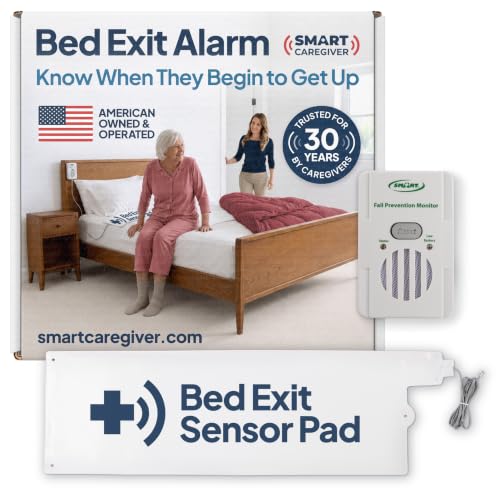
- Alerts when pressure is removed from the pad
- Optional wireless add-on kit available separately
- Sealed vinyl pad resists incontinence
Best For: Bed monitoring when you need a straightforward exit alarm for elderly adults
Whole-Home Door Alarm
Wi-Fi Sensor Set with 4 Sensors

- Covers multiple doors with 4 sensors
- Receiver displays which sensor opened
- Free app alerts with family sharing
Best For: Whole-home monitoring of several doors or windows with shared caregiver access
Early-Alert Dignity Pick
Lunderg Wireless Early-Alert Bed Alarm

- Wireless pager keeps alarms out of the room
- Hip-level pad aims to alert before full exit
- No Wi‑Fi, app, or tools needed
Best For: Caregivers who want quiet, early bed-exit alerts for dementia care
Multi-Device Monitoring Pick
Smart Caregiver Wireless Bed Pad Alarm

- Alerts when weight leaves the bed pad
- Works up to 300 feet from the monitor
- Can pair with up to 6 compatible devices
Best For: Families wanting a simple expandable bed alarm system
Floor-Alert Motion Pick
Upgraded Wireless Bed Sensor Alarm
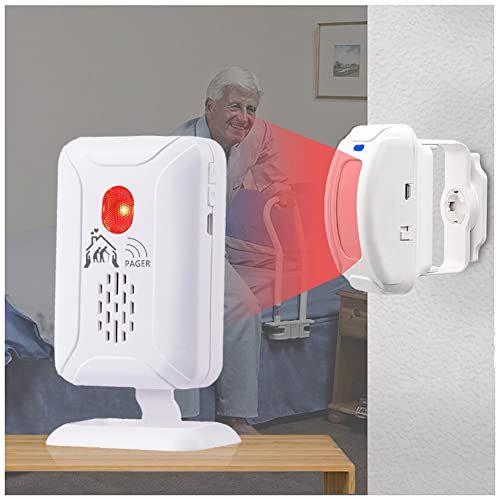
- Motion sensor can watch bed exit or door use
- No alarm sounds in the patient’s room
- Up to 918 feet in open area
Best For: Caregivers who want flexible motion alerts for bed or door monitoring
Wireless Bed Exit Alert
Smart Caregiver Bed Exit Alarm with Pager

- Weight-sensing bed pad alerts when pressure is removed
- Pager offers sound or vibration alerts
- Expandable with up to six Smart Caregiver sensors
Best For: Simple bed-exit monitoring with pager alerts
Motion Sensor Pager Set
PILSAMAS Bed Alarms for Elderly Dementia Patients

- Infrared motion sensing aims to reduce false alarms
- Pager shows the triggering sensor ID
- 1,000 ft range with multiple alert modes
Best For: Whole-home motion alerts with clearer location info
WiFi Bed Sensor Alarm
EverNary App-Connected Motion Alert

- Sends local and phone alerts through a WiFi hub
- Supports shared notifications in the Smart Life app
- Expandable up to 20 transmitters per hub
Best For: Remote app alerts for bed or room-exit monitoring
Wireless Motion Alert – Remote Motion Monitoring for Caregivers
For smart home safety sensors for dementia care, this wireless motion alarm is a simple way to monitor movement without keeping an alarm at the bedside. It can alert a caregiver pager when motion is detected at a bed or door, helping support fall and wandering prevention while keeping the person under watch from a distance.
Best For: Caregivers who want a standalone, battery-powered motion alert for bed or doorway monitoring.
Pros:
- Wireless pager lets the caregiver monitor movement remotely
- Mountable detector can be used for bed or door movement
- Battery powered with included pager and motion sensor batteries
- Optional adjustable mounting bracket adds placement flexibility
Cons:
- Standalone paging system cannot be used with other Smart Caregiver products
- Maximum range is listed at 8 meters in the details
- No smartphone app or Wi-Fi features
This is a practical pick if you want a straightforward alert system without app setup or ongoing connectivity concerns. Its focus is on simple remote notification and flexible mounting for everyday caregiving use.
WiFi Door Chime – App Alerts for Door Opens
This WiFi door alarm sensor is aimed at smart home safety sensors for dementia care when you want both local chime alerts and phone notifications. It can sound when a door opens, use delay mode for doors left open, and share alerts with family members for broader awareness.
Best For: Families who want a Wi-Fi door sensor with app alerts, shared notifications, and multiple chime options.
Pros:
- Offers both receiver chimes and app notifications
- Supports instant alert mode and delay alert mode
- Share alerts with family members or caregivers
- Includes 20 chimes and 5 volume levels up to 110dB
Cons:
- Requires 2.4GHz Wi-Fi only
- SMS and phone call alerts need a paid subscription
- Not recommended for metal doors
If you want a door-opening alert that can scale from home use to remote checking, this model covers the basics well. It blends flexible sound settings with phone-based awareness, though setup limits matter.
Bed Exit Alarm – Pressure Pad Safety Alert
For smart home safety sensors for dementia care, a bed-exit alarm is useful when the main concern is a loved one getting up unsafely at night. This pressure-sensing pad triggers when weight is removed, helping caregivers respond quickly while keeping setup focused on the bed itself.
Best For: Caregivers who need a simple bed alarm that detects when someone gets up.
Pros:
- Triggers when pressure is removed from the pad
- Can use an in-room alarm or an optional wireless add-on kit
- Durable 10″ x 30″ vinyl sensor pad is sealed for incontinence protection
- Two volume settings plus low-battery and sensor status lights
Cons:
- Wireless caregiver alerts require a separately sold add-on kit
- Monitor uses a 9V battery or optional adapter
- Designed specifically for bed use rather than doors or windows
This is a focused bed-monitoring solution for caregivers who need dependable exit detection more than app-based features. The pad-and-monitor setup is practical for daily use and easy to place under bedding.
Whole-Home Door Alarm – Wi-Fi Sensor Set with 4 Sensors
This multi-sensor system fits smart home safety sensors for dementia care when you want to watch several entry points at once. With four sensors, app alerts, a remote, and an ID-displaying receiver, it’s built to make it easier to see which door opened and respond quickly.
Best For: Caregivers monitoring multiple doors or windows with one pre-paired system.
Pros:
- Includes 1 receiver, 4 sensors, and 1 remote
- Receiver shows which sensor opened with red ID display
- Free app push alerts with family sharing and no mandatory fees
- Pre-paired for quick setup and uses USB-powered receivers
Cons:
- Requires 2.4GHz Wi-Fi, not 5G
- Optional SMS or phone alerts cost extra in-app
- Best fit depends on a door gap under 0.4 inches
For households that need broader coverage, this kit is the most complete option in the group. The combination of multiple sensors, history logs, and simple family sharing makes it a strong fit for ongoing dementia safety monitoring.
Early-Alert Dignity Pick – Lunderg Wireless Early-Alert Bed Alarm
If you want smart home safety sensors for dementia care without a loud in-room alarm, this Lunderg bed alarm is built around early notification to a caregiver pager you carry. The wireless pad sits at hip level, is designed to alert before the person is fully out of bed, and it works without Wi‑Fi, apps, or tools.
Best For: Caregivers who want a portable, quiet-alert bed sensor for dementia care with a focus on dignity and early warning.
Pros:
- Wireless pager alert keeps noise out of the patient’s room.
- PreRise sensor placement at hip level is meant to alert before the person gets fully out of bed.
- No Wi‑Fi, app, or tools required for setup.
- Includes adjustable pager volume and vibration-only mode.
Cons:
- Designed for bed monitoring only, not room-wide motion detection.
- Requires carrying the pager to receive alerts.
- Uses batteries rather than plug-in power.
This is a strong pick if your priority is an early, wireless alert that avoids startling the person in bed. The included pad, pager, and accessories make it a straightforward option for dementia care at home.
Multi-Device Monitoring Pick – Smart Caregiver Wireless Bed Pad Alarm
For smart home safety sensors for dementia care, this Smart Caregiver bed pad system focuses on dependable bedside monitoring with a wireless monitor and a 10″ x 30″ pressure pad. It alerts as soon as weight leaves the pad, and the quiet room setup helps avoid startling the person you’re watching.
Best For: Families who want a straightforward wireless bed alarm that can be expanded with other Smart Caregiver devices.
Pros:
- Wireless monitor alerts when the person gets off the bed pad.
- Up to 300-foot range gives caregivers room to move around the home.
- Monitor can be wall-mounted or carried.
- Can monitor up to 6 compatible devices from one monitor.
Cons:
- Bed-pad based monitoring may not suit users who move around a lot in bed.
- Range is shorter than some competing wireless options.
- Requires C batteries for the monitor.
This system is practical if you want a simple, expandable alert setup for bed-exit monitoring. It is especially useful when you may later add other caregiver alerts, but want to start with a reliable bed pad.
Floor-Alert Motion Pick – Upgraded Wireless Bed Sensor Alarm
This option fits smart home safety sensors for dementia care if you prefer motion-based alerts instead of a traditional bed pad. The sensor can be placed on the floor under the bed to detect when a foot is about to touch down, or near the door to watch for room exits, and it sends alerts to a caregiver pager without sounding in the patient’s room.
Best For: Caregivers who want a flexible motion sensor for bed-exit and doorway monitoring.
Pros:
- Motion sensor can be placed under the bed or at the door.
- No in-room alarm, which may help avoid startling the person.
- Long open-area transmission range up to 918 feet.
- Includes LED light and sound reminders on the caregiver pager.
Cons:
- Requires testing sensor range and direction before fixing it in place.
- Uses a motion detector instead of a pressure pad, so placement matters.
- Open-area range is not the same as indoors through walls and furniture.
This is a versatile setup if you want more than one monitoring location from a single sensor style. It can be a smart fit for dementia care when you need alerts for both bed exit and possible room wandering.
Wireless Bed Exit Alert – Smart Caregiver Bed Exit Alarm with Pager
For families comparing smart home safety sensors for dementia care, this Smart Caregiver bed exit alarm focuses on one job: alerting you when a loved one gets out of bed. The soft 10″ x 30″ pressure pad detects when weight is removed and sends a wireless alert to the included pager, making it a practical pick for overnight fall prevention and early response.
Best For: Caregivers who want a simple bed-exit alert with a pager and no app setup.
Pros:
- Weight-sensing bed pad provides early alerts when pressure is removed.
- Pager supports both vibrate and sound notifications.
- Expandable system can work with up to six Smart Caregiver sensors.
- U.S.-based company with customer support and a 1-year warranty.
Cons:
- Designed around bed-exit monitoring, so it is not a full-room system by itself.
- Uses a wired pad on the mattress area, which may not suit every setup.
This is a straightforward fall-prevention tool for caregivers who want dependable bed-exit alerts without extra complexity. Its strength is the dedicated pressure pad and pager combination, especially for nighttime monitoring.
Motion Sensor Pager Set – PILSAMAS Bed Alarms for Elderly Dementia Patients
If you want smart home safety sensors for dementia care that try to avoid false alarms, this PILSAMAS motion sensor set takes a different approach from pressure pads. It uses infrared motion sensing and a caregiver pager with a sensor ID display, so you can quickly see which sensor triggered and respond faster to a bed, room, or doorway alert.
Best For: Caregivers who need motion-based alerts with long range and clear sensor identification.
Pros:
- Infrared motion detection helps reduce false alarms from bed movement or incontinence.
- Sensor ID display shows which alert source triggered.
- Up to 1,000 ft range and multiple alert modes, including chime, vibration, and LED flash.
- No monthly fee and privacy-focused local alerts.
Cons:
- Motion sensors need careful placement to reduce pet triggers.
- Not a pressure-pad system, so it monitors movement rather than direct bed weight.
This system is a strong fit when you want broader coverage and clearer alert location than basic bed alarms. The long range and expandable design make it useful for whole-home monitoring.
WiFi Bed Sensor Alarm – EverNary App-Connected Motion Alert
For buyers comparing smart home safety sensors for dementia care, this EverNary WiFi bed sensor adds app-based remote notifications to a motion-alert system. When the sensor detects movement near the bed or doorway, the hub sounds locally and sends a message to your phone, which is useful if you are away from home but still need to know when a loved one gets up.
Best For: Families who want app alerts and remote monitoring for bed or room exits.
Pros:
- App-connected alerts can notify your phone even when you are away.
- Supports shared alerts through the Smart Life app.
- Expandable system can handle up to 20 transmitters per hub.
- Motion sensor can be placed under the bed or near a doorframe for flexible use.
Cons:
- Only supports 2.4GHz WiFi.
- Only one phone connects directly to the hub; others use sharing.
This option is best for caregivers who want remote visibility, not just a local alarm. Its app-based alerting and expandable hub make it a flexible choice for monitoring movement in different rooms.
How We Picked the Best Smart Home Safety Sensors for Dementia Care
We focused on sensors built for real-world dementia care: reliable alerts, easy setup, clear caregiver notifications, and useful placement options for beds, doors, and walkways. We also looked for systems that balance speed with simplicity, since the best Smart Home Safety Sensors for Dementia Care should reduce workload rather than add it.
Quick Comparison
In general, bed exit alarms are best for nighttime fall prevention, door sensors are best for wandering alerts, and motion sensors work well for broader room-level monitoring. Wi-Fi and app-connected models are more flexible, while pager-based systems are often simpler and more dependable for caregivers who want immediate local alerts.
Key Buying Factors for Smart Home Safety Sensors for Dementia Care
Alert Type and Timing
Look for early-warning alerts when possible, especially for bed exits. A sensor that notifies caregivers before a person fully stands up can be more useful than a loud alarm that only sounds after movement has already started.
Placement and Coverage
Choose sensors based on where the risk is highest. Bed pads are ideal for sleep-related fall prevention, door alarms help with exit monitoring, and motion sensors can cover hallways or large rooms. Make sure the sensor size and mounting method match the space.
Notification Method
Some systems send alerts to a pager, while others use smartphone apps or both. Pagers are straightforward and immediate; app alerts are better if multiple family members need to stay informed remotely.
Volume, Range, and Reliability
Check sound levels, wireless range, and whether the system can work through walls or across floors. For dementia care, consistent performance is usually more important than extra smart features.
Comfort and Daily Use
Bed pads should be comfortable and discreet. Door and motion sensors should not create confusion or frequent false alerts, since that can lead to alarm fatigue.
Who Should Buy Which Smart Home Safety Sensors for Dementia Care?
Choose a bed exit alarm if your main concern is nighttime wandering or fall prevention.
Choose a door sensor if you need to know when someone opens an exterior door or leaves a room.
Choose a motion sensor system if you want broader coverage for hallways, bedrooms, or common areas.
Choose Wi-Fi/app-based Smart Home Safety Sensors for Dementia Care if you want remote alerts for family caregivers or multiple monitors. Choose pager-based systems if you want the simplest, most direct alert path at home.