Smart home safety sensors for motion alerts can help you respond faster to entry, movement, wandering, and overnight safety risks.
Whether you need app notifications, caregiver paging, or a simple plug-and-play chime, the right sensor depends on where you plan to use it and who you are protecting.
Best 10 Smart Home Safety Sensors for Motion Alerts Picks for 2026
App-Connected Entry Alert
WiFi Motion Alerts for Home Entry
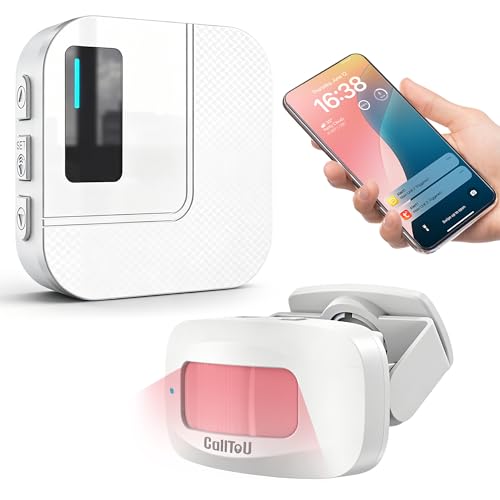
- Tuya app notifications for motion detection
- 20 chimes, 5 volume levels, and LED alerts
- Expandable up to 30 sensors
Best For: Caregivers, pet monitoring, and home entry alerts
Basic Caregiver Alarm

- Easy setup with adjustable alert tones
- Battery-powered wall-mount design
- 30-foot maximum range
Best For: Close-range caregiver or bedside motion alerts
Hub-Free Motion Alert Sensor

- No hub required for setup
- Tuya/Smart Life app alerts with history
- 128° angle and 6–40 ft detection
Best For: Easy DIY motion alerts with Alexa support
Caregiver Motion Alert System

- Hub-based alerts with phone notifications
- Placed under bed or on a doorframe
- Expandable up to 50 transmitters per hub
Best For: Caregiver monitoring and fall-prevention alerts
Indoor Motion Alert Sensor

- Smart Life and Tuya app monitoring
- Push alerts plus Alexa routines
- 128° sensing angle and 6 m range
Best For: Indoor motion alerts with smart light automation
Caregiver Pager Alarm
Wireless Bed & Door Pager Alarm

- Standalone pager and motion sensor system
- Mountable for bed or door monitoring
- Battery powered with included AA batteries
Best For: Caregivers needing simple motion alerts without app setup
WiFi Motion Alert Sensor
WiFi App Motion Alert PIR Sensor

- App alerts through Smart Life or Tuya Smart
- Works with Alexa and smart home automations
- Tool-free wireless installation
Best For: Home users wanting phone alerts and automation
Bed Exit Alert System
- App alerts for bed exit and room-leaving events
- Under-bed or doorframe placement options
- Expandable hub-based caregiving system
Best For: Elderly and dementia care with motion-based exit alerts
App-Connected Entry Alert – WiFi Motion Alerts for Home Entry
If you want smart home safety sensors for motion alerts that can notify you even when you are not in the room, this WiFi motion sensor door chime is built for that job. It sends Tuya app notifications when movement is detected, while also giving local chimes, LED flashes, and adjustable volume for indoor awareness.
Best For: Homes, caregivers, pet monitoring, and small businesses that need app-based motion alerts.
Pros:
- Instant phone alerts through the Tuya App over 2.4GHz WiFi
- 20 selectable chimes, 5 volume levels, and flashing LED alerts
- Can be shared with family members or caregivers in the app
- Expandable with up to 30 sensors for multi-area monitoring
Cons:
- Works with 2.4GHz WiFi only
- Designed for indoor use and entry monitoring
This is a practical pick if you want motion alerts that are both audible on-site and visible on your phone. Its easy adhesive installation and flexible power options make it simple to place at doors, rooms, or other key areas without wiring.
Basic Caregiver Alarm – Simple Caregiver Motion Alarm
For buyers who want smart home safety sensors for motion alerts without extra setup, this all-in-one motion sensor and alarm keeps things straightforward. It is a basic battery-powered option with adjustable alert tones and a simple on/off switch for quick caregiver-style monitoring.
Best For: Basic bedside or room-entry motion alerting for caregiving use.
Pros:
- Simple setup and easy-to-use controls
- Adjustable alert tones for different situations
- Battery powered for flexible placement
- Compact wall-mount design
Cons:
- Short 30-foot maximum range
- Requires a 9V battery, which is not included
- No app notifications or WiFi features
This model makes sense if you want a no-frills motion alarm for close-range awareness rather than smart automation. Its simplicity is the main advantage, especially for users who value ease of use over advanced connectivity.
No-Hub Smart PIR Sensor – Wide-Angle Smart PIR Alert
If you need smart home safety sensors for motion alerts with app control and no hub, this PIR motion detector is a flexible indoor pick. It connects directly to 2.4GHz WiFi, sends instant alerts through Smart Life or Tuya, and can trigger automations like turning on lights when motion is detected.
Best For: Indoor automation and app-based motion alerts with flexible power options.
Pros:
- No hub required, with direct 2.4GHz WiFi connection
- Instant app alerts through Smart Life or Tuya
- 128° wide-angle coverage with a 26ft range
- Battery or USB power for wireless or continuous use
Cons:
- Works on 2.4GHz WiFi only
- No Home Assistant support
- Indoor motion sensor with a limited 26ft range
This is a strong fit if you want a motion sensor that does more than beep locally. The wide angle, app notifications, and automation support make it useful for rooms, walkways, and other spaces where motion-triggered lighting adds convenience and safety.
Expandable Motion Doorbell Kit – Multi-Mode Caregiver Chime
For shoppers comparing smart home safety sensors for motion alerts, this motion sensor doorbell kit stands out for its multi-mode sound and scalable receiver setup. It combines motion detection with welcome, doorbell, clock, color light, and lighting modes, making it useful for homes, shops, and caregiver setups.
Best For: Entry monitoring, accessibility needs, and larger alert systems for homes or businesses.
Pros:
- 5 modes including motion alarm, welcome, doorbell, clock, and lighting
- 40+ voice greetings and 11 melodic ringtones
- Commercial-grade sensitivity with up to 300m range
- Scales to 38 sensors and 16 remotes per receiver
Cons:
- Outdoor use requires weather-shielded installation
- Uses a receiver-and-sensor style setup rather than app alerts
- Battery-powered sensor requires 3 AAA batteries
This kit is a good choice when you want more than a simple motion beep and need customizable tones for different areas or users. The long range and expandable system make it especially practical for larger properties or caregiving coverage.
Hub-Free Motion Alert Sensor – Smart PIR Motion Sensor
If you want smart home safety sensors for motion alerts that are simple to add and don’t need a hub, this WiFi PIR option is a practical pick. It uses Tuya Smart or Smart Life app notifications to send alerts when movement is detected, and it also keeps alarm history so you can review events later. With a 128° detection angle and a 6–40 ft range, it suits everyday rooms and entry points where you want straightforward monitoring.
Best For: Homeowners who want app-based motion alerts, Alexa compatibility, and easy DIY placement without a hub.
Pros:
- No hub required for setup.
- App notifications and alarm history for event tracking.
- 128° detection angle with up to 6–40 ft range.
- Can trigger routines like turning on smart lights.
Cons:
- Battery-powered, so occasional battery replacement is needed.
- Best suited to indoor-style placement described in the notes.
Overall, this sensor is a good fit if your priority is quick motion detection plus app alerts for home monitoring and automation. Its false-alarm reduction features and simple sticker-or-screw installation make it easy to place in hallways, doorways, garages, or rooms.
Caregiver Motion Alert System – WiFi Bed Sensor Alarm
For smart home safety sensors for motion alerts focused on caregiving, this WiFi bed sensor alarm is built to notify you when a loved one moves within range. The system uses a hub plus sensors to send an immediate phone alert and also rings locally, which is useful if you want both on-device and remote warning. It supports 2.4GHz Wi-Fi and can be expanded with additional transmitters for different monitoring setups.
Best For: Caregivers monitoring bed exits, room departures, or fall-prevention routines for elderly, dementia, or kids.
Pros:
- Sends immediate app alerts when motion is detected.
- Hub rings locally while the phone receives a warning message.
- Expandable system with support for additional transmitters.
- Can be placed under a bed or on a doorframe for monitoring.
Cons:
- Only supports 2.4GHz Wi-Fi.
- Relies on a hub, so setup is less direct than hub-free sensors.
- One phone connects to the hub directly; others use sharing.
This is less of a general room sensor and more of a caregiver-focused alert tool, which is exactly where it stands out. If you need motion alerts tied to bed movement or exits, the combination of local alarm, app warning, and expansion options makes it a strong practical choice.
Indoor Motion Alert Sensor – WiFi PIR Motion Sensor
This WiFi PIR sensor is aimed at users who want smart home safety sensors for motion alerts plus simple automation. It works with Smart Life and Tuya Smart apps for real-time monitoring, sends push notifications when motion is detected, and can also be used with Alexa routines for custom voice responses. With a 128° sensing angle and 6-meter detection distance, it covers common indoor monitoring spots without much setup.
Best For: Buyers who want an indoor motion sensor for app alerts, Alexa routines, and light automation.
Pros:
- Real-time app monitoring through Smart Life and Tuya Smart.
- Push notifications when motion is detected.
- Alexa-compatible routines and custom messages.
- Can automate smart lights based on motion.
Cons:
- Detection distance is listed as 6 meters rather than a longer-range option.
- Battery-powered, so battery upkeep is part of ownership.
As a motion alert sensor, it offers a well-rounded mix of notifications and home automation. If you want a compact indoor device that can both warn you and trigger lighting routines, this model keeps the feature set focused and useful.
Caregiver Pager Alarm – Wireless Bed & Door Pager Alarm
If you need smart home safety sensors for motion alerts focused on caregiving rather than app-based automation, this wireless motion sensor alarm is built for bedside and doorway monitoring. It uses a pager-style alert instead of a noisy room alarm, helping caregivers stay informed about movement while preserving a calmer environment for the person being watched.
Best For: Caregivers who want a simple, standalone motion alert system for bed or door monitoring.
Pros:
- Standalone paging system with one caregiver pager and one motion sensor included
- Mountable detector can be used for bed or door movement monitoring
- Wireless design helps remove alarm noise from the bedside
- Battery powered with included AA batteries for both units
Cons:
- Not compatible with other Smart Caregiver products
- Uses pager-style alerts instead of smartphone app notifications
- Range is listed at up to 300 feet / 8 meters, so placement still matters
This is a practical choice if your priority is immediate caregiver notification without extra setup or smart-home integration. It is narrower in scope than app-connected sensors, but that simplicity is also what makes it easy to deploy for fall and wandering prevention.
WiFi Motion Alert Sensor – WiFi App Motion Alert PIR Sensor
This WiFi smart motion sensor fits the smart home safety sensors for motion alerts category if you want phone-based notifications and automation. It works with Smart Life and Tuya Smart, sends app alerts when motion is detected, and can trigger compatible devices like smart bulbs, plugs, or a siren alarm.
Best For: Homeowners who want app notifications and basic smart home automation from a wireless motion sensor.
Pros:
- Sends motion alerts to your phone through Smart Life or Tuya Smart
- Supports Alexa voice assistant integration through the app
- Can automate compatible smart bulbs, plugs, and siren alarms
- Wireless, tool-free installation with multiple mounting options
Cons:
- Only supports 2.4GHz WiFi, not 5G
- Detection range is listed at 7m / 20 feet
- Battery life notes are mixed, so real-world runtime may vary by use
For buyers building a connected home security setup, this sensor offers the most flexible alerting and automation of the three. It is best when you want motion detection to do more than notify you, but it is less suitable if you need longer-range caregiving coverage.
Bed Exit Alert System – WiFi Bed Safety Alarm System
Built for caregiving, this WiFi bed sensor alarm is a strong fit for smart home safety sensors for motion alerts when the goal is monitoring a loved one getting out of bed or leaving a room. The hub sends an alarm and pushes an app alert, giving caregivers a way to respond quickly even when they are away.
Best For: Elderly care, dementia monitoring, and bed or doorway exit alerts.
Pros:
- App alerting works even when you are away from home
- Designed for under-bed or doorframe placement to detect exits
- Expandable system can support multiple transmitters and hubs
- Sharing function lets selected family members receive alerts
Cons:
- Only supports 2.4GHz WiFi
- One phone connects to the hub directly; others rely on sharing
- Motion sensor setup is more specialized than a general home motion detector
If your main need is caregiver notification for bed exit or wandering prevention, this system is more purpose-built than a standard motion sensor. It offers useful app-based peace of mind, though it is not a general-purpose smart home sensor.
How We Picked the Best Smart Home Safety Sensors for Motion Alerts
We focused on Smart Home Safety Sensors for Motion Alerts that balance reliable detection, clear alert methods, and practical everyday use. Priority went to models with instant notifications, simple setup, strong compatibility, and helpful caregiver or family monitoring features.
We also looked at whether each option is better suited for home security, elder care, bed monitoring, entry alerts, or business use. That matters because the best sensor is not always the most feature-rich one; it is the one that fits your alerting needs and installation limits.
Quick Comparison
In this category, the biggest differences usually come down to alert delivery and placement. App-based PIR sensors work well for remote monitoring and general security. Door chimes and pager systems are often better for immediate in-home awareness. Bed sensors are more specialized for nighttime safety, fall prevention, and wandering alerts.
Key Buying Factors for Smart Home Safety Sensors for Motion Alerts
Alert Type
Choose app notifications, audible chimes, pager alerts, or a combination based on who needs to receive the warning and how quickly they need it.
Detection Purpose
For home security, standard PIR motion detection is usually enough. For caregiving, consider bed sensors or motion alarms designed for wandering, fall prevention, or bathroom trips.
Connectivity and Setup
Some Smart Home Safety Sensors for Motion Alerts require Wi-Fi and an app, while others work as standalone systems. If you want less setup hassle, look for no-hub or easy-pairing designs.
Placement and Range
Think about where the sensor will be mounted and how far the alert must travel. Entryways, hallways, bedrooms, and care rooms all have different coverage needs.
Power and Reliability
Battery life, power source, and signal stability matter more than flashy features. A dependable alert is the whole point.
Who Should Buy Which Smart Home Safety Sensors for Motion Alerts?
If you want remote monitoring and phone alerts, choose a Wi-Fi app-connected motion sensor. If you need caregiver support, wandering prevention, or overnight safety, a bed or pager-based system is often the smarter fit. For shops, offices, and entry points, a motion sensor door chime can provide immediate local awareness without much complexity.
In short, the best pick depends on whether you are protecting a home, a loved one, or a business entry point. Start with the alert style you need most, then narrow by connectivity, installation, and the specific safety scenario you want to cover.