Choosing the right safety sensor can make daily care easier, faster, and less stressful. The best options help alert caregivers early, reduce fall risks, and fit the way your parent actually lives.
In this roundup, we focus on practical smart home safety sensors for elderly parents, with an eye toward ease of use, alert speed, range, and whether the system works well for beds, doors, motion, or floor-level monitoring.
Best 10 Smart Home Safety Sensors for Elderly Parents Picks for 2026
Wireless Motion Pager Alarm
Smart monitoring for bed or door movement

- Pager alerts keep alarms out of the room
- Mountable sensor for bed or door movement
- Battery-powered standalone system
Best For: Caregivers wanting simple motion alerts for elderly parents
WiFi Door Alert Kit
App-connected door sensor with gateway

- Phone app sends remote alerts anywhere
- Local gateway chime plus shared notifications
- 32 ringtones and adjustable volume
Best For: Families needing remote door alerts for elderly or dementia care
Early Alert Bed Alarm
Pre-rise paging for fall prevention

- Alerts caregivers before the user gets up
- No loud in-room alarm
- No Wi-Fi or app required
Best For: Nighttime fall prevention with discreet pager alerts
Wireless Bed Pad Alarm
10 x 30 weight-sensing monitoring

- Weight-sensing pad detects bed exits
- Monitor works up to 300 feet away
- Can pair with up to 6 devices
Best For: Bed-exit monitoring for caregivers needing long-range alerts
Floor-Trigger Motion Alert
Wireless Bed Exit Monitor for Caregivers
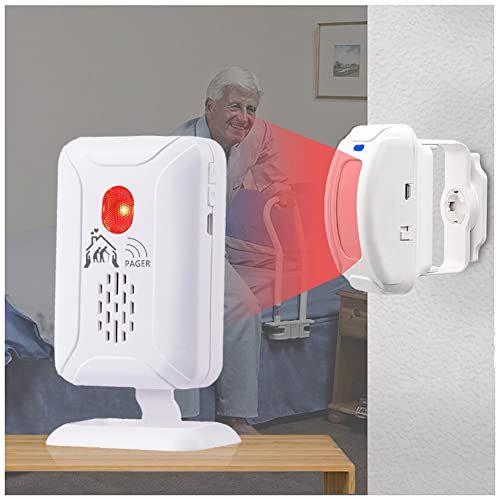
- Detects foot-down motion under the bed or at a doorway.
- Sends alerts to a caregiver pager instead of the patient room.
- Wireless range reaches up to 918 ft in open area.
Best For: Non-contact bed-exit and room-exit monitoring
Pressure Pad Safety Alarm
Simple Bed-Exit Alert for Elder Care
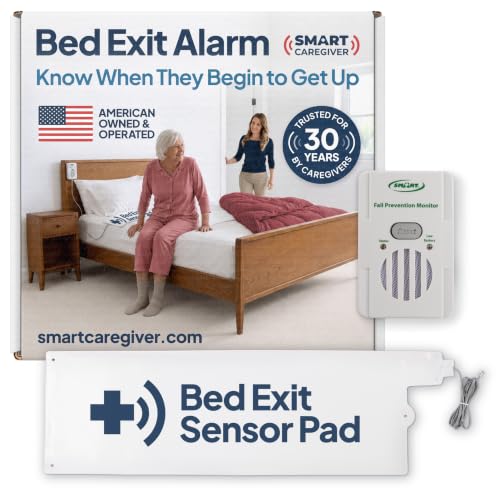
- Triggers when pressure is removed from the bed pad.
- Sealed vinyl pad is incontinence resistant and easy to clean.
- Includes low-battery and sensor status lights.
Best For: Basic bed-exit alerts with simple setup
Sensor-ID Pager System
Privacy-Focused Fall Alert Set

- Infrared sensors detect footsteps, not bed movement.
- Pager shows the exact sensor ID when triggered.
- No monthly fee, with local alerts only.
Best For: Private, subscription-free fall and room-exit alerts
Floor Mat Alert System
Smart Caregiver Floor Mat Alarm

- Alerts caregiver when pressure hits the mat
- Pager offers sound or vibration alerts
- Useful for bedside or doorway placement
Best For: Caregivers needing a quiet floor-based alert for bed exits or wandering
App-Connected Bed Sensor

- App sends alerts to your phone when motion is detected
- Can be placed under the bed or on a doorframe
- Expandable with multiple hubs and transmitters
Best For: Families wanting remote smartphone alerts and shared monitoring
Bed Exit Alarm
Smart Caregiver Bed Exit Alarm

- Alerts when pressure is removed from the bed pad
- Pager offers sound or vibration notifications
- Supports up to six compatible Smart Caregiver sensors
Best For: Nighttime bed-exit monitoring with early fall-prevention alerts
Wireless Motion Pager Alarm – Smart monitoring for bed or door movement
If you’re comparing smart home safety sensors for elderly parents, this wireless motion alarm is a simple way to track movement without putting an alarm in the room. It can be mounted for bed or door monitoring and sends alerts to the included pager, so a caregiver can stay nearby without being tied to the bedside.
Best For: Caregivers who want a battery-powered motion sensor for bed or doorway movement with pager alerts.
Pros:
- Wireless pager alerts keep the alarm noise away from the senior’s room.
- Mountable motion detector works for bed or door movement monitoring.
- Battery powered and includes a pager plus motion sensor.
- Simple standalone system with up to 300′ range listed in the product title.
Cons:
- It is a standalone system and cannot be used with other Smart Caregiver products.
- Batteries are required for both units, so ongoing battery upkeep is part of ownership.
This is a practical pick when you want a low-complexity alert system that lets you respond to movement quickly. It focuses on basic fall and wandering prevention rather than app-based features, which may suit caregivers who prefer a dedicated pager setup.
WiFi Door Alert Kit – App-connected door sensor with gateway
For shoppers looking at smart home safety sensors for elderly parents, this WiFi door alarm adds remote notifications through a phone app. The included gateway sounds locally when a door or window opens, while the app can send alerts anywhere the connection reaches, which makes it useful for checking on family members from off-site.
Best For: Families who want a WiFi door sensor with phone alerts for doors, windows, or entry points.
Pros:
- Works with a free app for remote push alerts.
- Gateway receiver provides a local chime while the phone receives warnings.
- Offers 32 ringtones and 5 adjustable volume levels up to 110 dB.
- Can be shared with multiple people through the app.
Cons:
- It depends on WiFi and app setup, so it is less straightforward than a basic standalone alarm.
- Battery-powered sensors still require battery management over time.
This is a flexible option if you want both local and remote door alerts. It stands out for app sharing and long-distance notification support, though it is better suited to users who are comfortable with WiFi-connected devices.
Early Alert Bed Alarm – Pre-rise paging for fall prevention
If you want smart home safety sensors for elderly parents without a loud alarm in the bedroom, this bed alarm is built around silent, wireless caregiver paging. The pad is designed to alert before your loved one is out of bed, and the system works without Wi-Fi, an app, or tools, which keeps setup simple.
Best For: Caregivers who want an early-alert bed alarm with pager notifications and no in-room noise.
Pros:
- Wireless pager alerts the caregiver instead of sounding loudly in the room.
- Pre-rise sensor placement is intended to alert before the user fully gets out of bed.
- No Wi-Fi, app, or tools required for setup.
- Includes pager, bed sensor pad, batteries, and mounting accessories.
Cons:
- It is a bed-specific solution rather than a broader home monitoring system.
- The key benefit depends on correct sensor placement at hip level.
This is a strong fit if your priority is discreet bedtime monitoring that protects dignity and reduces startling alarms. The wireless pager and early-alert design make it especially useful for dementia care and nighttime fall prevention.
Wireless Bed Pad Alarm – 10 x 30 weight-sensing monitoring
Among smart home safety sensors for elderly parents, this wireless bed pad system is a straightforward option for detecting when someone gets off the bed. It uses a weight-sensing pad and sends the alert to a separate monitor, so caregivers can supervise from another room without placing noise beside the sleeper.
Best For: Caregivers who want a simple wireless bed alarm with long range and multiple-device support.
Pros:
- Wireless 10″ x 30″ weight-sensing pad helps detect bed exits.
- Monitor can be wall mounted or carried around the home.
- Up to 300′ range supports caregiving from a distance.
- Monitor can pair with up to 6 compatible devices.
Cons:
- It is focused on bed monitoring, not general door or motion tracking.
- Requires C batteries for the monitor, so battery replacement is part of use.
This is a practical bed-alarm choice if you want a reliable sensor pad with enough range to move around the house. The multi-device support also makes it a good base for a larger Smart Caregiver setup later on.
Floor-Trigger Motion Alert – Wireless Bed Exit Monitor for Caregivers
If you’re comparing smart home safety sensors for elderly parents, this wireless bed and room-exit alert is a practical choice for monitoring movement without putting an alarm in the patient’s room. The floor sensor is designed to detect when a foot is about to touch down, or when someone leaves the room, and it sends the alert up to the caregiver pager instead.
Best For: Caregivers who want a non-contact way to watch for bed exits or room departures without startling the person being monitored.
Pros:
- Motion sensor can be placed under the bed or at the door for flexible monitoring.
- Alarm alerts the caregiver pager rather than sounding in the patient’s room.
- Wireless range is rated up to 918 ft in open area.
- Includes dual reminders with LED light and sound, plus battery and USB power options.
Cons:
- The sensor requires a self-test and a short startup delay before it enters working mode.
- You should test sensing range and direction before fixing it in place.
This is a straightforward motion-based option for households that want early warning at the bedroom threshold instead of a pressure pad. It’s especially useful when you want to reduce false alarms tied to pad displacement or incontinence concerns.
Pressure Pad Safety Alarm – Simple Bed-Exit Alert for Elder Care
For shoppers looking at smart home safety sensors for elderly parents, this bed alarm focuses on a simple pressure-pad approach that triggers when weight is removed. It uses a soft vinyl pad that tucks under the fitted sheet and sends an in-room alarm, with an optional wireless add-on kit available separately if you want alerts sent to the caregiver instead.
Best For: Families who want a basic, bed-mounted pressure alarm with easy setup and in-room alerting.
Pros:
- Instantly alarms when pressure is removed from the pad.
- 10″ x 30″ vinyl pad is sealed for incontinence protection and easy cleaning.
- Two volume levels and a front reset button make daily use simple.
- Low battery and sensor status lights help confirm operation.
Cons:
- The standard alert is in-room unless you buy the optional wireless add-on kit separately.
- Requires a corded monitor connection to the bed pad.
This is a sensible, no-frills option for caregivers who want a proven pressure-sensing alarm and don’t need advanced motion detection. Its strength is straightforward setup and a pad that’s designed for regular bedside use.
Sensor-ID Pager System – Privacy-Focused Fall Alert Set
If you want smart home safety sensors for elderly parents without a monthly fee, this motion-based pager set is built around local alerts and privacy. The infrared sensors watch for floor footsteps rather than bed movement, and the caregiver pager shows the sensor ID so you can tell where help is needed right away.
Best For: Caregivers who want fast, private, no-subscription alerts with clear sensor identification.
Pros:
- Infrared motion sensing is designed to reduce false alarms from bed movement or shifting.
- Caregiver pager displays the triggered sensor ID for quick location awareness.
- Offers 5 alert modes, including 38 chimes, vibration, and LED flashes.
- 1000 ft range and clip-on pager support around-the-home mobility.
Cons:
- Best results require installing the sensor at the recommended 15–20 inch height.
- Motion sensors are optimized for footstep detection, not direct bed-pad monitoring.
This set stands out for households that value privacy and quick response. The sensor ID display and long wireless range make it easier to pinpoint an alert without adding cloud-based services or subscriptions.
Floor Mat Alert System – Smart Caregiver Floor Mat Alarm
For smart home safety sensors for elderly parents, this floor mat alarm is a simple way to catch bed exits and possible wandering before a fall happens. Place the 24″ x 48″ mat beside the bed or near an exit door, and the included pager alerts the caregiver when pressure is detected.
Best For: Caregivers who want a wireless bedside or doorway alert without noise in the patient’s room.
Pros:
- Wireless pager can alert by sound or vibration up to 300 feet away.
- Durable pressure-sensing mat can be used by the bed or at a door.
- No loud room alarm, which helps avoid startling the person being monitored.
- Compatible with other Smart Caregiver alarms for expanded monitoring.
Cons:
- Pager requires 2 AA batteries, which are not included.
- Works as a single mat-and-pager system unless you buy more compatible sensors separately.
This is a practical, low-friction option if you want an immediate alert when an elderly parent steps out of bed or heads toward an exit. It is especially useful for nighttime fall prevention and wandering awareness.
App-Connected Bed Sensor – WiFi Smart Bed Sensor Alarm
If you want smart home safety sensors for elderly parents with phone alerts, this WiFi bed sensor system adds app-based monitoring to bed-exit and room-exit detection. Place the motion sensor under the bed or on a doorframe, and the hub can trigger alerts to the smartphone through the Smart Life app.
Best For: Families who want remote alerts and app sharing for monitoring a loved one from farther away.
Pros:
- Sends alerts to a smartphone through the app when motion is detected.
- Works over WiFi, so alerts can reach you even when you are away.
- Motion sensor can be placed under the bed or on a doorframe.
- Expandable system supports multiple transmitters and hubs.
Cons:
- Only supports 2.4GHz WiFi.
- Only one phone connects directly to the hub; others use sharing.
This system is a strong fit for caregivers who want app-based notification rather than a stand-alone pager. It gives you more flexibility for remote monitoring, but it does depend on WiFi setup and app sharing limits.
Bed Exit Alarm – Smart Caregiver Bed Exit Alarm
For smart home safety sensors for elderly parents, this bed exit alarm is designed to warn you the moment weight is removed from the bed pad. The soft 10″ x 30″ pad sits under the shoulders, and the included wireless pager sends a sound or vibration alert so caregivers can respond quickly.
Best For: Caregivers focused on early bed-exit alerts and nighttime fall prevention.
Pros:
- Weight-sensing bed pad alerts when the person starts getting up.
- Pager supports both sound and vibration alerts for flexible use.
- Can monitor up to six Smart Caregiver sensors for broader coverage.
- Built to reduce false alarms with an extra-large contact sensor.
Cons:
- Requires placing the pad in a specific under-shoulder position.
- Best suited to bed monitoring rather than room-wide sensing.
This is a focused bed-exit solution for caregivers who want early warning before a loved one fully stands up. It works well as part of a larger safety setup, especially for overnight supervision.
How We Picked These Smart Home Safety Sensors for Elderly Parents
We focused on systems that support real-world caregiving needs: early warnings, dependable alerts, simple setup, and flexible placement. Priority went to products that can help with fall prevention, wandering awareness, and nighttime monitoring without adding unnecessary complexity.
We also considered whether the alerts are sent to a pager, app, or both, since the best choice depends on how far away the caregiver may be and how quickly they need to respond.
Quick Comparison
Bed sensors are usually the best fit for nighttime fall prevention because they alert before a person fully stands up. Door sensors are better for wandering risk or exit monitoring. Motion sensors offer broader room awareness, while floor mats can catch movement at the bedside or doorway. If you want remote notifications, WiFi/app-based systems are worth a closer look.
Key Buying Factors for Smart Home Safety Sensors for Elderly Parents
Alert Type
Choose weight-sensing pads, motion detectors, door contacts, or floor mats based on the risk you want to monitor. For early fall prevention, bed-exit alerts are often more useful than loud in-room alarms.
Caregiver Notification Range
For in-home use, a wireless pager can be enough. For work, errands, or multi-room coverage, WiFi and app-connected systems may be more practical.
Noise and Comfort
Some systems are designed to alert the caregiver quietly instead of startling the person in bed. That matters for dementia care, overnight monitoring, and minimizing agitation.
Setup and Maintenance
Look for sensors that are easy to mount, position, or place under a bed or beside a doorway. Battery life, replacement parts, and alarm volume controls can also affect long-term usability.
Who Should Buy Which Smart Home Safety Sensors for Elderly Parents?
If your parent is most at risk when getting out of bed, a bed pad or early-alert bed sensor is usually the smartest option. If wandering is the bigger concern, choose a door sensor. If you need broader room coverage, motion sensors make sense. If you want the simplest bedside trigger, a floor mat can be effective.
For many families, the best Smart Home Safety Sensors for Elderly Parents are the ones that match the specific behavior you need to catch early, not the ones with the most features.