Choosing the right cane can make daily walking feel steadier, safer, and less tiring. The best option depends on balance needs, height fit, portability, and how much support you want.
In this roundup, we focus on practical walking canes for disabled adults that offer reliable stability, easy adjustment, and features that fit real-life use.
Best 10 Walking Canes for Disabled Adults Picks for 2026
All-Terrain Folding Pick
REHAND Foldable Adjustable Walking Cane
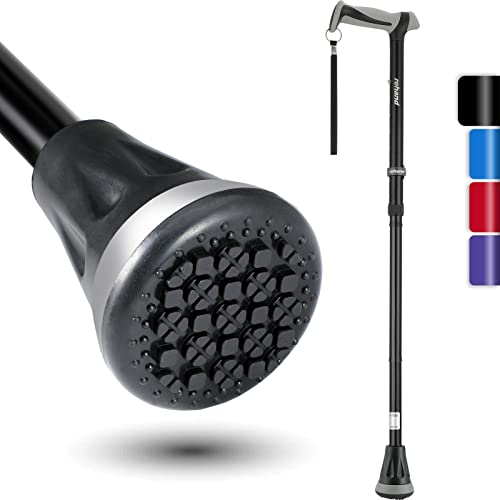
- 8 height settings for users from 5' to 6'5".
- Folds down and includes a travel bag for portability.
- All-terrain tip and shock-absorbing base boost stability.
Best For: People who want a portable adjustable cane for varied daily surfaces.
Quad Stability Choice

- Four-foot base adds stability and lets it stand on its own.
- Foam grip is designed for comfort during walking or standing.
- Height adjusts from 29 to 38 inches and supports 300 lbs.
Best For: People who want extra balance support and a self-standing cane.
Lightweight Everyday Carry
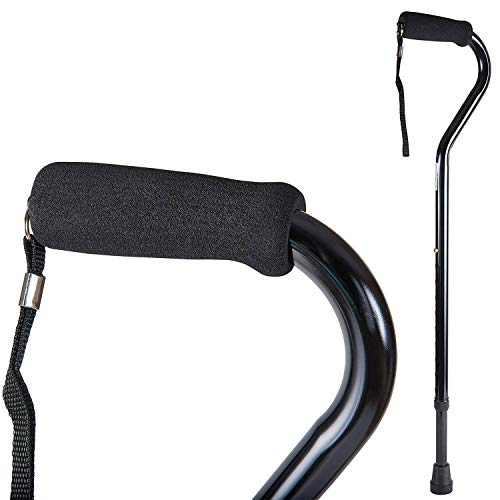
- Weighs only 12 ounces for easy carrying.
- Adjusts from 30 to 39 inches in 1-inch increments.
- Soft offset handle and wrist strap improve comfort and control.
Best For: Users who want a simple lightweight cane for everyday mobility.
Classic Offset Support
Medline Chrome Offset Walking Cane

- Adjusts from 29 to 38 inches with pushbutton lock.
- Soft-foam offset grip helps reduce wrist strain.
- Lightweight aluminum cane supports up to 300 lbs.
Best For: Users who want a comfortable lightweight offset cane for daily support.
Compact Free-Standing Support

- Foldable aluminum cane with adjustable height.
- 3-tipped base stands on its own.
- Pivoting tip improves surface contact.
Best For: Adults wanting portable support with a self-standing base.
Travel-Ready Stability

- Self-locking foldable cane with security strap.
- Palm-shaped handle reduces wrist pressure.
- Folds compactly for bags and travel.
Best For: Users who want a compact cane with a comfort-focused grip.
Self-Standing Quad Balance

- Self-standing quad base adds stability.
- Foam offset handle reduces wrist pressure.
- Foldable aluminum frame stays lightweight.
Best For: People who want a wider base and cushioned grip for steady support.
Compact Travel Cane

- Folds into 4 sections for compact storage
- Adjusts from 33 to 37 inches in 5 settings
- Lightweight aluminum build with wrist strap
Best For: Travel-friendly everyday support
Heavy-Duty Quad Cane
KingPavonini Free Standing Cane

- Self-standing 4.5-inch quad base
- Supports up to 350 lbs
- 8 height settings and foldable design
Best For: Users who want maximum stability and a higher weight limit
Ergonomic Pivot Cane

- Ergonomic handle reduces palm pressure
- 4-pronged rotating base with rubber pads
- Self-standing, foldable aluminum frame
Best For: All-around support with added comfort and balance
All-Terrain Folding Pick – REHAND Foldable Adjustable Walking Cane
If you want walking canes for disabled adults that are easy to carry but still feel stable, this REHAND option is built around everyday practicality. It adjusts across a wide height range, folds down for storage, and uses an all-terrain tip plus shock-absorbing base to help handle uneven ground more confidently.
Best For: Adults who need a foldable cane with broad height adjustment and extra support on rougher surfaces.
Pros:
- 8 height settings, fitting users from 5′ to 6’5″.
- Collapsible design folds into a travel bag or small storage space.
- Wide handle and TPR contact points are designed to reduce palm fatigue.
- All-terrain slip-resistant base and multilayer rubber structure add stability and shock absorption.
Cons:
- At 0.6 kg, it is not the lightest cane in this group.
- Designed as a balance aid, so it may not suit users needing maximal base stability.
Overall, this is a flexible choice for daily mobility when portability matters, especially if you need a cane that packs away easily and adjusts to a wide fit range.
Quad Stability Choice – Medline Small Base Quad Cane
For walking canes for disabled adults who want a steadier footprint, this Medline quad cane adds four feet and a small base for improved balance. It is a practical pick if you need a cane that can stand on its own and provide more confidence during recovery or routine mobility.
Best For: Users who want a compact quad cane with extra ground contact and self-standing convenience.
Pros:
- Quad base with four feet provides added stability.
- Foam handle is designed for a secure, comfortable grip.
- Can stand upright on its own for convenience.
- Supports up to 300 lbs and adjusts from 29 to 38 inches.
Cons:
- Heavier than standard single-tip canes at 2 pounds.
- Small base may be less maneuverable in tight spaces than a standard cane.
This model makes sense when stability matters more than ultra-light portability, especially for users who want a sturdy aluminum cane with a confident stance.
Lightweight Everyday Carry – DMI Adjustable Walking Cane
This DMI model is a straightforward option among walking canes for disabled adults who want light weight and easy adjustment. At just 12 ounces, it is built to be portable while still offering a slip-resistant tip, ergonomic grip, and wrist strap for more secure everyday use.
Best For: Adults who want a simple, lightweight adjustable cane for daily mobility.
Pros:
- Very light at 12 ounces, making it easy to carry.
- Adjusts from 30 to 39 inches in 1-inch increments.
- Ergonomic soft offset handle helps reduce hand fatigue.
- Wrist strap and slip-resistant tip add convenience and control.
Cons:
- 250 lb capacity is lower than some heavier-duty alternatives.
- Single-tip design offers less base coverage than a quad cane.
It is a solid no-fuss choice if you want a light cane that is easy to size and comfortable to hold without extra bulk.
Classic Offset Support – Medline Chrome Offset Walking Cane
For walking canes for disabled adults that focus on straightforward support, this Medline offset cane balances adjustability, comfort, and a clean look. Its soft-foam grip, wrist strap, and slip-resistant tip make it a practical everyday mobility aid for recovery or routine use.
Best For: Adults who want a lightweight offset cane with comfortable grip support.
Pros:
- Adjusts from 29 to 38 inches with a pushbutton lock.
- Lightweight aluminum construction supports up to 300 lbs.
- Soft-foam grip and offset handle help reduce wrist strain.
- Rubber tip improves traction on common walking surfaces.
Cons:
- Single-tip base provides less stability than a quad cane.
- Users seeking maximum ground contact may need an optional compatible quad tip.
This is a practical pick if you want a dependable everyday cane with a comfortable handle and enough adjustability for a better fit.
Compact Free-Standing Support – HONEYBULL Foldable Pivot Cane
If you’re comparing walking canes for disabled adults, this HONEYBULL option stands out for everyday stability and portability. Its foldable design makes it easy to pack, while the 3-tipped free-standing base and pivoting tip are meant to help it stay planted on a variety of surfaces.
Best For: Adults who want a foldable cane with a self-standing base for daily support and travel.
Pros:
- Free-standing 3-pronged base helps the cane stand on its own.
- Pivoting tip is designed for better contact on angled or uneven surfaces.
- Adjustable from 30″ to 36″ to fit a wide range of users.
- Lightweight aluminum build folds down for easier storage and transport.
Cons:
- Quad-style or multi-tip bases can feel bulkier than a standard cane.
- Folded design may be less rigid-feeling than a one-piece cane for some users.
Overall, this is a practical pick if you want a cane that balances adjustability, portability, and a stable standing base. It is especially useful when convenience matters as much as everyday walking support.
Travel-Ready Stability – Vaunn Easy Grip Folding Cane
For shoppers looking at walking canes for disabled adults, this Vaunn model focuses on stable support with a compact fold. It uses a self-locking mechanism, a non-slip palm-shaped handle, and a shock-absorbing rubber tip to make daily walking feel more secure and comfortable.
Best For: Adults who want a lightweight folding cane with a comfort grip and easy storage.
Pros:
- Self-locking mechanism helps keep the cane secure when unfolded.
- Ergonomic palm-shaped handle is designed to reduce wrist pressure and hand fatigue.
- Folds down to about 11 inches for bags, backpacks, and suitcases.
- Height adjusts in 1-inch increments from 33″ to 37″.
Cons:
- 250 lb weight capacity may be limiting for some users.
- Does not use a multi-tip or self-standing base design.
This is a strong choice if comfort grip and portability are your top priorities. It should appeal to users who need an easy-to-carry cane for home use, travel, or everyday errands.
Self-Standing Quad Balance – KINGGEAR Foldable Quad Cane
This KINGGEAR cane is a smart option in walking canes for disabled adults when extra standing stability matters. It combines a lightweight foldable aluminum frame with a self-standing quad base, plus an EVA foam handle intended to ease pressure on the hand and wrist.
Best For: Adults who want a self-standing cane with a wider base and cushioned grip.
Pros:
- Quad base is designed to stand on its own and improve traction.
- Adjusts from 31″ to 36″ in six 1-inch height settings.
- Foam offset handle is made for extra comfort and reduced wrist pressure.
- Lightweight, foldable aluminum design is easy to store and carry.
Cons:
- Quad base can be less compact than a standard single-tip cane.
- Folded length of 31 inches is not as travel-small as some collapsible canes.
For users who want a cane that feels more planted without giving up foldability, this model is easy to justify. The wider base and cushioned handle make it especially practical for everyday support and confidence.
Compact Travel Cane – SupreGear Folding Cane
If you want walking canes for disabled adults that are easy to pack and simple to size correctly, this SupreGear folding cane is built around portability and basic support. It folds into four sections for storage, adjusts across five height settings, and uses a lightweight aluminum build with a T-handle for everyday use indoors or out.
Best For: Adults who want a lightweight folding cane for travel, storage, and general daily support.
Pros:
- Folds into 4 sections and stores down to about 10 inches
- 5-level height adjustment from 33 to 37 inches
- Very light at 0.5 lb, with a wrist strap for added security
- TPR anti-slip tip for traction and stability
Cons:
- 198 lb weight capacity is lower than some heavy-duty options
- T-handle design may not suit users who prefer a quad base
This is a practical pick if compact storage matters more than extra support features. It keeps the design simple, lightweight, and travel-friendly while still covering the basics of adjustability and grip comfort.
Heavy-Duty Quad Cane – KingPavonini Free Standing Cane
For walking canes for disabled adults who need more stability, this KingPavonini model focuses on a wide self-standing base and a higher weight rating. It combines a 4.5-inch quad base, 360-degree rotating flex design, and eight height adjustments, making it a strong option for users who want added balance and easier parking between steps.
Best For: Adults who want a free-standing cane with a wider base and higher support capacity.
Pros:
- Self-standing design with an extra-wide 4.5-inch base
- Supports up to 350 lbs with thick aluminum construction
- 8 height settings from 31 to 38 inches
- Foldable and includes a travel pouch for easier carrying
Cons:
- Heavier than the lightest folding cane options at 1.08 lb
- Quad base may feel bulkier than a standard T-handle cane
This is a good choice if your priority is stability first and portability second. The self-standing base and rotating foot design make it especially appealing for users who want a cane that feels secure on different surfaces.
Ergonomic Pivot Cane – REHAND Self Standing Cane
If you are comparing walking canes for disabled adults and want comfort plus stability, this REHAND cane leans into both. It features a longer, wider ergonomic handle, a self-standing pivot quad base, and a collapsible aluminum frame that makes it easier to store and carry during daily routines or trips.
Best For: Adults who want an ergonomic cane with a pivoting quad base and self-standing convenience.
Pros:
- Longer, wider ergonomic handle designed to reduce palm pressure
- 4-pronged rotating base with non-slip rubber foot pads
- Self-standing design for easy resting between uses
- Collapsible aluminum frame with wrist strap and hook-and-loop tie
Cons:
- Pivot quad base may be less compact than a standard single-tip cane
- Weight rating is not listed in the supplied notes
This is a strong all-around option if comfort in the hand and steadiness on the ground matter most. The design is practical for regular use, especially when you want a cane that stands on its own and packs away quickly.
How We Picked the Best Walking Canes for Disabled Adults
We looked for Walking Canes for Disabled Adults that balance stability, comfort, portability, and value. Priority went to models with adjustable height ranges, dependable base designs, reasonable weight capacity, and features that support everyday use such as folding frames, self-standing capability, and ergonomic grips.
Quick Comparison
There are three common styles here: standard single-tip canes for lightweight support, offset canes for improved weight transfer and balance, and quad-base or pivot-base canes for added stability. Folding models are best for travel and storage, while self-standing designs are useful when you need to pause without laying the cane down.
Key Buying Factors for Walking Canes for Disabled Adults
Fit and Height Adjustment
A properly sized cane should let your elbow bend slightly when you stand upright. Adjustable models make this easier, especially if you wear different shoes or share the cane with a caregiver in limited situations.
Base Style and Stability
Single-point canes are light and simple, but they offer less support than quad bases. If balance is a major concern, consider a wider base or a pivoting tip that helps maintain contact on uneven surfaces.
Weight Capacity and Frame Strength
Check the stated capacity and choose a cane that comfortably exceeds your body weight and daily loading needs. Aluminum frames are common because they are light, durable, and easy to carry.
Grip Comfort and Portability
Soft or ergonomic handles can reduce hand fatigue during longer walks. Folding canes with straps or pouches are a smart pick if you travel often, use public transit, or want a cane that fits in a bag.
Surface Conditions
If you walk outdoors regularly, look for tips and bases designed to handle rough pavement, ramps, or wet ground. For indoor use, narrower bases may feel easier to maneuver through tight spaces.
Who Should Buy Which Walking Canes for Disabled Adults?
If you want maximum portability, choose a foldable cane with a travel pouch. If your top priority is balance support, a quad-base or offset cane is usually the better fit. If you need a simple everyday aid, a lightweight adjustable single cane may be enough. For many Walking Canes for Disabled Adults, the best choice is the one that matches your mobility level, routine, and comfort needs rather than the one with the most features.