Choosing the right alert system can make a real difference in keeping a loved one safer at home or in a care setting. The best wandering prevention alarms for dementia help caregivers respond sooner, without adding unnecessary stress or noise.
Below, we focus on practical options for beds, doors, floors, and motion detection so you can match the system to the person, the room, and the level of supervision needed.
Best 9 Wandering Prevention Alarms for Dementia Picks for 2026
Best for Door-or-Bed Alerts
Smart Caregiver Wireless Motion Sensor Alarm

- Wireless pager keeps alerts away from the bedside
- Mountable motion sensor works at beds or doors
- Up to 300' range for room-to-room monitoring
Best For: Caregivers who want a portable motion alarm for bed or doorway wandering alerts.
Best for Easy Setup
Ideal Security Pressure Floor Mat Alarm

- Pressure mat triggers alerts when stepped on
- Choose loud alarm, chime, or off
- Wired 30-ft setup offers flexible placement
Best For: Caregivers who want a simple doorway alert for monitoring exits at home.
Best for Quiet Night Monitoring
CallToU Bed Alarm for Dementia Wandering

- Detects feet-to-floor movement before full standing
- Silent, vibration, and adjustable volume modes
- Portable receiver with 360° sensor rotation
Best For: Caregivers who want a quiet, portable bed-exit alarm for nighttime dementia supervision.
Best Budget Mat Alarm
Floor Mat Exit Alarm for Seniors

- Pressure mat triggers an audible alert when stepped on
- Includes adjustable volume, tone options, and status lights
- Large 24" x 48" non-slip mat for bedside or doorway use
Best For: Caregivers seeking an affordable, easy-to-use floor mat alarm for bed, chair, or doorway monitoring.
Best for App Alerts
PILSAMAS Wi‑Fi Door Alarms for Dementia Seniors

- Four pre-paired sensors for multiple entry points
- App alerts plus local receiver with door ID display
- No monthly subscription and family sharing included
Best For: Families needing connected door monitoring with remote alerts and no recurring fee.
Best for Quiet Early Alerts
Lunderg Wireless Early Alert Bed Alarm

- Sends alerts to a caregiver pager instead of sounding in the room
- No Wi‑Fi, app, or tools required for setup
- Includes adjustable pager volume, vibration mode, and 400 ft. range
Best For: Caregivers who want a discreet early-warning bed alarm for dementia-related wandering risk.
Best for Comfort
HENDUN Motion Sensor Door Alarm

- Wireless, pre-paired installation
- Silent mode with LED-only alerts
- Long 918 ft caregiver range
Best For: Families who want a simple motion alert for dementia wandering or early fall warnings.
Best for Bed-Exit Alerts
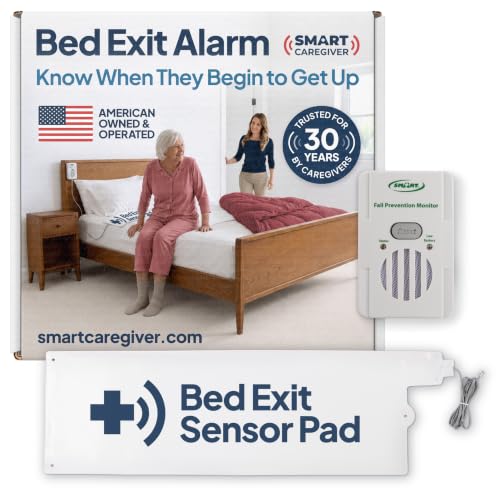
- Instantly alerts when pressure is removed from the pad
- Optional wireless caregiver alert kit available separately
- Soft, easy-to-clean 10"x30" sensor pad
Best For: Caregivers who want a simple bed alarm to warn them when a loved one tries to get up.
Best for Bed-Exit Monitoring
Smart Caregiver Bed Exit Alarm with Pager

- Wireless pager with sound/vibrate alerts
- Large weight-sensing bed pad for early alerts
- Expandable to six Smart Caregiver sensors
Best For: Families needing a simple wireless bed-exit alarm for nighttime dementia care and fall prevention.
Best for Door-or-Bed Alerts – Smart Caregiver Wireless Motion Sensor Alarm
If you want a simple alerting setup for wandering prevention alarms for dementia, this wireless motion sensor system gives a caregiver pager notification when movement is detected at a bed or door. It is designed to reduce noisy bedside alarms while still letting you monitor activity from a distance.
Best For: Caregivers who need a portable, motion-based alert system for a bedroom doorway, bedside, or other transition point.
Pros:
- Wireless pager lets the caregiver stay mobile while receiving alerts remotely
- Motion sensor can be mounted near a bed or door for flexible placement
- Helps avoid loud alarm noise right at the patient’s bedside
- Up to 300′ range supports monitoring from another room or area
Cons:
- Requires AA batteries for both the pager and sensor
- Motion sensing is useful for exits, but it is not a full perimeter system
For families comparing wandering prevention alarms for dementia, this Smart Caregiver system is a practical middle-ground option: it is straightforward, portable, and focused on alerting you when movement starts rather than sounding a disruptive alarm at the bed.
Best for Easy Setup – Ideal Security Pressure Floor Mat Alarm
If you want a simple alert system without cameras, apps, or complicated setup, this pressure-mat alarm is a practical option to consider for wandering prevention alarms for dementia. It reacts when someone steps on the mat, giving you either a loud alarm or a gentler chime so you can monitor movement at a doorway or exit point.
Best For: Caregivers who need a straightforward, wired door-mat alert for monitoring exits, especially in home entryways or other high-traffic spots.
Pros:
- Step-on pressure sensor provides immediate entry/exit alerts.
- Two sound modes let you choose between a loud alarm and a chime.
- Wired design with a 30-ft cable allows flexible placement.
- Works indoors and can be used outside when protected by a waterproof mat.
Cons:
- Requires a physical mat placement, so it may not suit every doorway.
- Not a smart connected system, so there are no app or remote notifications.
- Best performance depends on proper positioning and coverage.
This is a solid low-tech choice if you want reliable doorway alerts without extra setup. For families comparing wandering prevention alarms for dementia, its simplicity and selectable sound modes make it easy to adapt to a home routine.
Best for Quiet Night Monitoring – CallToU Bed Alarm for Dementia Wandering
If you need a practical alert system for nighttime supervision, this CallToU option is a solid pick among wandering prevention alarms for dementia. It uses a floor-positioned wireless sensor that detects feet touching down before a person is fully standing, which can give caregivers a crucial head start for fall prevention or wandering prevention.
Best For: Caregivers who want a portable bed-exit alert with vibration, silent mode, and adjustable sound for home or hospital use.
Pros:
- Sensor detects movement before full standing, helping you respond earlier.
- 5 volume levels, 18 ringtones, plus silent and vibration-only options.
- Portable receiver and rechargeable design make it easier to move between rooms.
- 360° sensor rotation helps reduce false alarms from restless sleep.
Cons:
- Requires AAA batteries for the sensor, so there is ongoing battery maintenance.
- Works best as a bed-exit alert, not a full-room perimeter monitor.
For caregivers comparing wandering prevention alarms for dementia, this model stands out for quiet overnight monitoring and early bed-exit detection without needing direct contact with the patient. It is a sensible choice when you want alerts that are flexible, portable, and less likely to be disruptive.
Best Budget Mat Alarm – Floor Mat Exit Alarm for Seniors
Floor Mat Exit Alarm for Seniors Fall Prevention & Anti-Wandering - Economy System
Check Price On AmazonIf you need a simple, lower-cost option for wandering prevention alarms for dementia, this floor-mat system gives caregivers an easy audible alert when someone steps out of bed, off a chair, or toward a doorway. It’s a practical pick for basic monitoring without a complex setup.
Best For: Caregivers who want an affordable pressure-mat alarm for beds, chairs, or exits.
Pros:
- Pressure-sensing mat alerts as soon as weight is applied
- Includes audible alarm with adjustable volume and tone options
- Works on battery power and has helpful status/low-battery lights
- Large 24" x 48" mat with non-slip, beveled-edge design
Cons:
- Uses 3 AA batteries, which are not included
- Not compatible with AC adapters despite the system description
- Basic economy model lacks advanced caregiver features
For families comparing wandering prevention alarms for dementia, this model stands out for straightforward operation and a wide sensing mat, but it’s best viewed as a no-frills alert system rather than a feature-rich monitoring solution.
Best for App Alerts – PILSAMAS Wi‑Fi Door Alarms for Dementia Seniors
If you want wandering prevention alarms for dementia that can alert both nearby caregivers and family members away from home, this PILSAMAS kit is built for that job. It combines four pre-paired sensors, app notifications, and a local receiver with ID display, so you can quickly see which door or window was opened.
Best For: Families who want whole-home door monitoring with app alerts, customizable sensor names, and no mandatory monthly fee.
Pros:
- Wi‑Fi app alerts plus local chimes for in-home and remote awareness
- Four sensors with LED ID display and history logs for faster response
- No subscription required, with family sharing and privacy-friendly design
- Easy setup thanks to pre-paired sensors and adjustable volume/melodies
Cons:
- Requires 2.4GHz Wi‑Fi only, not 5GHz
- SMS and phone-call alerts cost extra via in-app purchase
- Door alignment and gap limits matter for reliable triggering
As a practical pick for wandering prevention alarms for dementia, this model stands out when you want both local sound and remote app visibility without ongoing fees. It’s a strong fit for caregivers who need to monitor multiple entry points and want a simple, connected setup.
Best for Quiet Early Alerts – Lunderg Wireless Early Alert Bed Alarm
If you want wandering prevention alarms for dementia that notify you before a loved one is fully out of bed, the Lunderg Wireless Early Alert Bed Alarm is built around quiet, caregiver-only alerts. It skips the in-room blast, uses a wireless pager you carry, and is designed for straightforward setup without Wi‑Fi, apps, or tools.
Best For: Caregivers who want an early-warning bed alarm that preserves dignity and works well for dementia care at home or in facilities.
Pros:
- Wireless pager alerts you before the person gets up, without startling them with an in-room alarm
- Easy setup with no Wi‑Fi, app, or tools required
- Portable pager offers adjustable volume, vibration mode, and up to 400 ft. range
- Includes incontinence-resistant pressure pad and batteries
Cons:
- Designed for bed-exit monitoring, so it won’t replace supervision or other safety tools
- The pad and pager system is less flexible than app-based smart alerts
- Works best when the pad is placed correctly at hip level
For buyers comparing wandering prevention alarms for dementia, this model stands out for its caregiver-first alert style and simple, no-fuss operation. It is a practical choice if you want early notification without the noise, confusion, or setup burden of more complex systems.
Best for Comfort – HENDUN Motion Sensor Door Alarm
If you want a simple alert system that can support wandering prevention alarms for dementia, this HENDUN motion sensor setup is a practical choice. The wireless, pre-paired design makes it easy to place the sensor near a doorway or bedside and keep the receiver within reach, so caregivers get an immediate warning without complicated installation.
Best For: Caregivers who need a fast, wireless motion alert for dementia-related wandering, sleepwalking, or early fall awareness.
Pros:
- Easy wire-free setup with pre-paired sensor and receiver
- Adjustable volume plus silent/LED-only mode for nighttime use
- Long 918 ft range gives caregivers more freedom around the home
- Motion detection can help warn before feet hit the floor
Cons:
- Motion-based alerts may not replace a dedicated bed sensor for every setup
- Receiver batteries and USB-C cable are separate considerations
- Best results depend on thoughtful placement and calibration
Overall, this is a flexible alert option for families comparing wandering prevention alarms for dementia, especially if they want something quick to install and easy to hear day or night. Its strength is convenience and range rather than clinical-grade monitoring.
Best for Bed-Exit Alerts – Smart Caregiver Bed Alarm
If you need one of the most straightforward wandering prevention alarms for dementia, this bed-exit monitor is built to alert you the moment weight is removed from the sensor pad. It is a practical option for caregivers who want a reliable bedside warning system without complicated setup.
Best For: Caregivers who want a simple, dependable bed alarm to catch nighttime rising or unassisted bed exits.
Pros:
- Alerts immediately when the person gets off the bed pad
- Includes flexible alert options, with an optional wireless add-on available
- Soft 10"x30" vinyl pad is easy to clean and designed for daily use
- Simple placement under the fitted sheet and mountable monitor for convenience
Cons:
- Wireless caregiver alert kit is sold separately
- Requires a battery or optional AC adapter for power
- In-room alarm may be too loud if a quieter caregiver-only setup is preferred
This is a focused, no-frills choice if your priority is catching bed exits fast. For families comparing wandering prevention alarms for dementia, it stands out as a bed-based safety tool rather than a full-room tracking system.
Best for Bed-Exit Monitoring – Smart Caregiver Bed Exit Alarm with Pager
This bed-exit alarm is a practical option for families comparing wandering prevention alarms for dementia, especially when the main risk is a loved one getting up from bed at night. The wireless pager and weight-sensing pad give caregivers an early heads-up, making it easier to respond before a fall or unsafe wandering starts.
Best For: Caregivers who want a simple, wireless bed alarm with pager alerts for nighttime monitoring and early fall prevention.
Pros:
- Wireless pager alerts with sound or vibration for flexible daytime and nighttime use.
- Weight-sensing 10" x 30" bed pad helps detect when pressure is removed from the bed.
- Supports up to six Smart Caregiver sensors for broader room-by-room monitoring.
- U.S.-based company with long-running customer support for setup and troubleshooting.
Cons:
- Designed mainly for bed exit detection, not full-room tracking on its own.
- Requires correct pad placement to minimize false alarms and improve reliability.
For households that need a focused alert at the moment someone starts to rise, this is a strong, straightforward pick among wandering prevention alarms for dementia. It works best as an early-warning tool paired with attentive caregiving, rather than as a complete monitoring system.
How We Picked the Best Wandering Prevention Alarms for Dementia
We prioritized Wandering Prevention Alarms for Dementia that are easy to set up, reliable in daily use, and suited to common caregiving situations. We looked for clear alert methods, flexible placement, wireless convenience where useful, and system designs that fit different mobility and supervision needs.
We also favored products that help caregivers catch movement early rather than after a person has already left the room or bed. That means considering pressure mats, bed pads, motion sensors, and door alerts as separate solutions for different risks.
Quick Comparison
Bed alarms are best when the main concern is standing up unassisted or leaving bed at night. Door and window alarms work well for exit monitoring and perimeter awareness. Floor mats are useful in bedside or doorway zones where a footfall should trigger an alert. Motion-based systems add flexibility for larger spaces, while app-connected options can help when caregivers need alerts across a wider area.
Key Buying Factors for Wandering Prevention Alarms for Dementia
Alert Type
Choose between sound, vibration, pager alerts, or app notifications based on the caregiver’s routine and hearing needs. A loud alarm may be right in some homes, while a silent pager or phone alert is better when you want a faster, less disruptive response.
Trigger Location
Consider where wandering risk begins. If a person tends to get out of bed first, a bed exit sensor makes sense. If the risk is leaving through a hallway or front door, a door sensor or motion detector may be more appropriate. For high-risk transitions, floor mats can add another layer of detection.
Installation and Daily Use
Look for systems that are simple to mount, place, and reset. Care tools should reduce workload, not create it. Wireless systems can be easier to position, while wired options may be more dependable in fixed locations.
Range and Coverage
Make sure the alert reaches the caregiver from the room where it matters. Range becomes especially important in larger homes, multi-level spaces, or shared caregiving environments.
False Alarm Control
A good system should be sensitive enough to detect movement without triggering constantly from minor shifts or household traffic. Proper placement and the right sensor type matter as much as the alarm itself.
Who Should Buy Which Wandering Prevention Alarms for Dementia?
If the priority is bedside safety, choose a bed exit alarm or pressure pad system. If the concern is doorway wandering, a door sensor or motion alert is usually the better fit. If you need broad coverage or care for someone who moves unpredictably, a combination system can offer more complete protection.
For families balancing safety with comfort, the best choice is usually the least intrusive system that still gives caregivers enough warning to respond quickly. That balance is the real goal when choosing Wandering Prevention Alarms for Dementia.