If you’re comparing bed alarms for nursing home use, the goal is simple: catch bed exits early and help reduce falls without creating more confusion for residents.
The best systems balance reliable sensing, caregiver-friendly alerts, and placement that fits the room, workflow, and resident’s needs.
Best 10 Bed Alarms for Nursing Home Use Picks for 2026
Best for Early Alerting
Lunderg Wireless Early Alert Bed Alarm System

- Alerts caregivers before the resident gets up
- No in-room alarm, helping reduce agitation
- Wireless pager, easy setup, and adjustable alert modes
Best For: Caregivers in nursing home or dementia care settings who want a quieter early-warning bed alarm.
Best Dual-Pad Monitoring
Smart Caregiver Bed & Chair Exit Alarm

- Includes both bed and chair sensor pads
- Quick alert system for fall and wandering prevention
- Easy-to-use monitor with clip-on placement
Best For: Nursing homes that need one simple alarm for both bed and chair monitoring.
Best for Silent Night Monitoring
CallToU Bed Alarm with Vibration

- Early floor-level detection helps warn before full standing.
- Silent and vibration modes suit overnight care settings.
- Portable receiver with adjustable volume and ringtone options.
Best For: Care teams and family caregivers needing quiet, early bed-exit alerts.
Best for Simple Bed Exit Alerts
Smart Caregiver Bed Alarm with 10x30 Pad
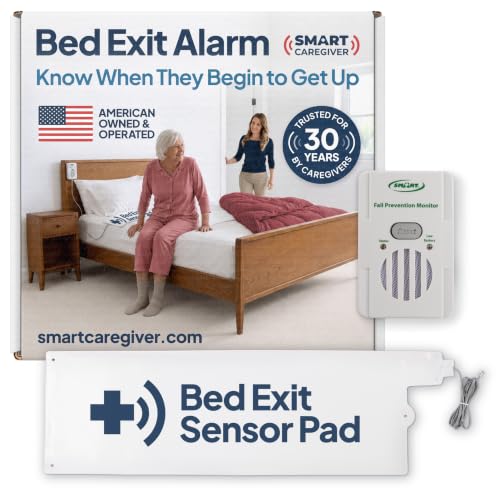
- Weight-sensing pad alerts when the resident leaves bed
- Compact 10" x 30" pad for flexible placement
- Straightforward setup for caregivers and staff
Best For: Nursing homes and care facilities needing a simple bed-exit alert for elderly residents.
Best for Refusing-Help Patients
Lunderg Under Mattress Alarm Set

- Hidden under-mattress pad is hard to tamper with
- Adds chair monitoring for broader fall coverage
- Pager includes vibration and adjustable sound
Best For: Nursing homes and dementia caregivers who need a discreet alarm system for people who refuse visible monitoring.
Best for Reliable Wireless Alerts
Briidea Wireless Bed Alarm Pad

- Large 20" x 28" pad improves sensing coverage.
- Wireless alert reaches up to 300 feet.
- Three volume settings help control nighttime noise.
Best For: Caregivers needing a simple plug-in bed alarm with a wireless receiver and adjustable volume.
Best Wireless Early-Alert
Lunderg Wireless Bed & Chair Alarm Set

- Wireless pager keeps alerts off the bedside
- Early-warning bed pad helps catch movement sooner
- Includes both bed and chair sensors
Best For: Nursing homes and caregivers who want quiet, wireless fall-prevention alerts.
Best for Motion-Sensor Monitoring
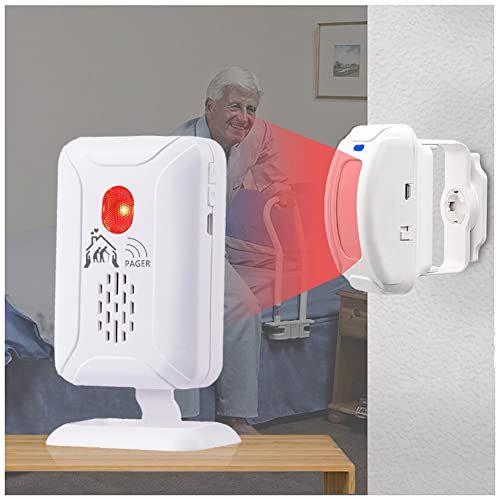
- Alerts caregivers without sounding in the resident’s room.
- Flexible sensor placement for under-bed or doorway monitoring.
- Long wireless range and dual power options add convenience.
Best For: Care homes and caregivers who want a room-quiet motion alarm for bed-exit monitoring.
Best Wireless Pager Alert
Smart Caregiver Bed Exit Alarm

- Wireless pager for remote caregiver alerts
- Weight-sensing pad detects bed exits
- Straightforward option for fall prevention
Best For: Nursing homes and caregivers who want a simple bed-exit alarm with remote paging.
Best for Hard-to-Monitor Patients
Lunderg Under Mattress Bed Alarm

- Hidden under-mattress sensor is harder to tamper with
- Early alert can warn before the person fully stands up
- Wireless pager has adjustable volume and vibration
Best For: Care settings where residents remove wearables or ignore visible alarms.
Best for Early Alerting – Lunderg Wireless Early Alert Bed Alarm System
If you need bed alarms for nursing home use that notify caregivers before a resident tries to stand, this wireless Lunderg system is built for a calmer, less intrusive setup. The sensor pad sends an alert to a portable pager instead of sounding an in-room alarm, which can be a better fit for dementia care and shared living spaces. It’s also simple to set up, with no Wi-Fi, app, or tools required.
Best For: Caregivers and nursing home environments that want an early-warning bed alarm without an in-room blast.
Pros:
- Early-alert design notifies you before the person is fully out of bed
- No in-room alarm, helping reduce stress and agitation for the resident
- Portable pager with adjustable volume, vibration mode, and up to 400 ft. range
- Easy wireless setup with batteries included and no Wi-Fi or app needed
Cons:
- Only works well if caregivers keep the pager close by
- May be more specialized than a basic bed alarm for simple home use
- Requires correct pad placement to get the intended early-alert timing
For bed alarms for nursing home use, this Lunderg model stands out because it balances fall prevention with dignity and lower disturbance. If you want a wireless alerting system that’s easier on residents and practical for staff or family caregivers, it’s a strong choice.
Best Dual-Pad Monitoring – Smart Caregiver Bed & Chair Exit Alarm
If you need bed alarms for nursing home use that can cover both sleep and seated supervision, this Smart Caregiver system is a practical choice. It uses pressure-sensitive pads to alert staff when a resident starts to rise, helping caregivers respond before a fall or wandering incident happens.
Best For: Nursing homes and care settings that need one monitor for both bed and chair exit alerts.
Pros:
- Includes both a 10" x 30" bed pad and a 10" x 15" chair pad
- Immediate alerts help caregivers intervene quickly
- Simple setup with clip-on monitor placement and reset button
- Low-battery and sensor status lights support safer daily use
Cons:
- Alarm volume is limited to high/low settings rather than fine adjustment
- Requires moving the monitor between bed and chair unless you buy an extra unit
- Pad sensitivity may need adjustment based on resident movement patterns
Overall, this is a sensible option for bed alarms for nursing home use when you want straightforward exit detection without a complicated system. Its dual-pad design makes it versatile, though facilities that need more advanced alert customization may want to look elsewhere.
Best for Silent Night Monitoring – CallToU Bed Alarm with Vibration
If you need bed alarms for nursing home use that can alert staff before a resident is fully upright, this CallToU system is built for practical room monitoring. Its floor sensor detects feet touching down, and the receiver offers adjustable volume, silent mode, and vibration so you can match the alert to daytime or overnight care without constant false alarms.
Best For: Care teams and family caregivers who want a portable bed-exit alert with quiet nighttime options and flexible placement.
Pros:
- Floor sensor detects bed exits early, before the person is fully standing.
- Silent and vibration modes help avoid disturbing others during overnight monitoring.
- Receiver is portable and includes multiple volume levels and ringtone choices.
- Sensor rotation helps reduce false alerts from movement or repositioning.
Cons:
- Requires AAA batteries for the sensor, so upkeep is not fully wireless-free.
- Not ideal if you prefer a pad-style pressure alarm that senses body contact.
For bed alarms for nursing home use, this model stands out when you want early warning, quiet operation, and a setup that is less likely to trigger from routine shifting in bed. It is a solid fit for caregivers who need a straightforward alert system for fall prevention and wandering risk.
Best for Simple Bed Exit Alerts – Smart Caregiver Bed Alarm with 10×30 Pad
If you’re comparing bed alarms for nursing home use, this Smart Caregiver system is a straightforward option built around a weight-sensing pad that alerts a caregiver when someone gets out of bed. It’s a practical fit for facilities that want a simple, focused fall-prevention setup without a lot of extra complexity.
Best For: Nursing homes and care settings that need a basic, dependable bed-exit alert for elderly residents.
Pros:
- Weight-sensing bed pad automatically triggers when the user stands up
- Compact 10" x 30" pad fits many standard beds and placement needs
- Simple design is easy for staff to understand and deploy
Cons:
- Focused on bed-exit alerts rather than a full monitoring system
- May require staff to confirm ideal pad placement for consistent performance
For buyers comparing bed alarms for nursing home use, this model makes sense when the priority is fast notification and uncomplicated day-to-day operation. It’s not the most feature-packed option, but it covers the core job well for fall prevention.
Best for Refusing-Help Patients – Lunderg Under Mattress Alarm Set
If you need bed alarms for nursing home use where residents may pull off wearable devices or ignore visible sensors, this Lunderg set stands out for its hidden under-mattress design and added chair coverage. It sends wireless alerts to a pager you carry, helping staff respond sooner without adding noise or clutter at the bedside.
Best For: Dementia care, nursing homes, and home caregivers looking for a discreet bed-and-chair alarm system for people who refuse visible monitoring.
Pros:
- Invisible under-mattress pad reduces the chance of tampering or refusal.
- Early-alert bed sensing plus chair monitoring improves fall-response timing.
- Portable pager offers adjustable volume and vibration-only mode.
- Includes batteries and is backed by 24/7 real-person support.
Cons:
- Not compatible with Sleep Number air-adjustable mattresses.
- Only works with mattresses up to 13 inches thick.
- Higher-feature setup may be more than basic alarm buyers need.
For bed alarms for nursing home use, this is a smart pick when the main challenge is getting reliable alerts from residents who refuse help or remove obvious devices. The hidden pad, pager alerting, and chair coverage make it especially practical for dementia care and higher-risk fall prevention.
Best for Reliable Wireless Alerts – Briidea Wireless Bed Alarm Pad
If you need bed alarms for nursing home use that are simple to deploy and quick to hear, this Briidea option focuses on dependable motion detection, a wide sensing area, and a wireless alert you can place farther from the bedside.
Best For: Caregivers who want a plug-in, low-maintenance bed alarm with adjustable volume and long-range alerting for overnight monitoring.
Pros:
- Large 20″ x 28″ pressure pad helps improve detection and reduce false alerts.
- Wireless alarm can be placed up to 300 feet away, which is helpful in larger homes or care settings.
- Three volume levels make it easier to match the alarm to a quieter nighttime environment.
- Plug-in power means no batteries to manage overnight.
Cons:
- Requires a wall outlet for the alarm system to operate.
- May be less suitable if you need a fully portable, battery-powered setup.
For bed alarms for nursing home use, this model stands out for its straightforward setup and practical alert range, though it is still best suited to rooms where plug-in power is available and the pad can be positioned correctly under the sheet.
Best Wireless Early-Alert – Lunderg Wireless Bed & Chair Alarm Set
If you need bed alarms for nursing home use that alert caregivers before a resident gets up, this wireless set is built for practical fall prevention without an in-room blast. The bed pad and chair pad both send alerts to a handheld pager, which helps preserve dignity while still giving staff time to respond.
Best For: Nursing homes, dementia care settings, and family caregivers who want a wireless early-warning alarm for both bed and chair use.
Pros:
- Wireless pager alerts avoid loud alarms in the room
- Bed pad is designed to trigger before the user fully exits the bed
- Includes both bed and chair sensors for broader coverage
- No Wi-Fi, app, or tools required for setup
Cons:
- Requires a caregiver to carry the pager for alerts to work
- Higher upfront cost than basic bed-only alarms
- Not ideal if you only need a single-room alarm solution
For bed alarms for nursing home use, this Lunderg system stands out because it focuses on early notification and quieter monitoring rather than startling the resident. That makes it a strong fit when dignity, responsiveness, and simple setup matter most.
Best for Motion-Sensor Monitoring – Upgraded Bed Sensor Alarm
If you need bed alarms for nursing home use that alert caregivers without sounding in the patient’s room, this motion-sensor system is a practical pick. It uses a wireless floor or doorway sensor to notify a caregiver pager when someone starts to get up, helping reduce fall risk while avoiding the startle effect of a bedside alarm.
Best For: Care homes and caregivers who want a room-quiet, motion-based alert system for monitoring bed exits or doorway movement.
Pros:
- Alarm stays with the caregiver, not the resident, which may reduce agitation or surprise.
- Motion sensor can be placed under the bed or at the door for flexible monitoring.
- Wireless range reaches up to 918 ft in open areas for broader coverage.
- Includes dual alerts and dual power options for more dependable day-to-day use.
Cons:
- Needs careful placement and testing to avoid missed detections or false triggers.
- Uses batteries and setup accessories, so installation takes a bit more effort than a simple pad alarm.
For bed alarms for nursing home use, this model stands out for keeping the warning at the caregiver side rather than in the resident’s room. That makes it especially useful when you want timely fall-prevention alerts without disturbing a sleeping or confused patient.
Best Wireless Pager Alert – Smart Caregiver Bed Exit Alarm
If you need bed alarms for nursing home use that can notify staff quickly without complicated setup, this Smart Caregiver option is built around a simple weight-sensing pad and a wireless pager. It’s designed to alert a caregiver when a resident gets out of bed, helping support early intervention for fall prevention in busy care settings.
Best For: Nursing homes, assisted living, and caregivers who want a straightforward bed-exit alert with a wireless pager.
Pros:
- Wireless pager lets staff receive alerts without staying in the room.
- Weight-sensing bed pad provides direct bed-exit notification.
- Useful for early fall prevention in senior care environments.
- U.S.-based company and customer service may help with support questions.
Cons:
- Requires proper pad placement for reliable alerts.
- Wireless range can depend on walls and building layout.
- Not a full monitoring system; it only alerts on bed exit.
Overall, this is a practical pick if you want bed alarms for nursing home use that are easy to understand and focused on one job: alerting caregivers when a resident stands up. It fits best in settings where quick response matters more than advanced features.
Best for Hard-to-Monitor Patients – Lunderg Under Mattress Bed Alarm
If you need bed alarms for nursing home use where residents may remove wearables or ignore visible pads, this under-mattress system is designed to stay out of sight and still catch movement early. The wireless pager lets staff or caregivers receive alerts without bedside noise, and the early-warning trigger can help you respond before a person fully stands up.
Best For: Dementia care, nursing home rooms, and other situations where a hidden, low-fuss alarm is more likely to be kept in place.
Pros:
- Under-mattress sensor stays invisible and harder to tamper with
- Early-alert technology is meant to warn before standing up
- Wireless pager offers adjustable volume, vibration, and a clip
- Includes batteries and is FSA/HSA eligible
Cons:
- Only works with mattresses up to 13 inches thick
- More expensive than basic pad-and-buzzer alarms
- Requires carrying the pager, so it is not a fully hands-free setup
This is a strong fit if you want bed alarms for nursing home use that are less likely to be removed or ignored. The hidden sensor and early-alert approach make it especially practical for dementia care, though the mattress-height limit is worth checking before buying.
How We Picked the Best Bed Alarms for Nursing Home Use
For Bed Alarms for Nursing Home Use, we focused on systems that support early warning, consistent detection, and practical day-to-day use in care settings. Priority went to options with wireless paging, weight-sensing pads or under-mattress sensors, adjustable alert behavior, and designs that minimize startling in-room noise.
We also considered setup simplicity, pad size and placement flexibility, and whether the alarm style is better suited to dementia care, fall prevention, or general overnight monitoring.
Quick Comparison
In general, larger weight-sensing pads can be easier to position on a bed and may better capture exit attempts, while under-mattress and early-alert systems are often preferred when you want a quieter, less intrusive setup. Portable pager systems are useful when caregivers move between rooms, and vibration or silent alert modes can help in louder environments or shared spaces.
Key Buying Factors for Bed Alarms for Nursing Home Use
Alert Type
Choose between audible alarms, vibration, pager alerts, or silent notifications based on staffing patterns and resident sensitivity. In many facilities, caregiver pager alerts are more practical than a loud bedside alarm.
Sensor Style
Weight-sensing bed pads, exit pads, and under-mattress sensors each have trade-offs. Bed pads are usually straightforward and dependable, while under-mattress systems can be less visible and more comfortable for some residents.
Early Warning Vs. Exit Detection
Some systems notify caregivers as soon as pressure changes suggest the person is about to stand. That early-warning approach is often ideal for higher fall-risk residents, while standard exit alarms may be enough for lower-risk situations.
Placement and Routine Use
Look for products that fit common bed sizes, can be routed neatly, and are easy for staff to reset after interruptions. The best Bed Alarms for Nursing Home Use should work smoothly across multiple shifts without creating extra tasks.
Who Should Buy Which Bed Alarms for Nursing Home Use?
If you need the least disruptive option for a sensitive resident, consider an early-alert or under-mattress style. If your priority is simple, visible monitoring, a weight-sensing bed pad with pager alert is often the most straightforward choice. For dementia care or wandering prevention, choose a system with reliable caregiver notification, strong signal range, and alert modes that match your environment.
Overall, the right choice depends on the resident’s fall risk, the room layout, and how your staff responds to alerts. A well-matched alarm can improve response time without adding noise, confusion, or unnecessary complexity.